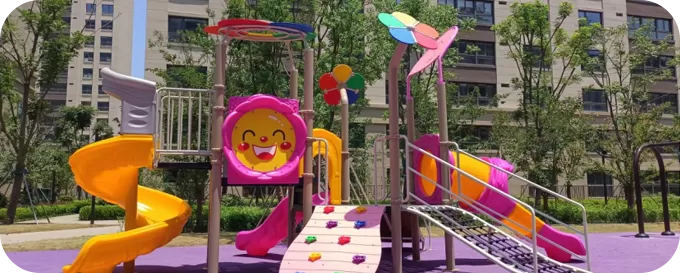
 Buying Guide
Plan restaurant playground equipment around visibility, user age, circulation, surfacing, cleaning, maintenance, budget and the available site.
Read insight


Commercial playground equipment cost depends on the approved equipment size, play components, structural system, materials, customization, safety surfacing, packing volume, installation plan and documentation scope. Freight, duties, ground preparation, drainage, concrete work, surfacing and local labor may be separate from the equipment price. A useful quotation should therefore describe the configuration and exclusions, not only show a total. Buyers can improve accuracy by providing a site plan, target age group, project location, preferred style, budget range and installation plan.
A commercial playground quotation cannot be calculated reliably from one product photo. Two structures may look similar on screen but differ in overall size, number of platforms, material specification, themed fabrication, packing volume, installation method, surfacing scope and required documents. For schools, parks, communities, resorts, contractors and distributors, the useful question is not simply “What is the unit price?” It is “What project scope is included in this quotation?”
This guide explains the eight main factors behind commercial playground equipment cost, shows which expenses may sit outside the equipment quotation and gives buyers a practical checklist for requesting a comparable proposal. It does not publish a generic price range because the final configuration, destination and local work must be confirmed for each project.
A product image does not define the structure, materials, included components or delivery scope.
Standard and compact systems usually create a clearer starting scope than a fully custom landmark design.
Equipment, surfacing, freight, installation and local site work should be separated when quotations are compared.
Packing volume and destination affect logistics, but freight should not be assumed to be included in the equipment price.
Testing and documentation must be checked against the ordered model, configuration and local project requirement.
A project-based quotation starts with a defined site, user group, configuration and delivery boundary.
A photo can show a theme and general shape, but it rarely confirms platform count, dimensions, material grade, post system, fall height, safety zone, coating, fasteners, foundation method or included accessories. It also does not show whether the image is a standard product, a modified configuration, a design rendering or a completed installation.
Start with the playground equipment quotation guide and the playground budgeting page. These pages help define the information needed before a supplier compares options. If a reference image is used, identify which features matter—such as a tube slide, rope bridge, roof form or color direction—rather than asking for an exact copy without a site review.
| Factor | What changes the scope | What buyers should confirm |
|---|---|---|
| 1. Size and components | Platforms, routes, slides, climbers and freestanding items | Usable site, users and priority activities |
| 2. Structural approach | Standard, compact, modified or fully custom | Required scale, lead-time expectations and design freedom |
| 3. Materials | Metal, panels, plastics, rope, wood, stainless steel and finishes | Approved model specification and climate exposure |
| 4. Theme and fabrication | Custom panels, sculptural forms, colors and special fabrication | Which visual elements are essential |
| 5. Surfacing and site work | Impact-attenuating surface, drainage, sub-base and concrete work | Local scope and applicable requirements |
| 6. Packing and logistics | Volume, protection, container planning and destination | Trade term, port or delivery point and exclusions |
| 7. Installation | Foundation, anchors, access, equipment and local labor | Who installs and who coordinates the site |
| 8. Documents | Drawings, labels, reports, inspections and project records | Exact tender, authority and model requirements |
More area does not automatically mean better play value, but a larger configuration normally uses more structural posts, platforms, protective panels, access routes and connecting parts. The type of activity also matters. A simple transfer between two platforms is different from a network that combines rope climbing, bridges, several slide types and ground-level play.
Define the usable area through playground site planning, then prioritize activities for the target users. This allows the supplier to allocate the budget to play functions instead of filling the drawing with components that do not support the operating plan.
A model from the standard outdoor playground systems range provides an established structural starting point. A compact outdoor playground system is designed around a smaller structural scale and can suit courtyards, small schools and communities when its approved layout fits the site. A fully custom structure may require additional design development, special panels, non-standard connections and more coordination before production.
“Custom” is not one fixed price level. Changing colors on an established configuration is a different scope from changing platform geometry, producing new decorative forms or developing a multi-level landmark structure. Ask the supplier to state exactly what has been changed.
Material choices influence procurement, fabrication, finishing, packing and maintenance planning. Galvanized steel, coated metal parts, plastic components, HDPE panels, rope systems, wood and stainless steel each have different applications and inspection points. The final specification should come from the approved product or project documents; one material description should not be applied automatically to every model.
Climate exposure also matters. A coastal, humid, high-UV or chemically exposed site may require a different discussion from an inland school courtyard. Compare the actual specification, finish and maintenance plan—not a general statement such as “premium materials.”
Themed roofs, shaped panels, sculptural enclosures, custom graphics and special metalwork add visual identity, but they also affect design time, tooling, fabrication and packing. Before approving them, decide which theme elements create real project value and which can be simplified without losing the intended character.
The custom playground design process explains how site information, a concept and production constraints are coordinated. Renderings should be treated as design proposals until the final manufacturable configuration and material schedule are approved.
Usable dimensions and site constraints are more useful for pricing than a product photo alone.
The equipment quotation and total project budget are not the same. The project may also need ground preparation, drainage, foundations, pathways, edging, landscaping, utilities and surfacing. EPDM, rubber tiles, artificial grass systems, sand and engineered wood fiber have different sub-base, drainage, installation and maintenance needs.
Surfacing must be coordinated with the equipment’s approved fall-height and use-zone information and with applicable local requirements. Artificial grass should not be assumed to provide impact attenuation in every construction. Ask whether the supplier’s price includes only equipment, includes surfacing materials, or includes any installation work.
Commercial playground components are irregular in shape. Slides, posts, panels, rope elements and hardware need different protection and labeling. The playground packing and shipping guide explains how component identification and container planning support overseas delivery.
A quotation should separate equipment value from freight unless the selected trade term clearly includes transport. Destination, container utilization, seasonal rates, local charges, duties and final-mile delivery can change independently of the equipment specification.
Installation cost depends on foundation and anchoring method, site access, unloading, temporary storage, local labor, lifting requirements and the agreed surfacing sequence. A flat, accessible site and an elevated or restricted courtyard do not create the same installation plan.
Confirm whether the buyer will use a local contractor, whether remote guidance is included and what approved drawings will be issued. Remote support should not be interpreted as an automatic commitment to provide an on-site installation team.
Some projects need tender schedules, installation drawings, component labels, packing lists, material records or product test documents. These requirements should be discussed before the quotation is finalized. An EN 1176 or ASTM F1487 document applies to the model, configuration and scope stated in that document; it is not a universal approval for every product or market.
Use the playground test-report verification guide to review document scope. If a local authority, consultant or inspection body has a required format, share it before design approval.
Packing volume and the agreed delivery term should be shown separately from the equipment scope.
Project type and location.
Usable site dimensions, site photos and a CAD file when available.
Target age group, expected users and operating context.
Priority play functions, reference style and color direction.
Preferred standard, compact or custom starting point.
Known material, climate, surfacing and documentation requirements.
Destination port or delivery point and requested trade term.
Local installation plan, target schedule and realistic budget range.
Local landscape architects, structural or civil engineers, contractors, surfacing specialists and approval authorities may need to review site levels, drainage, underground conditions, foundations, accessibility, impact attenuation, local permits and final inspection. Their role depends on the country and project. The supplier’s drawings and product information should be coordinated with these local responsibilities rather than treated as a substitute for them.
ZZRS Amusement Equipment Co., Ltd. is a commercial outdoor playground equipment manufacturer in Wenzhou, China. ZZRS Playground supports site-based design discussion, production, inspection, packing, export delivery coordination and installation guidance within the confirmed project scope. Buyers can also review real playground equipment photos to identify a suitable product direction before requesting a proposal.
A photo can support an initial discussion, but it does not define dimensions, materials, safety zones, included components or delivery scope. Site and user information are needed for a useful quotation.
Not automatically. Freight depends on the agreed trade term, packing volume, destination and current logistics conditions. The quotation should state whether transport is included.
Only when it is listed in the scope. Equipment, surfacing materials, ground preparation and local installation should be shown as separate items or clear inclusions.
They may differ in size, platform count, structural specification, materials, theme fabrication, play components, documentation, packing volume and installation requirements.
No. Buyers should check the model, configuration, standard version and scope named in the document, then confirm the project’s local requirements.
Send the usable site dimensions, photos, project location, target users, preferred functions, style references, budget range, destination and installation plan.
Send ZZRS Playground your site dimensions, project location, target age group, preferred style, budget range and installation plan. The team can review the project information and discuss layout, product configuration, production, packing and delivery support.
Practical guidance from playground planning, manufacturing, delivery and completed project experience.
Buying Guide
 Buying Guide
 Buying Guide