 Buying Guide
Compare 10 Canadian playground equipment manufacturers and suppliers by manufacturing evidence, product focus, regional support, CSA documentation and project fit.
Read insight

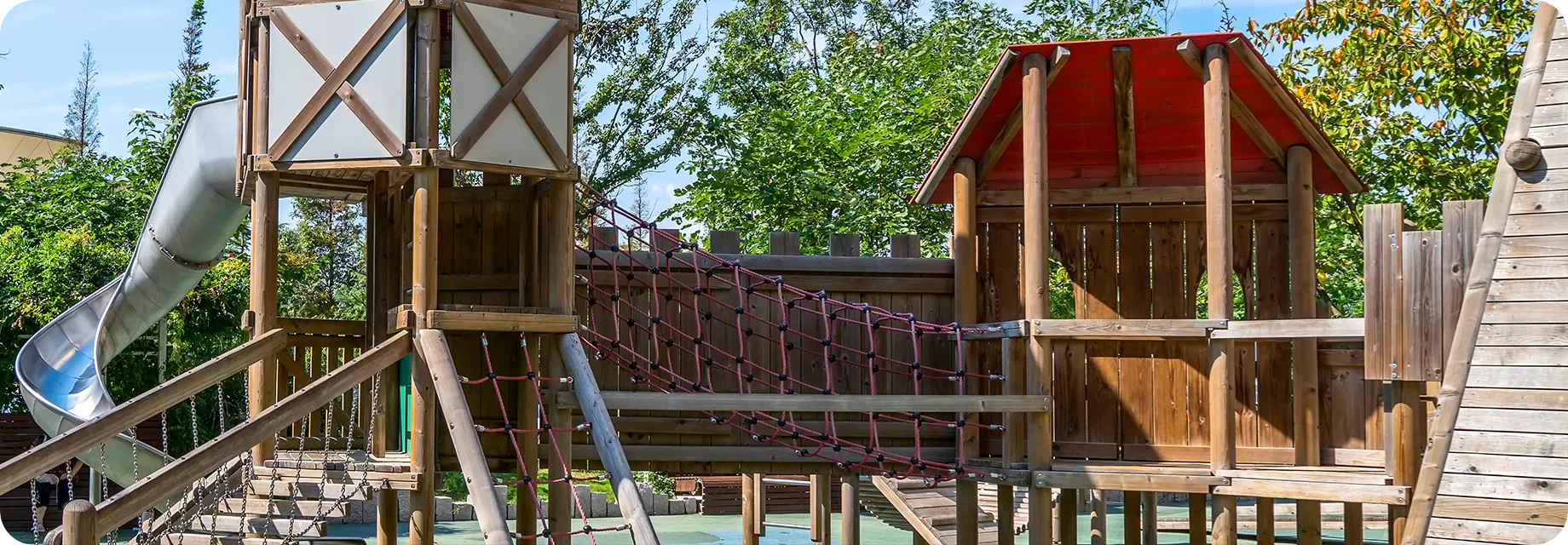
Choose a visual direction that supports the site's purpose, users, identity, production and long-term maintenance.
A playground style should help users understand the space, reinforce the project identity and remain practical to manufacture, install, inspect and maintain.
Start with the setting, users and desired play experience. Then decide whether a standard product family, a coordinated colour-and-graphic package or a more customized themed structure is justified.
Project type and audience
Age groups and play goals
Architectural or landscape context
Brand or story references
Customization budget
Maintenance and replacement needs
Clean geometry and a controlled palette for schools, residential developments and modern public spaces.
Wood tones, organic forms and landscape-led details for parks, resorts and nature-focused settings.
Castle, forest, ocean, transport or project-specific storytelling where footfall and memorable identity matter.
Efficient combinations of core play functions for smaller sites, limited budgets or phased projects.
Clear routes, ground-level participation, sensory variety and social play planned around the actual user brief.
Climbing, balance, rope and movement-led equipment for users and sites that prioritize physical challenge.
| Question | Why it matters | Approval evidence |
|---|---|---|
| Does it fit the setting? | Scale and visual character should relate to nearby buildings, landscape and project identity. | Mood references and site-view review |
| Does it support play? | Decorative features should not displace required functions, capacity or visibility. | Function schedule and layout |
| Is the customization controlled? | One-off shapes and graphics can affect price, lead time, documents and replacements. | Itemized customization scope |
| Can it be maintained? | Complex details should remain accessible for inspection, cleaning and part replacement. | Material and maintenance review |
| Is the final version identifiable? | Concept images, colours and production drawings must reference the same revision. | Approved rendering and schedule |
Coordinate brand, visibility, heat, fading and part references instead of choosing isolated colours.
Review colour planning →Compare structure, panels, slides, ropes, platforms and surfacing by climate and maintenance.
Review material choices →No. Confirm users, functions, capacity, accessibility and site fit first; then use theme and graphics to strengthen the approved layout.
Often, a standard family can be coordinated through selected colours, panels or graphics. The available change depends on the product, structure and written quotation.
It can require additional concept, approval, production and documentation work. Confirm revision deadlines and production release conditions in the programme.
Keep the approved rendering, colour/material schedule, equipment configuration, customization list, revision and date together.
Share the site, audience, play goals and visual references so the design direction remains practical and approvable.
Practical guidance from playground planning, manufacturing, delivery and completed project experience.
Buying Guide
 Buying Guide
 Factory & Production