
Playground equipment is very different from a small consumer product that can be placed into a single carton and delivered directly to the buyer.
A commercial playground may include steel posts, platforms, plastic slides, tube slides, roofs, decorative panels, climbing nets, ropes, hardware, connectors, themed components, installation accessories, and safety-related parts. These components differ significantly in size, weight, shape, and packing requirements.
For overseas projects, good packing is not only about protecting the equipment during transportation. It also affects container utilization, part identification, customs documentation, unloading, site storage, and installation efficiency.
This guide explains how playground equipment is packed and shipped from China, what overseas buyers should check before shipment, and how proper labeling and documentation can help local installation teams work more efficiently.
Commercial playground equipment is normally disassembled into structural and functional components for export. Steel parts, plastic slides, rope elements, themed panels, hardware, and installation documents require different protection and identification. Component labels should correspond with drawings and the packing list so the receiving team can identify parts after arrival. Container selection depends on total volume, the longest components, packing method, and the selected project configuration. Before delivery, the buyer should confirm truck access, lifting equipment, temporary storage, package checking, and the planned installation sequence.
Different component types need different protection.
Labels and packing lists should use consistent references.
Container size cannot be decided from product name alone.
Trade-term scope must follow the written quotation.
Unloading and dry storage should be planned before arrival.
Before agreeing the delivery scope, use the playground manufacturer selection checklist to verify how packing, trade terms, installation documents and after-sales responsibilities are written into the quotation.
Last reviewed: August 4, 2026 · Meaningful update: added first-party packing and container-loading evidence, a packaging video, and related buyer links.
Commercial playground equipment may travel thousands of kilometers before reaching the final project site. During this process, it can be handled by factory workers, truck drivers, warehouse staff, port operators, shipping lines, customs teams, freight forwarders, and local contractors.
Without suitable protection, painted surfaces may be scratched, plastic parts may be damaged, ropes may become dirty, decorative panels may be bent, and small accessories may be lost.
Poor organization can also create problems after arrival. Even when all components are included, the installation team may have difficulty identifying the correct posts, platforms, brackets, fasteners, or slide connections if the parts are not clearly classified and labeled.
A suitable packing process should therefore address four main objectives:
Protect the equipment during handling and transportation
Use container space efficiently
Prevent small parts and hardware from being lost
Help the local team identify and install the components
For overseas playground projects, packing should be considered part of the complete delivery process rather than the final step after production.
Outdoor playground equipment is generally divided into several component groups before packing. The exact classification depends on the structure and project design.
Typical component groups include:
Main steel posts
Platforms and stairs
Structural beams and connectors
Plastic open slides
Tube slide sections
Roofs and decorative panels
Climbing walls and activity panels
Rope bridges and climbing nets
Stainless steel slide sections
Swings and moving accessories
Themed decorative components
Bolts, screws, brackets, clamps, and covers
Installation tools or accessories included in the order
Separating these components allows the factory to choose a suitable packing method for each material.
For example, a powder-coated steel post should not be protected in the same way as a plastic slide, climbing rope, or stainless steel slide section.
Before the equipment is packed, the factory should confirm that the manufactured components match the approved project information.
This may include checking:
Final product model
Approved layout
Confirmed colors
Platform heights
Slide directions
Material specifications
Quantity of components
Custom decorative elements
Hardware and installation accessories
Buyer-approved changes
Shipping destination
Container or shipment arrangement
For custom playground equipment, the packing team should work from the final production drawing rather than an earlier draft.
If the playground has completed factory trial assembly, the trial assembly records can also be used to confirm the main components before disassembly and packing.
Large playground structures are normally not shipped as fully assembled products. After production and any required trial assembly, the equipment is disassembled into transportable parts.
The factory then classifies the components by product area, structure, material, or installation sequence.
For a large themed playground, classification may follow different activity zones, such as:
Main tower area
Slide area
Bridge area
Climbing area
Entrance area
Decorative theme area
Hardware and accessories
This approach makes it easier to check quantities and prepare the packing list.
For projects containing several similar platforms or posts, part numbers are especially important. A label can help the installation team match each component with the corresponding position in the installation drawing.
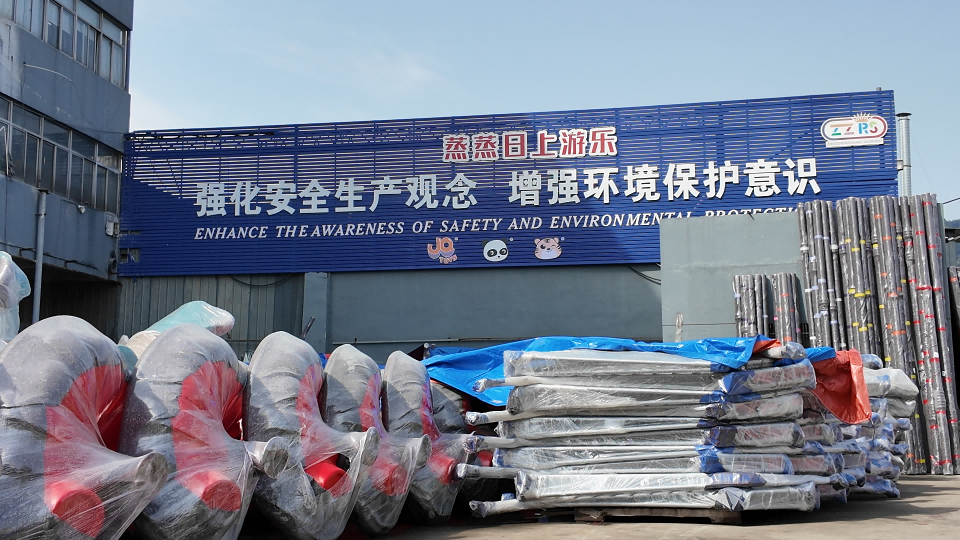
Wrapped playground components classified and staged at the factory before shipment.
Steel structures are some of the heaviest parts of outdoor playground equipment. These may include galvanized steel posts, powder-coated beams, stairs, platforms, handrails, and supporting frames.
Although metal parts are structurally strong, the finished coating still needs protection against scratching and impact.
Common protection methods may include:
Foam padding around contact areas
Protective cotton felt or wrapping materials
Separation between painted surfaces
Reinforcement around corners and connection points
Bundling long posts according to size
Securing components to prevent movement during transport
Direct metal-to-metal contact should be reduced where possible because vibration during truck and ocean transportation can damage finished surfaces.
Sharp edges and projecting connectors should also be protected to prevent them from scratching nearby components.
Plastic playground components may include open slides, tube slide sections, roofs, panels, tunnels, windows, and themed decorative parts.
These components are generally lighter than steel structures but may be more vulnerable to scratching, deformation, or impact.
The factory should consider:
Protecting visible surfaces
Separating curved components
Supporting large hollow plastic parts
Preventing heavy steel components from pressing against plastic
Protecting connection holes and edges
Avoiding excessive pressure during container loading
Tube slides are usually divided into individual sections for shipment. Each section should be classified so the local team can identify the correct installation order.
For custom animal shapes, tree-house decorations, vehicle-themed panels, or irregular decorative components, additional protection may be required around detailed shapes and projecting areas.
Rope playground components can include climbing nets, rope bridges, hanging ropes, cargo nets, rope tunnels, and balancing activities.
These parts should be kept clean, dry, and organized during transportation.
Packing considerations may include:
Bundling each net separately
Adding labels for installation position
Protecting metal connectors
Preventing ropes from becoming tangled
Keeping rope components away from oil or dirty metal surfaces
Separating different sizes and shapes
Custom climbing nets may look similar after they are folded. Clear labels and installation drawings are therefore particularly useful.
The factory should also check whether the connection hardware for each rope component is included in the correct accessory package.
Stainless steel slides require careful surface protection because visible scratches may affect the finished appearance.
Depending on the design, the slide may be shipped as:
A complete short slide section
Several connected slide sections
Separate side panels and sliding surfaces
Curved or spiral components
Long hillside slide sections
Protective film, foam padding, soft wrapping, and reinforced frames may be used depending on the size and shape.
Stainless steel components should be positioned carefully inside the container so that heavy structural parts do not press against the sliding surface.
For large or irregular stainless steel slides, the factory should also consider unloading and on-site lifting requirements before deciding how the components are packed.
Bolts, screws, clamps, caps, brackets, connectors, and small accessories are essential for playground installation. A missing major post may be immediately visible, but a missing connector or special bolt may only be discovered after installation has started.
Hardware should therefore be:
Counted before packing
Classified by type or installation area
Packed in separate bags or boxes
Clearly labeled
Listed in the packing or hardware list
Protected from moisture where required
For overseas projects, ZZRS typically prepares fasteners and accessories according to the confirmed project specification. Where applicable, 304 stainless steel fasteners may be used for improved outdoor corrosion resistance.
Small accessories should not be placed loosely inside large equipment components without labels. Organized hardware packages make it easier for the local installation team to locate the required parts.
Clear labeling is one of the most important parts of export packing.
Labels can include:
Product or project code
Component number
Installation area
Package number
Quantity
Part description
Corresponding drawing number
ZZRS Playground uses classified packing and waterproof labels where appropriate to help buyers identify components after arrival.
The label information should correspond with the installation drawings and packing list. For example, a post marked as “P-05” should appear with the same code in the structural drawing.
A complete packing list can also help the buyer check the delivery after container unloading.
Packing and installation should be planned together.
Before shipment, the supplier may prepare documents such as:
Product layout drawing
Post positioning drawing
Installation drawing
Component identification drawing
Hardware list
Packing list
Installation instructions
Reference photos or videos
Foundation or fixing information
For custom playground equipment, the installation team may also need information about platform heights, slide connections, bridge directions, and installation sequence.
Clear documentation cannot replace an experienced installation team, but it can reduce unnecessary confusion and improve communication between the factory and local workers.
After the equipment is packed, the factory prepares it for container loading.
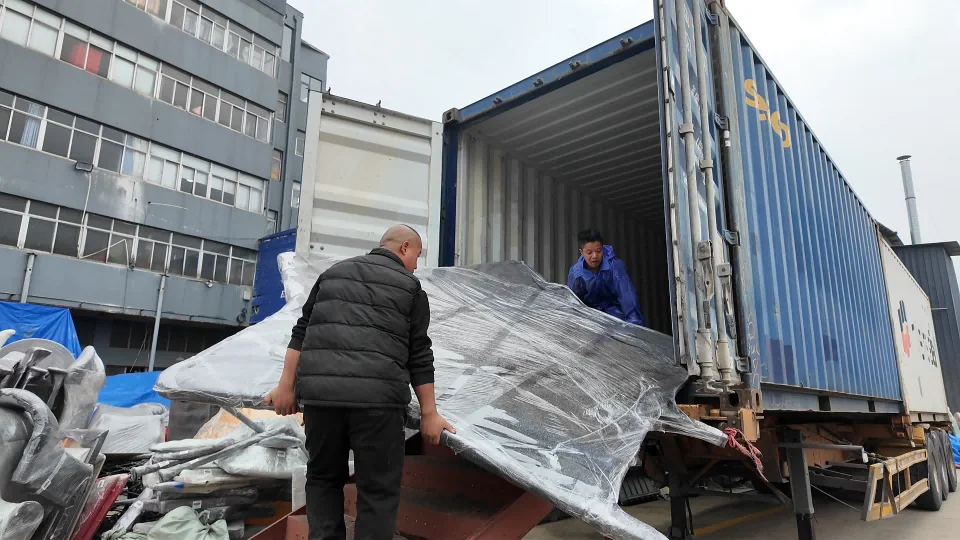
First-party container-loading view: the final loading order depends on component size, protection needs and the unloading plan.
Commercial playground equipment is commonly shipped in a full container when the project volume is large enough. Smaller orders may use consolidated shipping, although freight cost and handling risk should be considered.
Common container sizes include:
20-foot general-purpose container
40-foot general-purpose container
40-foot high-cube container
The suitable container depends on the total volume, component length, product shape, packing method, and destination requirements.
During container loading, the factory should consider:
Loading heavy structural components first
Keeping fragile parts away from pressure
Using container height efficiently
Preventing packages from moving
Protecting painted and plastic surfaces
Keeping hardware and documents accessible
Planning the unloading sequence
Taking loading photos when needed
Large components should not simply be forced into the remaining space. The loading plan should consider whether the buyer can safely unload them at the destination.
Before the container or shipment leaves the factory, overseas buyers should confirm several important details.
Confirm that the product model, color, dimensions, quantity, and custom details match the approved order.
Review the number of packages and the main component classification.
Confirm whether package labels need to include the buyer’s company, project code, destination, or other required information.
Make sure the required drawings, instructions, and hardware lists have been prepared.
Confirm the correct port, delivery address, consignee information, and contact details.
The quotation should clearly state the agreed trade terms. ZZRS commonly supports arrangements such as EXW and FOB Ningbo, while other shipping arrangements should be confirmed according to the project and quotation.
The buyer should check whether a forklift, crane, workers, or temporary storage area will be required when the equipment arrives.
| Component Type | Main Packing Risk | Possible Protection | Identification |
|---|---|---|---|
| Steel posts and beams | Scratching and movement | Protective wrapping and controlled bundling | Part number |
| Platforms and stairs | Coating damage | Surface separation and bundling | Area code |
| Plastic slides | Scratching or deformation | Soft protection and separation | Slide or section number |
| Tube slide sections | Incorrect installation order | Section protection | Sequence label |
| Stainless steel slides | Visible surface scratches | Film, soft wrapping, or support frame as required | Section number |
| Rope nets | Tangling and contamination | Separate bundling | Position label |
| Decorative panels | Edge or surface damage | Corner and surface protection | Theme-area code |
| Hardware | Missing or mixed parts | Classified bags or boxes | Hardware list |
| Installation documents | Loss or mismatch | Digital and/or protected copy | Project reference |
According to the confirmed order, components may be classified by project area, product type, or installation sequence. Steel and plastic parts are protected separately where their surfaces and shapes require different handling. Hardware and small accessories can be grouped by function, while component numbers are matched with the packing list and available installation references. Packing and loading photos may be prepared when required. The exact materials, labels, and document set depend on the selected configuration and written order scope.
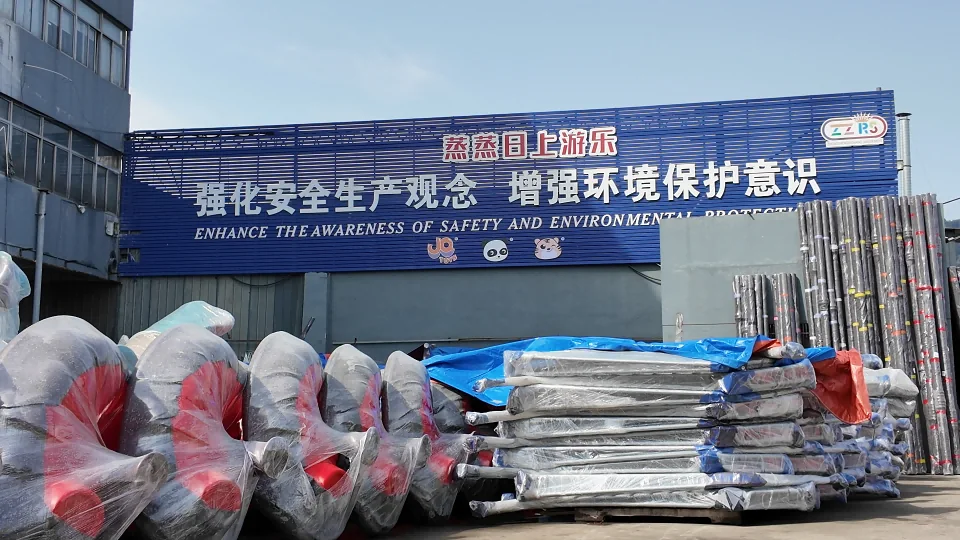
Wrapped playground components prepared for export. The actual protection, bundling and labels follow the selected configuration and written order scope.
This organization follows production and any required trial assembly before disassembly and packing. Buyers can review the wider ZZRS manufacturing and quality-control process for additional first-party factory context.
Useful label fields can include project reference, product code, package number, component number, installation area, quantity, drawing reference, and a destination mark when required.
FORMAT EXAMPLE — NOT A CUSTOMER ORDER
Project: ZZRS-XXXX
Package: 08/26
Component: P-05
Area: Main Tower
Quantity: 1
Drawing Reference: A-03
| Document | Purpose |
|---|---|
| Final product list | Confirms the ordered products |
| Packing list | Lists packages and quantities |
| Hardware list | Identifies fasteners and accessories |
| Layout drawing | Confirms the final arrangement |
| Post positioning drawing | Supports site preparation |
| Installation drawing | Supports assembly |
| Component identification | Matches parts with drawings |
| Commercial documents | Supports the agreed shipment arrangement |
| Packing photos | Helps confirm loading and visible package condition |
These items should be confirmed together with the shipping information needed for a playground quotation.
A 20GP container may suit a relatively smaller-volume or heavier shipment. A 40GP provides more loading length, while a 40HQ provides additional internal height. The final choice depends on total packed volume, the longest component, protection method, selected configuration, and unloading conditions. The same product can require a different loading plan when its dimensions, accessories, or packing method change.
| Term | General Responsibility Point | Buyer Should Confirm |
|---|---|---|
| EXW | Goods are made available at the agreed factory location | Pickup and export arrangement |
| FOB | Supplier handles the agreed export process to the named port | Ocean freight and destination costs |
| CIF | Includes agreed freight and insurance to the named port | Destination charges and import process |
The exact scope should follow the written quotation and agreed Incoterm. ZZRS commonly supports EXW and FOB Ningbo arrangements. Other shipping arrangements should be confirmed in the quotation.
| Item | What to Confirm |
|---|---|
| Delivery access | Whether the truck can reach the unloading area |
| Forklift or crane | Whether lifting equipment is needed |
| Workers | Availability and experience of unloading staff |
| Temporary storage | A clean, dry, and secure area |
| Package checking | Compare packages with the packing list |
| Damage record | Photograph visible package damage before unpacking |
| Hardware storage | Keep small accessories classified and protected |
| Installation sequence | Avoid opening all packages randomly |
| Site foundation | Confirm readiness before installation |
Coordinate these tasks with the site's playground installation preparation and the approved project information from the design process for production and delivery.
Do not discard the packaging immediately.
Photograph the container, package, label, and affected component.
Compare the package with the packing list.
Record the package and component numbers.
Contact the supplier with the available evidence.
Confirm whether the issue is transport damage, a missing part, or an identification mismatch.
Review the corrective action under the order, shipment, insurance, and after-sales terms.
Responsibility and corrective action should be reviewed according to the shipment condition, agreed trade terms, insurance, and order terms. Keep the relevant information for after-sales communication for overseas playground projects.
For context on earlier checks, see playground production and pre-shipment inspection and the range of commercial outdoor playground equipment.
Good packing can significantly improve installation efficiency.
When parts are clearly labeled, workers can identify the correct components before assembly. When hardware is classified, the team does not need to search through mixed bags. When packing follows the installation sequence, the components needed first can be unloaded and prepared first.
Poor packing may create the opposite result:
Similar components are difficult to distinguish
Hardware becomes mixed
Installation starts before all parts are located
Painted surfaces are damaged during unloading
Drawings do not match component labels
Local workers need repeated clarification from the factory
For overseas projects, the connection between packing and installation should be considered during the production stage rather than after the equipment is completed.
Buyers and suppliers should avoid several common mistakes.
A product photo does not show every component, hardware item, or installation detail. Final drawings and specifications should be confirmed before packing.
If the first components needed for installation are loaded at the back of the container, unloading and site organization may become more difficult.
Different bolts and connectors may look similar. Mixed hardware can delay installation.
Steel, plastic, stainless steel, and decorative parts require different protection methods.
Some large parts may require lifting equipment. The buyer should prepare before the shipment arrives.
Installation drawings and packing lists should be reviewed before shipment rather than requested only after the container has arrived.
ZZRS Amusement Equipment Co., Ltd. manufactures commercial playground equipment in Wenzhou, Zhejiang, China. According to the confirmed order, project support may include design coordination, production planning, trial assembly when required, component classification, protective packing, labels, packing lists, container-loading coordination, installation information, and after-sales communication.
The exact packing and document scope depends on the equipment structure, selected materials, shipment volume, destination, and written quotation.
This first-party ZZRS video shows packaging-detail handling for playground equipment components. Use it as process evidence, then confirm the exact protection, labels, package count and loading scope for your order.
Open the ZZRS packaging-detail video page.
Commercial playground equipment is disassembled into component groups. Steel, plastic, ropes, nets, hardware and decorative parts receive protection suited to their shape and material, then labels and packing-list references help identify them after arrival.
Yes. Container selection depends on the final component list, packed volume, longest parts, loading plan and project configuration rather than the product name alone.
Small hardware can be grouped, labeled and checked against parts lists. Package references should correspond with installation drawings or product zones, and the receiving team should count packages before unloading is completed.
Usually not. Commercial playground equipment is normally shipped in classified components for efficient transport and assembled at the destination according to the agreed drawings and installation method.
Local installation may be possible when the supplier provides the agreed foundation and assembly information and the buyer arranges a competent team, site preparation, lifting equipment and project-specific supervision or inspection where required.
Confirm the final product and drawing revision, package count, trade term, destination port or address, receiver details, document requirements, unloading conditions and temporary storage plan.
ZZRS can provide classified packing, package identification, packing information and installation documents or online technical communication according to the selected product and written order scope.
Packing and shipping playground equipment from China requires more than placing finished products into a container.
A suitable export process includes final order checking, component classification, protective packing, hardware organization, waterproof labeling, packing lists, container planning, installation documents, and communication with the buyer before shipment.
For overseas projects, good packing helps protect the equipment and makes unloading, identification, and installation more manageable after arrival.
Send the destination port, selected equipment, expected schedule, and unloading conditions so the packing and shipment scope can be reviewed in the quotation.