
Choose a park playground equipment manufacturer by checking how well its proposal fits public-park use—not by comparing catalog pictures alone. For a high-use park, the supplier should translate expected visitor volume, age zones, supervision, climate, maintenance capacity and site constraints into one coordinated layout, material schedule, safety-document scope, installation plan and spare-parts process. Compare written evidence for every point. A factory that cannot connect the drawing, quotation, inspection records, packing labels and installation documents is difficult to manage after the order is placed.
This buyer guide is published by ZZRS Amusement Equipment Co., Ltd. (brand: ZZRS Playground), a commercial playground equipment manufacturer in Wenzhou, China. It explains a park-specific comparison process. It is not a ranking of Chinese manufacturers, and the final product, test-report and service scope must be confirmed for the selected model and destination.
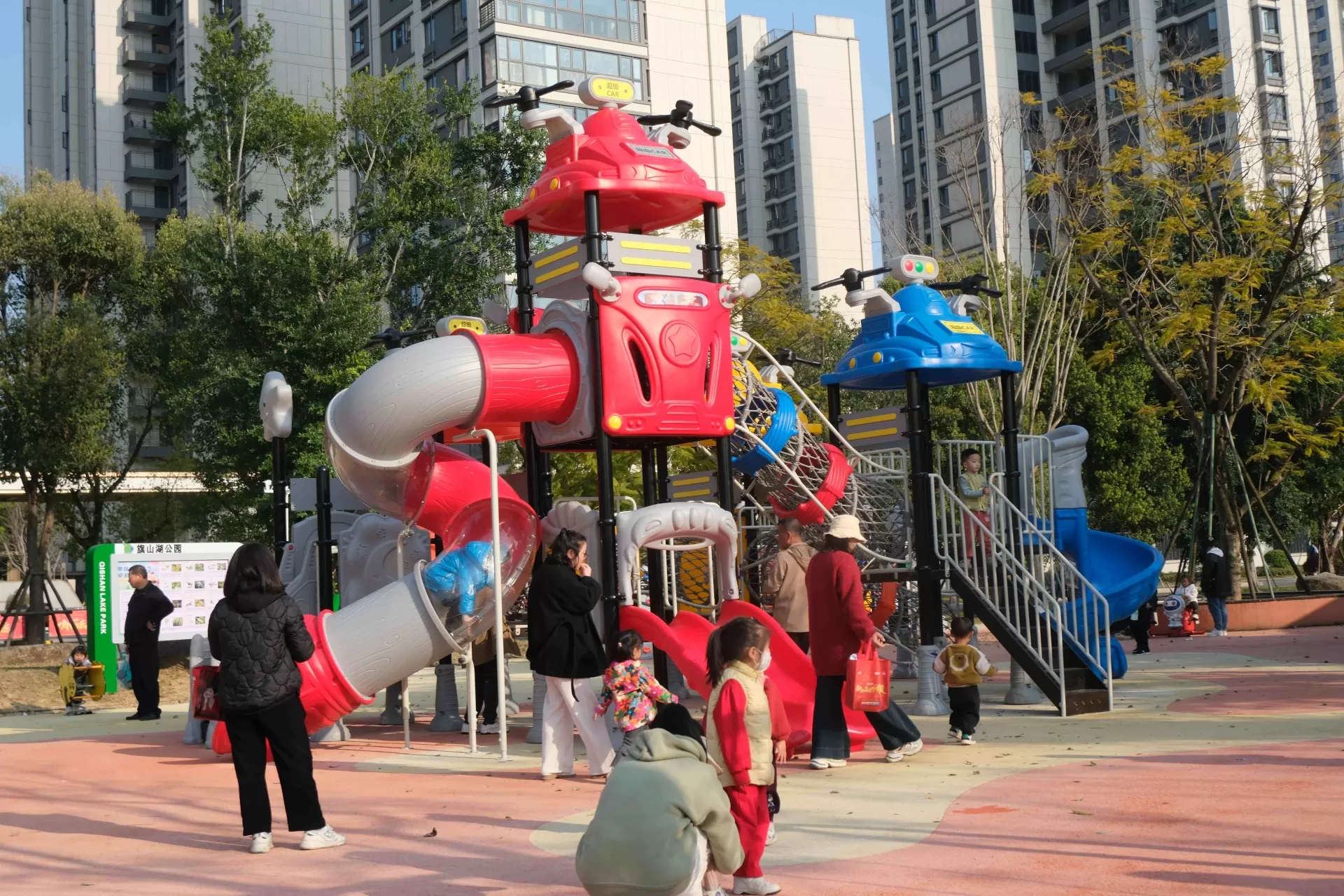 Document the actual park boundary, circulation and existing conditions before asking a manufacturer to recommend equipment.
| Decision area | Evidence to request | Park-specific risk controlled |
|---|---|---|
| Visitor volume and age zones | Dimensioned layout, intended age range, activities, circulation and capacity assumptions | Crowding, poor supervision lines and unsuitable challenge levels |
| Durability and maintenance | Component-by-component material and finish schedule, inspection points and maintenance requirements | Premature corrosion, coating damage and unclear upkeep responsibility |
| Public procurement documents | Model list, quotation exclusions, drawings, report numbers, covered configurations and standard editions | Tender claims that do not match the ordered configuration |
| Site and installation interfaces | Use zones, foundations, anchor details, drainage interfaces, unloading plan and installation responsibilities | Late site changes, access problems and disputed installation scope |
| Spare parts and long-term support | Part identification method, recommended spares, warranty schedule and response process | Extended closures when a high-use component needs replacement |
| Comparable project evidence | Relevant park photos, project drawings or delivery records with confidential information removed | Selecting a supplier whose experience does not match the site or project scale |
A manufacturer can only prepare a useful park proposal when the buyer supplies a usable site brief. Record the park boundary, entrances, paths, trees, utilities, slopes, drainage, shade, nearby roads and maintenance access. Add the intended opening date, expected peak periods, supervision approach, accessibility goals and target age groups.
A public park may serve toddlers, school-age children and accompanying adults at the same time. Ask the supplier to show how age groups, challenge levels, active routes and quieter ground-level activities are separated or connected. The layout should make supervision and circulation understandable. The exact capacity cannot be judged from equipment dimensions alone; it depends on the activity mix, platform routes, access points and required use zones.
Use the ZZRS quotation information checklist to prepare the initial brief, then compare the proposed equipment families on the commercial outdoor playground equipment page. These links provide inputs and product starting points; they do not replace the project-specific layout review.
“Outdoor grade” is too vague for a public procurement decision. Request a schedule that identifies the main structure, platforms, panels, slides, ropes or nets, fasteners, coatings and foundations. The schedule should state the exact material and finish proposed for the selected model. Coastal air, high humidity, strong UV exposure, freeze-thaw conditions, treated water nearby and heavy daily use can change the appropriate specification.
The supplier should explain which incoming materials, dimensions, welds, edges, coatings, molded parts, fasteners and assembled connections are checked for the order. Evidence should be tied to the approved drawing and bill of materials, not to a generic factory presentation. Review the documented ZZRS manufacturing and quality-control process as an example of the checkpoints a buyer can discuss.
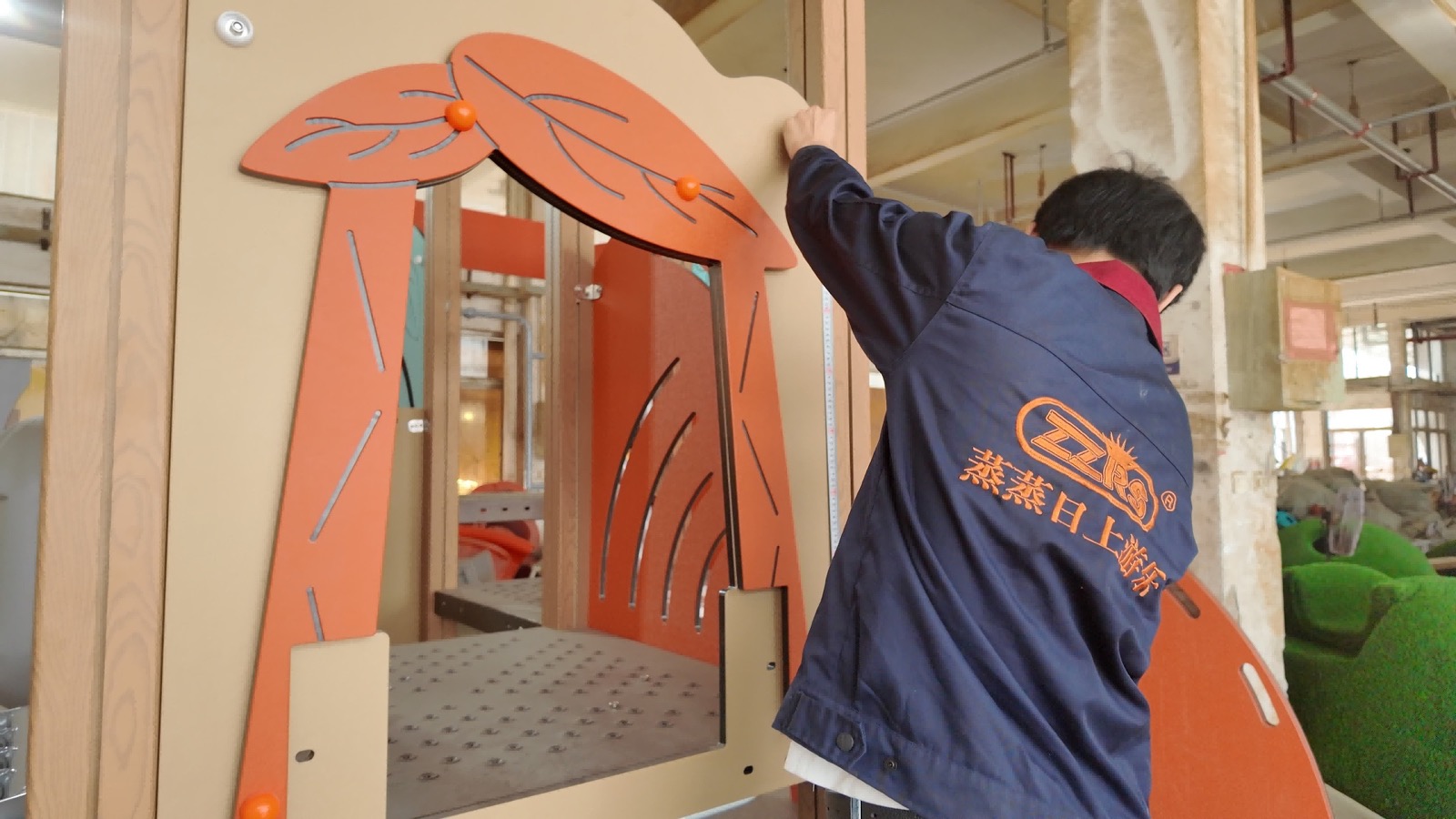 Trial assembly can be useful for selected configurations, but its extent must be written into the approved order scope.
Do not assume every park order needs a complete factory assembly. Ask when playground equipment trial assembly is appropriate, which modules or interfaces will be checked and what evidence will be provided before packing.
Public buyers often need product data, drawings, standards information, inspection records and formal quotation schedules. The manufacturer should identify the exact report number, tested model or product family, standard edition and configuration covered by any document it offers. A certificate or test report for one model must not be presented as automatic coverage for a materially different layout.
Before tender approval or contract signing, reconcile four records:
The layout — equipment positions, dimensions, use zones, circulation and site interfaces.
The quotation — included equipment, materials, documents, spare parts, packing and services.
The technical specification — components, finishes, connections, foundations and project-specific options.
The document register — drawings, reports, manuals, inspection records and delivery documents to be supplied.
Review the ZZRS page for playground safety standards, test reports and certification information. Availability remains subject to the selected configuration and documented scope.
A park project can be delayed even when the equipment is correctly manufactured. Confirm who is responsible for the survey, utilities, drainage, foundations, anchor installation, unloading, lifting, temporary storage, assembly, safety surfacing, fencing, reinstatement and final inspection. Drawings should use the same equipment references as the quotation and packing list.
The supplier needs truck and container access information, unloading limits, storage space and any crane restrictions. If the park remains partially open, the delivery and installation sequence should be coordinated with the site safety plan. Ask how modules and hardware will be labeled so the installer can match packages to the drawing.
 Installation preparation should connect foundations, delivery access, component identification and local responsibilities.
Use the playground installation planning guidance to define these interfaces before dispatch. Any on-site or remote support from the manufacturer should be described in the quotation, including language, duration, travel, local labor and tool responsibilities where applicable.
High-use park equipment needs a practical plan for inspection, cleaning, tightening, coating repair and replacement of wear items. Ask the manufacturer how each component will be identified after installation and which spares it recommends for the selected configuration. The order file should make it possible to identify a replacement panel, fastener group, rope element or molded part without relying only on an old photograph.
Compare suppliers on:
component and hardware identification;
recommended spare-parts list and quantities;
warranty coverage by component and material;
maintenance instructions and inspection intervals;
process for reporting damage and ordering replacements;
records the park operator should retain after handover.
Read the ZZRS after-sales support process, then confirm the exact warranty and replacement-part terms in the project contract.
A large themed resort structure does not prove that a supplier can coordinate a municipal neighborhood park, and a small school installation may not demonstrate the logistics required for a regional destination park. Request examples similar in equipment type, site complexity, climate, installation method or procurement documentation. Evidence may include real project photos, approved layouts, trial-assembly records, packing labels or installation documents with sensitive client information removed.
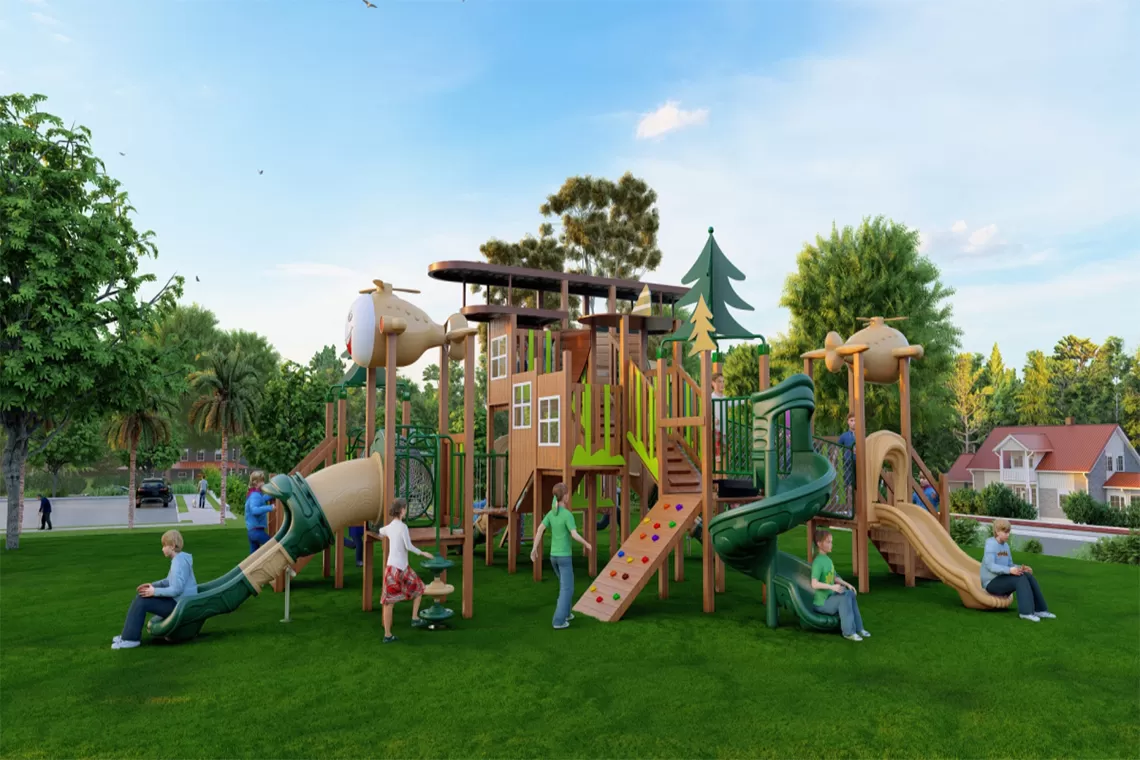
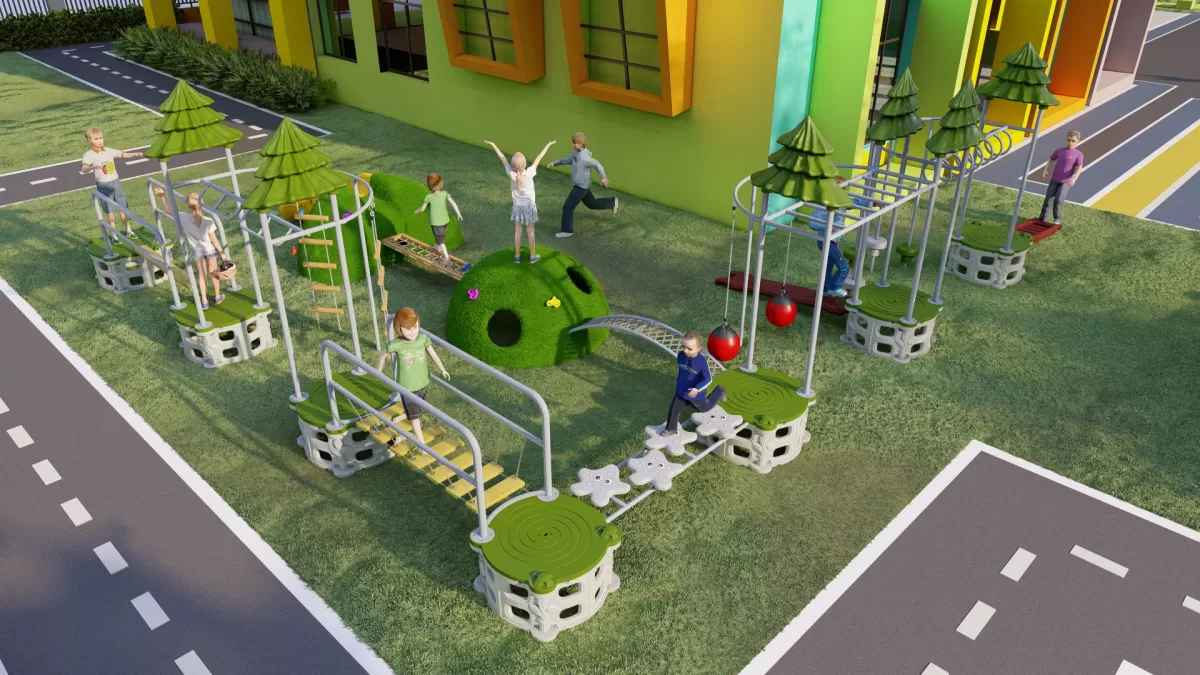
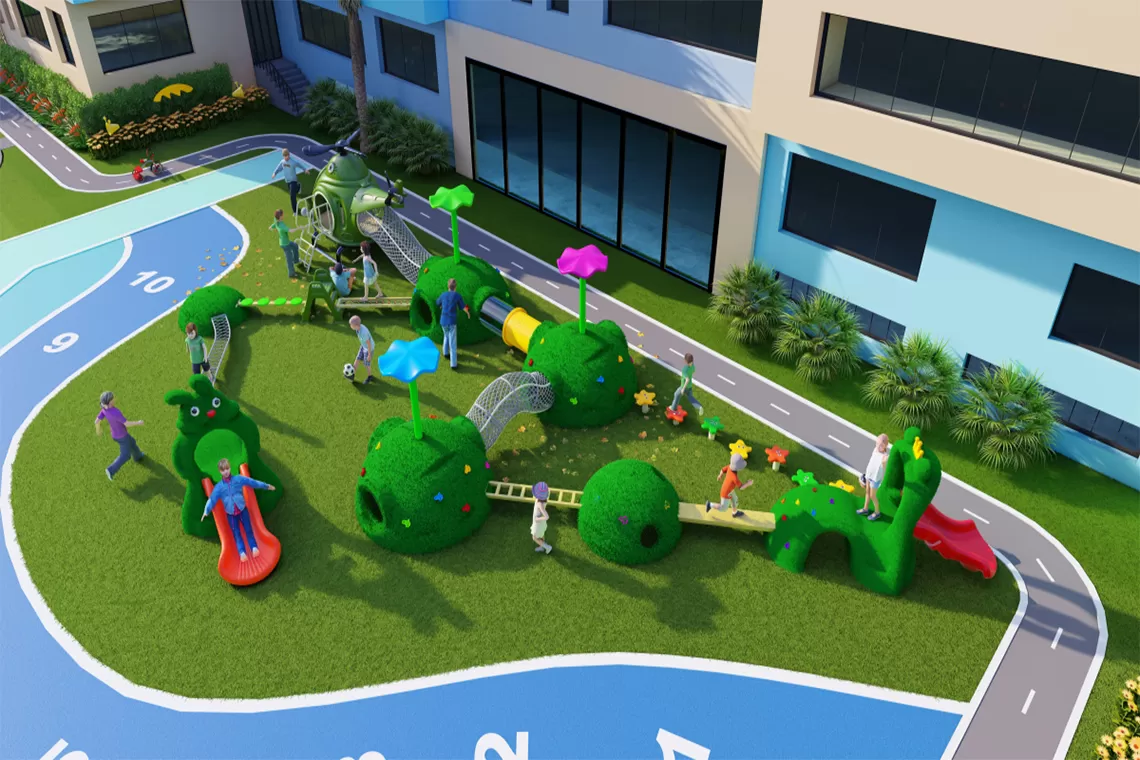
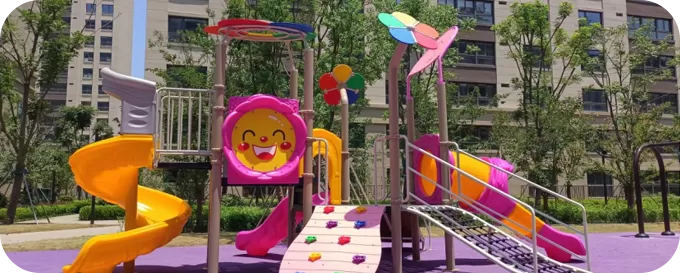
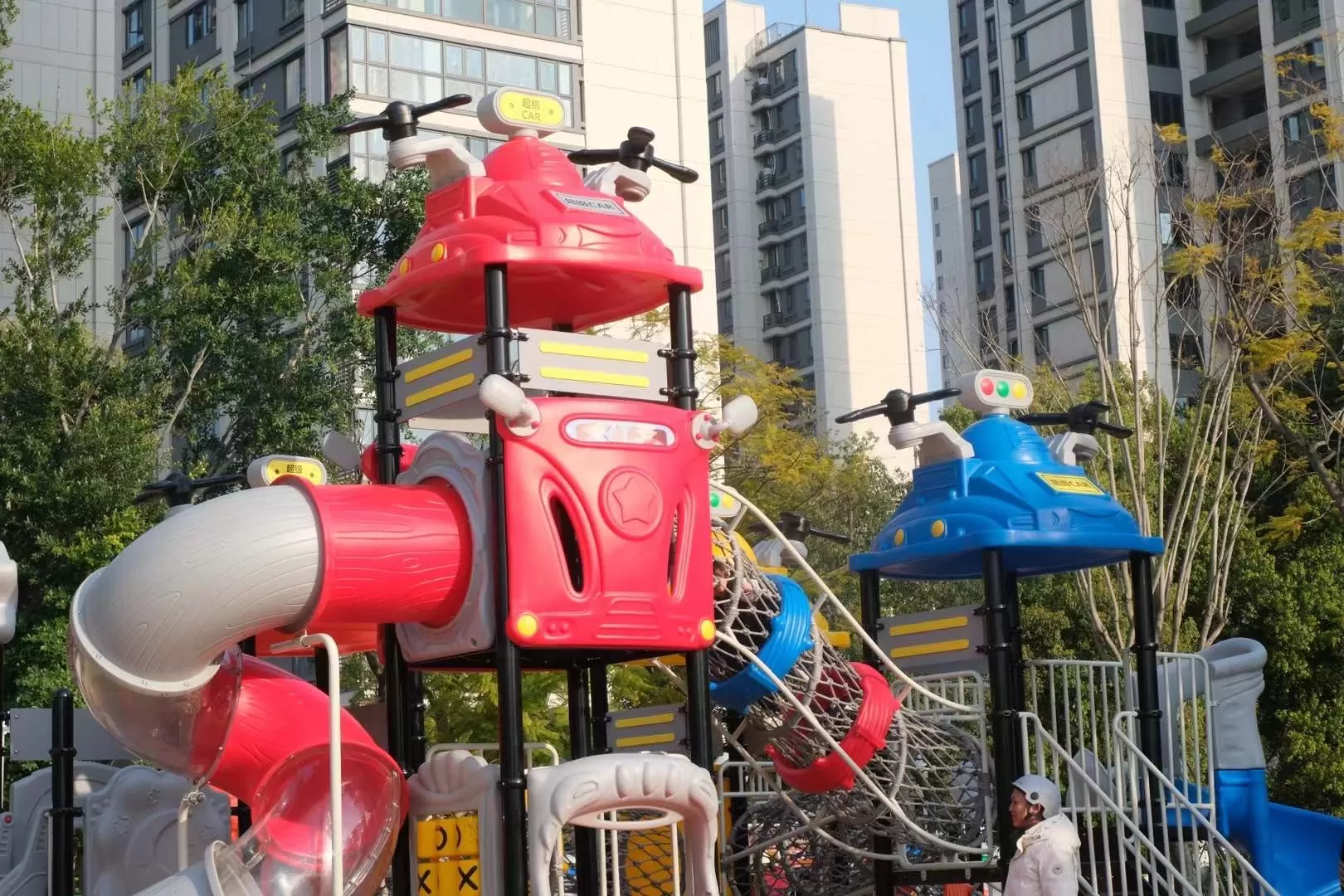 Use product images as configuration references, then verify the corresponding drawing, specification and delivery evidence.
Browse real playground project photos and the parks and recreation project route, but ask which evidence is directly relevant to your brief. ZZRS should only present materials that can be connected to a real product, process or project record.
The site plan shows boundaries, entrances, fixed obstacles, levels, drainage and delivery access.
The proposal identifies intended ages, activity mix, circulation and supervision considerations.
The quotation and drawing use the same model names, quantities and dimensions.
Materials and finishes are listed by component and matched to the operating environment.
Safety-document claims identify the report, covered model and standard edition.
Foundations, use zones, surfacing and installation responsibilities are defined.
Quality checks and any trial-assembly scope are written into the order process.
Packing labels, packing lists and installation references follow the approved drawings.
Warranty, recommended spares, maintenance information and replacement-part support are clear.
Comparable park or process evidence is available and accurately described.
ZZRS Amusement Equipment Co., Ltd. can review site information, discuss suitable commercial playground configurations, coordinate layout and material confirmation, document the approved order scope, arrange production checks, classify components for packing and provide installation communication according to the quotation. These services are not identical for every order. Buyers should confirm the selected model, materials, document availability, trial-assembly requirement, inspection points, packing method, installation support and after-sales terms before production.
To request a park-specific proposal, send the site dimensions, destination, expected users, preferred activities, procurement document requirements, schedule and installation method through the ZZRS project enquiry page.
The strongest evidence is a consistent set of project records: layout, quotation, material schedule, document register, inspection plan, packing references and installation information that all describe the same selected configuration.
No. Compare the total documented scope, including materials, safety documents, use zones, foundations, packing, freight, installation responsibilities, spares and after-sales terms. A lower price may exclude items required to complete the park.
Request the report number, tested model or product scope and applicable standard edition. Confirm that the document actually covers the configuration being purchased and meets the destination's procurement requirements.
No. The appropriate scope depends on the structure, interfaces, project risk and order agreement. Confirm which modules or connections will be assembled or checked and what evidence will be supplied.
The agreed package may include layout and foundation drawings, component identification, packing lists, assembly references, hardware information and technical guidance. Exact availability and responsibilities must be stated in the quotation.
Request component identification, recommended spare quantities, warranty terms, maintenance instructions and the process for ordering replacements for the selected model.