 Buying Guide
Compare 10 Canadian playground equipment manufacturers and suppliers by manufacturing evidence, product focus, regional support, CSA documentation and project fit.
Read insight

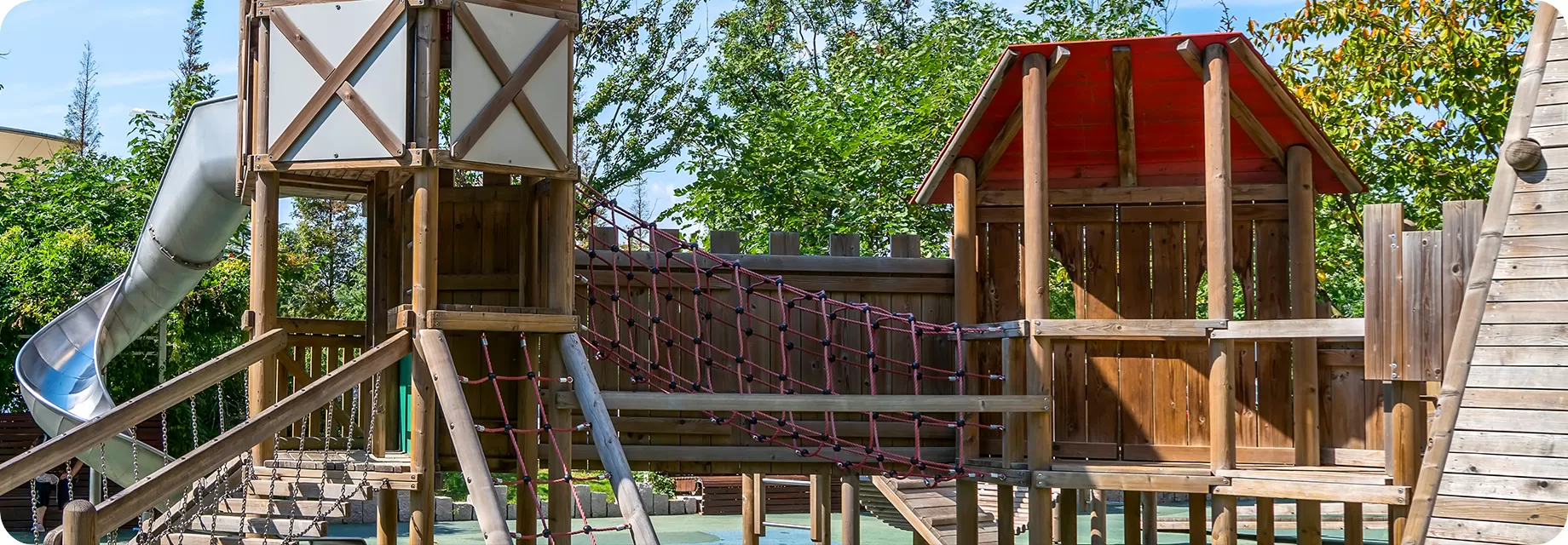
Compare structural, panel, slide, rope, hardware and surfacing materials against exposure and maintenance conditions.
A commercial playground is a system of different materials: structure, panels, slides, roofs, ropes, platforms, fasteners and surfacing. Each component should be reviewed against climate, corrosion, UV, heat, moisture, chemicals, wear, cleaning and replacement access.
Do not rely on a general statement that one material is “best.” Confirm the actual grade, thickness, finish, hardware and product scope listed in the quotation and applicable documents.
Climate and UV exposure
Coastal, pool or chemical environment
User load and wear intensity
Cleaning and inspection capacity
Desired visual character
Replacement-part strategy
Applicable procurement requirements
| Component | Common material direction | Buyer should verify |
|---|---|---|
| Main structure | Coated steel, stainless steel or other specified structural system | Dimensions, protective finish, connection details and exposure suitability |
| Panels and barriers | HDPE sheet, coated metal, engineered plastics or wood-based components | Thickness, edge treatment, colour, UV exposure and fixing method |
| Slides and moulded parts | Rotomoulded plastic, stainless steel or specified alternatives | Component shape, finish, heat exposure, drainage and quoted grade |
| Ropes and nets | Reinforced rope systems with defined connectors | Construction, abrasion points, tensioning, inspection and replacement method |
| Platforms and access | Coated metal, engineered panels, anti-slip systems or other specified surfaces | Surface condition, drainage, fixings, cleaning and wear areas |
| Fasteners and fittings | Specified metal grades and protective finishes | Location, exposure, compatibility, tightening and inspection access |
| Impact surfacing | EPDM, rubber systems, artificial grass systems, loose fill or local alternatives | Applicable performance, thickness, substrate, drainage, installer and test scope |
Review surface temperature, colour choice, UV exposure, shade, user contact and realistic appearance change.
Review salt exposure, drainage, coating damage, dissimilar metals, inspection frequency and touch-up responsibility.
Review chemicals, constant moisture, stainless grade where specified, fasteners, drainage and cleaning products.
Review water retention, freeze-thaw exposure, slip risk, timber moisture details and seasonal inspection.
Prioritize replaceable wear areas, vandal resistance, cleaning access, fastener inspection and parts identification.
Balance the desired timber or natural appearance with moisture control, checking, finish renewal and lifecycle expectations.
Component name and drawing reference
Material type and specified grade
Thickness or dimension where relevant
Protective coating or surface finish
Colour reference
Fastener and connector information
Cleaning and maintenance guidance
Touch-up or repair method where applicable
Replacement-part identification
Scope of certificates or test reports
A management-system certificate or general material statement does not by itself verify every component in a custom configuration. Confirm the quoted product and document scope.
No single material decision covers the whole structure. Review each component, grade, coating, fastener, drainage detail and maintenance plan against salt, humidity and direct exposure.
No. Thickness, formulation, finish, colour and application can differ. Confirm the quoted panel or component specification rather than relying only on the material name.
Wood-based designs can be suitable when the product, treatment, detailing, moisture exposure, inspection and maintenance plan fit the project. Confirm the exact quoted material and finish.
Not automatically. Ask which model, configuration, material and documented scope the report represents, and review changes with the responsible project parties.
Send the destination, climate, exposure, usage and maintenance expectations so component choices can be reviewed in context.
Practical guidance from playground planning, manufacturing, delivery and completed project experience.
Buying Guide
 Buying Guide
 Factory & Production