
For custom playground equipment, production is only one part of the project. Before the equipment is packed and shipped, many important details still need to be checked, including structure matching, dimensions, slide direction, platform connection, accessories, hardware, packing sequence, and installation logic.
This is why factory trial assembly is important, especially for non-standard outdoor playground equipment, themed playgrounds, large combination slides, tree house playgrounds, stainless steel slides, and overseas custom projects.
A playground may look complete in a 3D rendering, but the real product still needs to be checked in the factory before delivery. Trial assembly helps the manufacturer confirm whether key parts match the design and whether the project can be installed more smoothly after arrival.
This article explains why playground equipment needs factory trial assembly before delivery and what buyers should pay attention to.
Last updated: July 12, 2026 · Updated by: ZZRS Content Team
Factory trial assembly is a factory check of the main playground structure and critical connections before packing. It does not always mean that the complete project is installed exactly as it will appear on site. Custom, non-standard, themed, large, or structurally complex projects are more likely to need key-structure or partial assembly. A mature standard product may only require component, dimension, hardware, and accessory checks. The appropriate scope depends on structural complexity, customization, installation conditions, and the project requirements agreed with the buyer.
Trial assembly scope varies by project.
Standard repeat products may not need complete assembly.
Custom connections and changed slide directions deserve additional checking.
Photos and measurements can document key checks when required.
Trial assembly reduces avoidable installation issues but cannot replace site preparation or professional installation.
.png "Custom playground factory trial assembly")
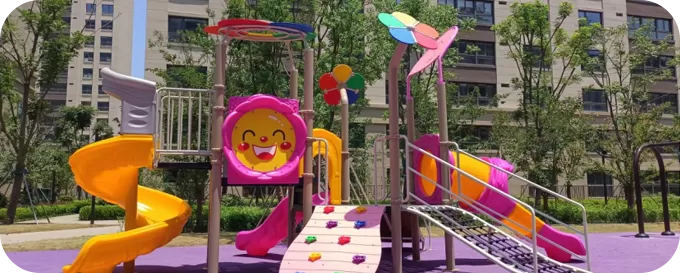
Factory trial assembly of a custom playground structure to check key connections before packing.
Factory trial assembly means checking and assembling key playground components in the factory before shipment. It is not always the same as fully installing the entire playground exactly as it will appear on site. For large or complex projects, the factory may assemble the main structure, key platforms, slides, connection points, special components, and important custom parts to verify whether they match the design.
The purpose of trial assembly is to make sure the equipment can be installed correctly after delivery.
For custom playground equipment, trial assembly may include checking:
Main posts and platforms
Slide direction and connection points
Climbing nets and rope structures
Panels, roofs, and decorative parts
Tube slides and spiral slides
Stainless steel slide sections
Bolts, screws, and hardware
Custom themed components
Installation sequence
Component labels
Packing list and accessory list
Trial assembly is especially helpful when the playground is not a standard product. For example, a forest-themed playground, ocean-themed playground, tree house slide, large non-standard outdoor play structure, or custom resort playground may include special shapes and different connection methods.
Without factory checking, small problems may only appear after the equipment arrives at the project site. At that stage, solving them may take more time and communication.
Custom playground projects are different from standard products. The size, color, layout, theme, platform height, slide direction, and play functions are often adjusted according to the buyer’s site.
This means the factory needs to make sure that the actual components match the confirmed design.
For overseas buyers, trial assembly is even more important because the installation is often handled by a local team. The local workers may not be familiar with the structure, and the buyer may rely on installation drawings, videos, and online guidance. If the factory checks the main structure before delivery, it can reduce possible confusion during installation.
Trial assembly can help confirm:
Whether the product size matches the design
Whether special components can be installed correctly
Whether the slide direction is correct
Whether platforms and posts match each other
Whether the climbing parts fit the structure
Whether the themed decorations match the layout
Whether the hardware is complete
Whether the installation order is reasonable
Whether the packing can follow the installation logic
For custom outdoor playground equipment, this process helps reduce risks before shipping.
During factory trial assembly, the manufacturer does not only check whether the playground “looks right.” The factory needs to review structure, dimensions, connection points, accessories, safety-related details, and installation logic.
The first step is to check whether the main structure matches the design drawing. Posts, platforms, beams, ladders, bridges, panels, and slides should fit together correctly.
If the playground includes special shapes or customized structures, these parts need more attention.
Platform height affects slide length, guardrail position, climbing route, fall height, and installation planning. During trial assembly, the factory can check whether platform height and connection position are consistent with the confirmed design.
For kindergarten, school, park, resort, and community playgrounds, platform height should match the target age group and project requirements.
Slides are one of the most important parts of playground equipment. The slide direction, entrance position, exit area, and connection points should be checked carefully.
This is especially important for tube slides, spiral slides, stainless steel slides, and custom slides.
For themed playground equipment, decorative panels, roofs, animal shapes, tree house elements, ocean elements, and other custom parts should match the overall layout.
Trial assembly helps confirm whether these parts are installed in the correct position.
Climbing nets, rope bridges, tunnels, and balance routes need correct tension, position, and connection. If these parts are not checked in advance, installation on site may take more time.
Bolts, screws, fasteners, clamps, covers, labels, and small accessories should be checked before packing. Missing hardware can delay installation, especially for overseas projects.
The factory can also review the installation sequence during trial assembly. This helps prepare clearer installation drawings and component labels for the buyer.
A good installation sequence can save time and reduce confusion for the local installation team.
For overseas playground projects, the equipment may travel a long distance before arriving at the site. Once the product is shipped, any missing part or unclear structure can be difficult to solve quickly.
Factory trial assembly helps overseas buyers in several ways.
First, it helps identify possible issues before delivery. If a component needs adjustment, the factory can correct it before packing.
Second, it helps the factory prepare better installation guidance. When the structure is checked in the workshop, the manufacturer can understand which parts need clearer labels, drawings, or photos.
Third, it helps reduce installation delays. Local installation teams can work more efficiently if the parts are organized, labeled, and matched with the drawings.
Fourth, it improves communication. Buyers can receive trial assembly photos or videos to better understand the structure before the goods arrive.
For custom playground equipment, trial assembly is not just a factory step. It is part of project risk control.
Themed and non-standard playgrounds usually need more trial assembly checking than simple standard products.
For example, a forest-themed playground may include tree house structures, animal decorations, climbing nets, curved bridges, wooden-look panels, and different slide types. An ocean-themed playground may include wave shapes, blue color structures, tube slides, and special decorative elements. A large resort playground may include irregular layouts and multiple activity routes.
These designs are more attractive, but they also require more technical coordination.
Trial assembly can help check:
Whether custom shapes fit the main structure
Whether decorative parts match the theme design
Whether curved or irregular components connect properly
Whether children’s movement routes are smooth
Whether the layout matches the confirmed 3D design
Whether large components can be packed and shipped properly
For non-standard playground equipment, the factory should not only focus on appearance. The product should also be practical for production, packing, shipping, installation, and long-term use.
After trial assembly and inspection, the playground equipment needs to be disassembled, classified, packed, and prepared for shipment.
Good packing is important for international projects. Outdoor playground equipment usually includes many separated parts, such as posts, platforms, slides, panels, roofs, climbing parts, ropes, nets, and hardware. If the packing is not clear, the installation team may spend more time identifying parts.
After trial assembly, the factory should prepare:
Component classification
Packing list
Hardware list
Labels or part numbers
Protection for plastic parts
Protection for painted metal parts
Packing photos if needed
Container loading plan
Installation drawings
Online installation support information
For overseas buyers, clear packing and labeling can make installation easier and reduce unnecessary communication after the goods arrive.
ZZRS Amusement Equipment Co., Ltd. manufactures commercial playground equipment in Wenzhou, Zhejiang, China. Depending on the project, support may include site-information review, custom design, 3D concept development, production planning, key-structure checking, component labeling, packing coordination, and installation guidance.
The required checking level should be agreed for the selected structure. A custom or modified project may need more factory verification than an unchanged standard configuration.
Before production starts, buyers can ask the manufacturer several questions to confirm whether the project will be checked properly.
Useful questions include:
Will the main structure be checked before delivery?
Is factory trial assembly needed for this project?
Can the factory provide trial assembly photos or videos?
How will the components be labeled?
Will the hardware be packed separately?
Are installation drawings included?
Can local workers install the playground with drawings and online guidance?
What should be checked before installation on site?
How are missing or damaged parts handled after delivery?
These questions help buyers understand the supplier’s production and delivery process more clearly.
| Project Type | Typical Checking Level | Reason |
|---|---|---|
| Standard catalog product | Component or partial checking may be sufficient | The structure has already been standardized |
| Modified standard product | Partial trial assembly may be recommended | Size, height, or direction has changed |
| Custom themed playground | Key-structure trial assembly is often appropriate | Custom parts and decorations require matching |
| Large combination playground | Main structure checking may be required | Multiple platforms and activity routes connect |
| Stainless steel slide project | Section and support-point checking may be needed | Curves and connections can be project-specific |
| Rope or climbing structure | Position and connection checking may be needed | Attachment points must match the approved layout |
| Indoor soft play project | Module and layout checking depends on the design | Site height and access can restrict the layout |
| Repeat order with unchanged structure | Full assembly may not always be necessary | The same configuration may have been checked previously |
Trial assembly scope should be confirmed according to the structure, customization level, installation conditions, and agreed project scope. The decision starts with the approved custom playground equipment design process and production information.
| Inspection Area | What Is Checked | Possible Record |
|---|---|---|
| Main structure | Posts, beams, and platforms | Photos and measurements |
| Dimensions | Overall size and platform arrangement | Measurement record when required |
| Slide direction | Entry, connection, and exit orientation | Photos or marked drawing |
| Connection points | Holes, brackets, and alignment | Inspection notes |
| Panels and roofs | Position and fit | Photos |
| Rope components | Position and connection | Photos when required |
| Hardware | Type, quantity, and matching | Hardware checklist |
| Custom decoration | Shape, position, and fit | Comparison with the approved concept |
| Installation sequence | Assembly logic | Installation notes |
| Component labels | Matching part numbers | Label record |
| Packing preparation | Classification after disassembly | Packing list |
Records may include photos, measurements, notes, or short videos when required. They do not replace third-party inspection unless that service is separately agreed. Related production steps are explained in how playground equipment is manufactured in the factory.
No. A standardized, repeatedly produced structure may be checked through dimensions, components, hardware, and accessories without assembling the complete product. The checking scope should be reassessed when the size, platform arrangement, slide direction, themed parts, or main structure changes. Trial assembly is a factory verification step; it is not the same as final installation on prepared foundations.
Typical process: Identify the issue → Compare it with the approved drawing → Confirm the required correction → Adjust or remake the component → Recheck the connection → Update the relevant drawing or label when required → Confirm before packing.
Possible findings include a mounting-hole mismatch, incorrect slide direction, component interference, missing bracket, decoration-position mismatch, label mismatch, or an unclear installation sequence. Trial assembly reduces avoidable installation problems, but it does not replace proper site preparation, foundation work, or professional installation.
Depending on the agreed project scope, buyers may request overall assembly photos, close-up connection photos, slide-direction photos, platform and post photos, component-label photos, hardware-package photos, a short inspection video, comparison with the approved layout, or packing photos after disassembly. Availability should be confirmed for the selected structure; not every order includes a formal third-party report.
For applicable requirements and document scope, review applicable playground standards and documentation. A verified trial-assembly video would add useful evidence to this article, but no video is embedded until a matching source is confirmed.
Photograph or record critical structures when required.
Confirm component positions against the approved information.
Disassemble the checked structure in a controlled sequence.
Number the main components.
Classify hardware and small accessories.
Match labels with drawings or installation references.
Protect coatings, plastic parts, and special components.
Prepare the packing list.
Arrange components for container loading.
Provide the agreed information to the installation team.
The next stage is component labeling, packing, and shipping, followed by the agreed installation drawings and technical guidance. Trial assembly is especially relevant for custom themed playground structures and other non-standard playground projects.
It is a factory check of major structures, connections, directions, components, and installation logic before packing.
No. The scope depends on the product's maturity, customization, structure, and project requirements.
No. It is a controlled factory check and does not include final foundations, surfacing, or site conditions.
Photos or videos can be prepared when required and included in the agreed project scope.
Checks may cover structures, dimensions, slide direction, connections, panels, ropes, hardware, labels, and assembly sequence.
The structure is confirmed, disassembled, labeled, protected, and prepared for packing.
No. It reduces avoidable factory-related mismatches but cannot replace accurate site work and proper installation.
Factory trial assembly is an important step for many custom playground equipment projects. It helps check structure, dimensions, slide direction, platforms, accessories, hardware, installation logic, packing preparation, and project feasibility before delivery.
For overseas buyers, trial assembly can reduce installation confusion and help the local team understand the playground structure more clearly after the equipment arrives.
A good playground project is not only about design and production. It also needs careful checking, packing, shipping, installation guidance, and after-sales communication.
Ask our team whether full or partial factory trial assembly is suitable for your selected structure and project requirements.