 Buying Guide
Compare 10 Canadian playground equipment manufacturers and suppliers by manufacturing evidence, product focus, regional support, CSA documentation and project fit.
Read insight


To choose a reliable playground equipment manufacturer in China, verify the supplier’s actual production scope, material specifications, safety-document support, design process, quality controls, export packing and installation assistance. Compare price only after every supplier is quoting the same configuration, materials, trade term and service scope. Evidence tied to the product you plan to buy is more useful than a large catalogue or a general certificate claim.
Last reviewed: August 4, 2026 · Substantially updated as a buyer verification checklist.
Start with one written project brief, then ask each shortlisted supplier for factory evidence, a project-specific layout, an itemized specification and a quotation with clear inclusions and exclusions. Check the legal contracting company, factory address, applicable report scope, drawing revision, quality-control steps, packing plan, installation documents and after-sales contact before paying a deposit.
This page is a step-by-step selection checklist. If you are still building a supplier shortlist, first review the types of outdoor playground equipment manufacturers in China. It explains supplier categories; this checklist explains how to verify and compare individual suppliers.
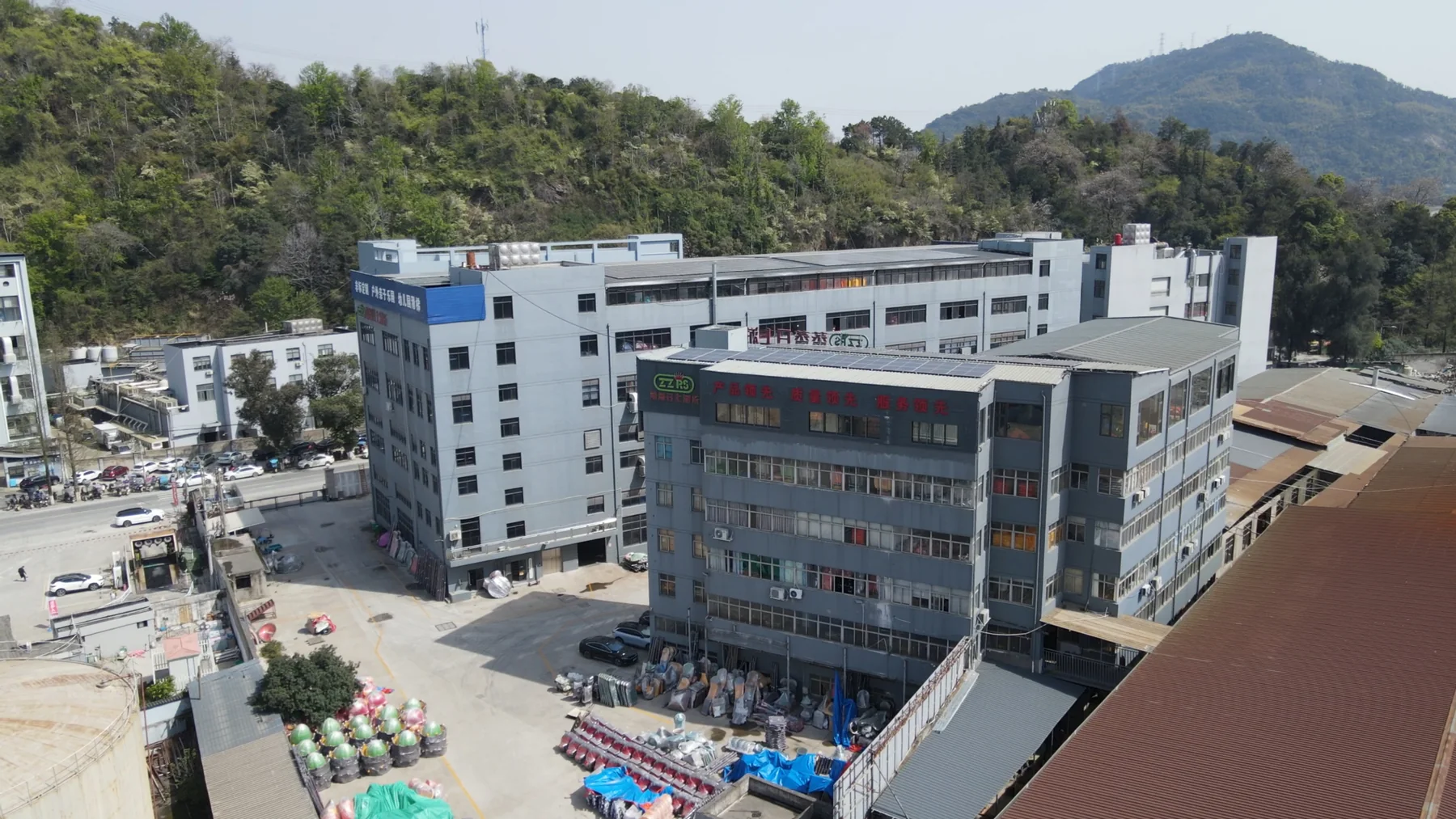
First-party factory evidence should help buyers connect a supplier’s legal identity, address and production scope to the order under review.
A useful comparison starts before the first quotation. Send the same written brief to every supplier so layouts and prices are based on the same site, users and responsibilities.
| Project information | What the buyer should provide | Why it matters |
|---|---|---|
| Site size and boundaries | Measured length and width, CAD/PDF plan or dimensioned sketch, plus photos | Defines the usable design area and access constraints |
| Project type | School, kindergarten, park, community, resort, commercial venue or another application | Helps the supplier propose a relevant product direction |
| Target users | Intended age groups, expected use pattern and supervision context | Supports age-zone and activity planning |
| Environment | Indoor/outdoor use, climate, coastal exposure, shade, drainage and ground conditions | Affects materials, finishes, surfacing and maintenance questions |
| Destination | Country, delivery location or port, and known tender or approval requirements | Guides document, packing and trade-term discussions |
| Design direction | Preferred theme, colors, play functions and reference images | Separates required functions from optional decoration |
| Commercial scope | Budget range, desired schedule, trade term and installation plan | Prevents suppliers from quoting materially different scopes |
For a quotation-ready brief, use the playground equipment quotation information checklist.
Factory status does not prove reliability by itself, but buyers should know who manufactures the equipment and who accepts contractual responsibility. Compare the legal company name on the registration, quotation, contract, invoice and payment account. If an affiliated export company is involved, ask for the relationship and responsibilities in writing.
Legal business name, registration information and registered address.
Factory address and the name of the entity operating the facility.
Current workshop photos and production videos, preferably date-stamped.
A live video walkthrough that moves from raw-material storage to work in progress, inspection and packing.
The equipment categories actually produced at that site and any subcontracted categories.
Production-stage records relevant to the proposed product.
Trial-assembly records when trial assembly is included or needed.
Packing, package-label and container-loading evidence.
During a live walkthrough, ask the host to follow one component through several stages instead of showing only a showroom. Buyers can use the playground equipment production process as a review map.
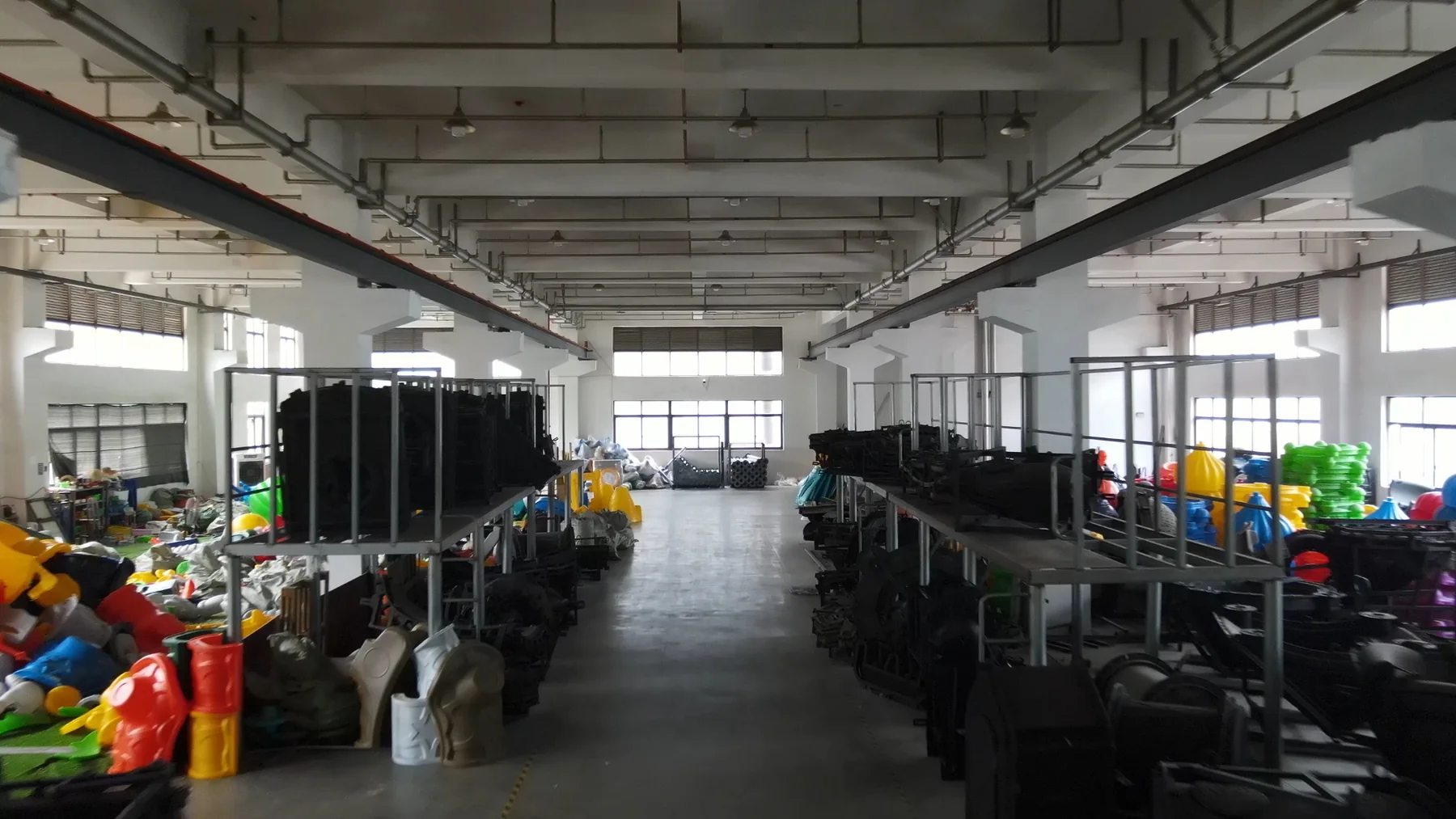
A current workshop view is one piece of evidence; it should be considered together with company records, drawings, specifications and order-specific production information.
A direct manufacturer and a trading company can both be valid sourcing partners. The better choice depends on whether the project needs direct technical communication for one main product category or consolidation across several factories and categories.
| Review point | Direct factory | Trading or sourcing company | What the buyer must verify |
|---|---|---|---|
| Manufacturing | May manufacture the main playground structure directly | May source from one or more factories | Who makes each category and where |
| Technical communication | Can offer a shorter path to design and production teams | May coordinate technical information across suppliers | Who approves drawings and specification changes |
| Mixed-category orders | May purchase categories outside its main scope | May be structured for consolidation | Control of subcontracted products and documents |
| Contract and payment | May contract through the factory or an affiliated export entity | Usually contracts through the trading entity | Legal seller, payment beneficiary and warranty responsibility |
| Inspection and support | May coordinate directly with its workshop | May provide supplier management or third-party coordination | Written inspection, packing, installation and after-sales scope |
Do not reject a supplier only because it is a trading company, and do not approve a supplier only because it calls itself a factory. Use the same evidence standard for either model. See the detailed factory vs trading company comparison.
A supplier with a broad catalogue is not automatically the best match. Ask for evidence related to the product family and site type you are actually buying.
Standard outdoor playgrounds: review modular configurations, parts consistency and installation documentation.
Custom-themed playgrounds: review site-based design, revision control, structural coordination and trial-assembly planning.
Kindergarten and school playgrounds: review age zoning, circulation, supervision context and site-specific requirements.
Public park and community projects: review public-use conditions, surfacing coordination, maintenance access and replacement-part planning.
Stainless steel slides: review the application, support structure, slide geometry, surface-temperature considerations and installation interface.
Indoor soft play: review building dimensions, fire and facility requirements, access, installation sequence and local approvals.
Freestanding play: review foundations, safety area, selected activity and compatibility with the wider site plan.
Ask each supplier which parts of the proposed order fall inside its core manufacturing scope and which parts are sourced elsewhere.
Descriptions such as “high-quality steel” or “environmental plastic” are not adequate for a commercial comparison. Request the specification for the exact quoted configuration and record any item still subject to approval.
| Component | Information the buyer should request | Useful supporting evidence |
|---|---|---|
| Main posts and steel | Material, outside dimensions, wall thickness, galvanizing or other treatment, finish and project-specific corrosion considerations | Drawing, written specification and relevant production records |
| Platforms and stairs | Construction, thickness where applicable, drainage, surface treatment and slip considerations | Section detail and finish description |
| Plastic parts | Plastic type, manufacturing process, nominal thickness or grade where specified, UV considerations and color confirmation | Component data, sample or product-specific record |
| Panels | HDPE or other specified material, thickness, edge treatment and attachment method | Panel drawing and material description |
| Fasteners | Material, corrosion protection, covers, locking method and replacement information | Parts list and connection detail |
| Ropes and nets | Rope construction, connectors, intended application, tensioning and replacement method | Detail drawing and material description |
| Surfacing | Whether included, proposed system, thickness basis, sub-base assumptions and local installation scope | Separate surfacing specification and quotation line |
Material suitability depends on the selected model, environment, maintenance plan and destination requirements. Avoid transferring one product’s specification to every product in a supplier’s catalogue.
EN 1176, ASTM F1487 and other standards may be relevant depending on the destination, product and project requirements. A certificate logo or general compliance statement does not prove that every configuration is covered.
Request the issuing body, report number, standard edition, tested product or model range, date and stated limitations. Compare that scope with the quotation and approved drawing. If the configuration changes, ask whether the change affects the document scope.
Share the destination, tender wording and authority requirements before ordering.
List the required documents as quotation deliverables.
Confirm whether documents relate to the manufacturer, a management system, a material or the specific product.
Use qualified local professionals or authorities when project approval requires them.
Use the playground safety standards, test reports and certification guide to organize the document review.
Custom design should be a controlled process, not a promise that “anything is possible.” Ask how site information becomes an approved production package and who controls revisions.
Review of site dimensions, access, photos and project constraints.
Layout showing the equipment footprint, circulation and relevant safety area.
3D rendering for visual review.
Age-zone and activity planning appropriate to the project brief.
Theme, color and selected-function adjustments.
Structural and connection confirmation for the selected configuration.
A final drawing or production-release package with date and revision.
The quotation, specification, component list and installation documents should refer to the same approved revision. Review the custom playground design process for a more detailed workflow.
Ask the supplier to describe the checks used for your order and what records will be available. Avoid assuming that one inspection label covers every production stage.
Incoming-material identification and checks appropriate to the order.
Production-stage dimensional and component checks.
Welding, edge, connection and finish checks relevant to the selected product.
Coating or surface-treatment review where applicable.
Component matching against the current drawing and parts list.
Full or partial trial assembly when required by the product or agreed project scope.
Final component count, condition review and packing inspection.
Corrective-action and written change-control process.
Trial assembly can help confirm interfaces, quantities, visual coordination and labeling for complex or customized equipment. It is not necessary in the same form for every standard product, so define the scope before ordering.
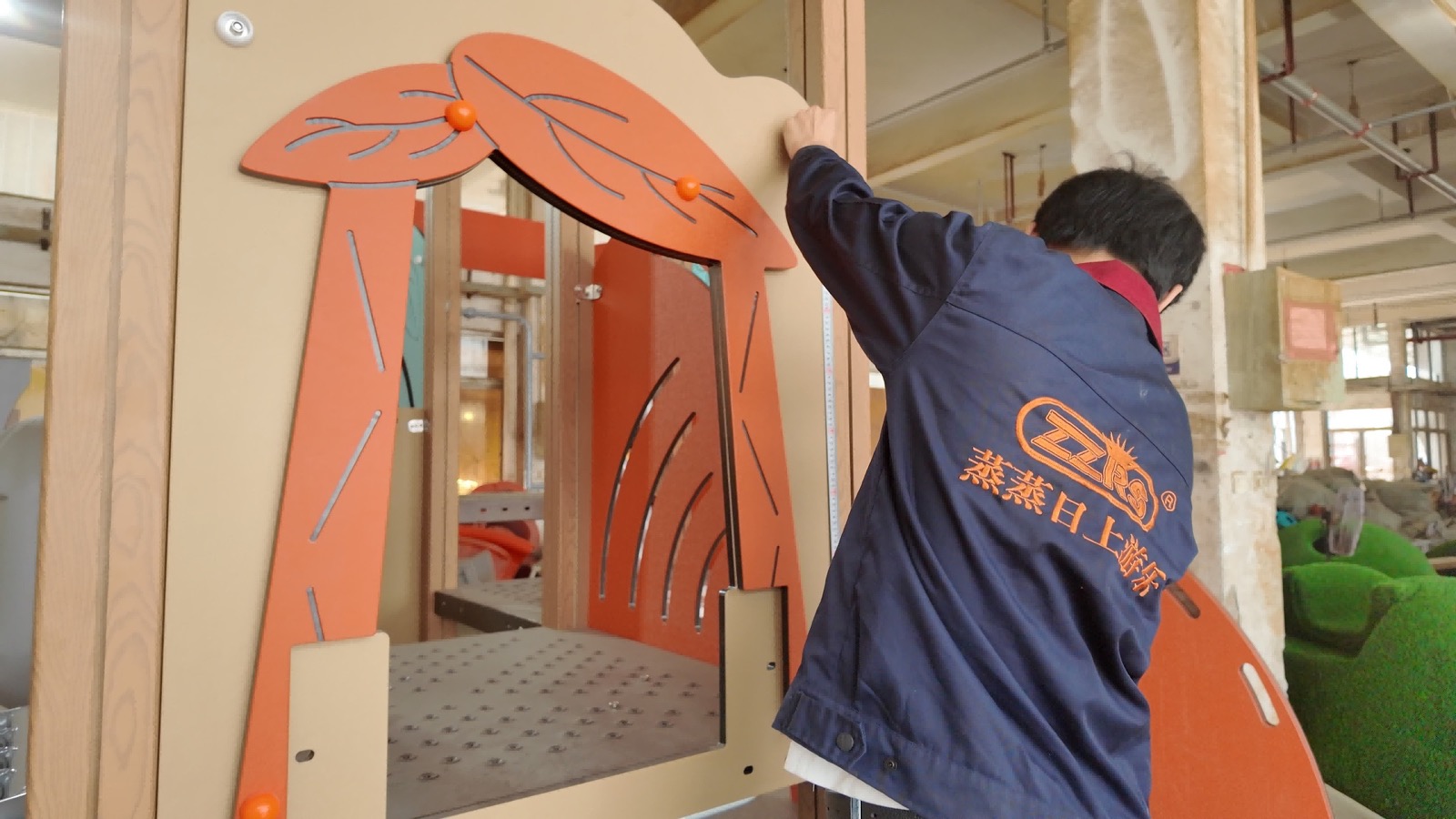
Factory trial assembly may be used for project-specific interface and component checks before disassembly and packing.
See when playground equipment factory trial assembly may be appropriate.
A quotation comparison is meaningful only when suppliers are pricing the same layout, materials, trade term and responsibilities. Normalize the scope before deciding that one offer is cheaper.
| Comparison item | Supplier A | Supplier B | What to verify |
|---|---|---|---|
| Product configuration | Record model/revision | Record model/revision | Same layout, quantities, activities and dimensions? |
| Material specifications | Record exact scope | Record exact scope | Same post, platform, plastic, panel, rope and fastener basis? |
| Design service | Included / separate | Included / separate | Layout, rendering, revisions and production drawing included? |
| Documents | List deliverables | List deliverables | Same report, drawing, packing and installation-document scope? |
| Trial assembly | Scope and record | Scope and record | Required, optional or not included? |
| Packing | Method and scope | Method and scope | Export packing, labels and packing list included? |
| Trade term | EXW / FOB / CIF / other | EXW / FOB / CIF / other | Same named place or port and same freight responsibilities? |
| Installation support | List deliverables | List deliverables | Foundation drawing, assembly drawing, parts list and remote support? |
| Spare parts | Included / optional | Included / optional | Which parts, quantities, price and freight responsibility? |
| Exclusions | Record clearly | Record clearly | Surfacing, foundations, unloading, local labor, tools, travel or taxes excluded? |
Keep open questions beside the table and require written clarification. Do not rely on screenshots of chat messages as the final scope of supply.
Commercial playground equipment is generally shipped in classified components for on-site assembly. Ask how finished surfaces are protected, how hardware is grouped, how labels correspond with the drawings and how the final packing list is prepared.
Preliminary packing approach and final package count.
Component labels linked to drawings or parts lists.
Container plan based on the final configuration and longest components.
Agreed EXW, FOB, CIF or other trade-term responsibilities.
Foundation and assembly drawings.
Hardware and component lists.
Unloading, temporary storage and installation assumptions.
Process for reporting transport damage or missing parts.
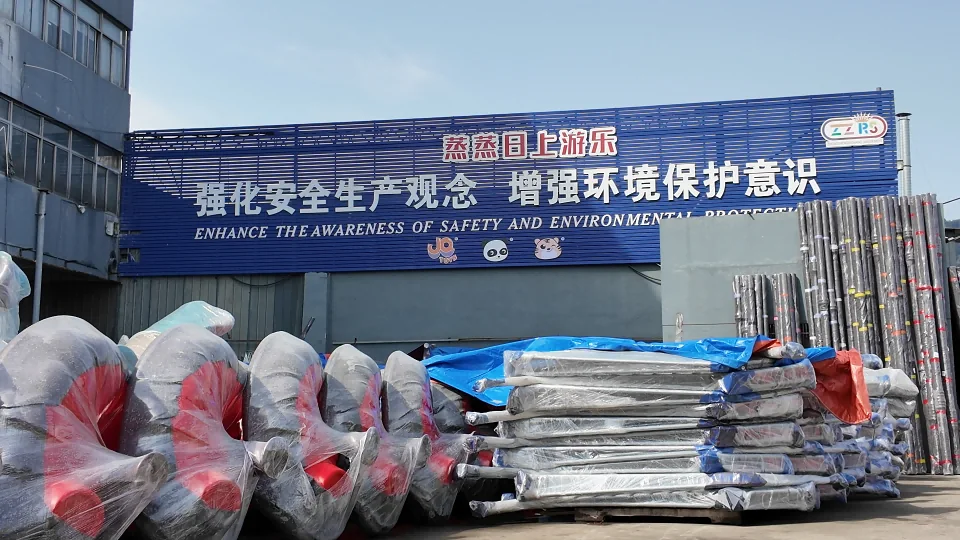
Classified export packing should protect components and help the receiving team match packages to the installation information.
Read how playground equipment is packed and shipped from China, then confirm the exact packing and freight scope in the quotation. The local team should also review playground installation preparation before dispatch.
Provides product photos but will not provide a project-specific specification.
Avoids showing the current factory address, workshop or relevant production process.
Quotation, drawing and specification refer to different models, dimensions or revisions.
Uses the same certificate claim for every product without explaining model scope or limitations.
Cannot explain which parts are manufactured directly and which are subcontracted.
Changes materials, configuration or commercial terms without written confirmation.
Cannot explain packing labels, installation documents or the missing-part process.
Offers an unusually low price but will not identify the differences, exclusions or reduced scope.
Requests payment to a beneficiary that does not match the contract without a documented explanation.
Describes design, installation and warranty only as “no problem” rather than a written deliverable.
What is the legal name of the contracting company and payment beneficiary?
Where will the main playground structure be manufactured?
Which parts of this order are produced directly and which are sourced from other factories?
What project information do you need before preparing the layout and quotation?
What exact materials, dimensions, finishes and components are included?
Which test reports or certificates apply to this model and configuration?
How are drawing revisions approved and released to production?
What quality-control stages and records apply to this order?
Is trial assembly required, and what will be assembled and recorded?
How will components, hardware and packages be labeled?
Which installation drawings, parts lists and technical-support services are included?
What are the trade term, exclusions, spare-parts arrangement and after-sales process?
ZZRS Playground is the brand used by ZZRS Amusement Equipment Co., Ltd. For a project-specific proposal, the working scope can include:
Review of site dimensions, photos, access and intended application.
Custom layout development and 3D rendering.
Written confirmation of the selected configuration and material scope.
Production coordination against the approved project information.
Trial assembly when required by the product or agreed order scope.
Classified packing and component identification.
Installation drawings and online technical communication according to the quotation.
Export-project coordination for the agreed trade term and destination information.
Final materials, report availability, trial-assembly scope, packing, freight, installation support and after-sales responsibilities are confirmed for the selected product and written quotation. Review more first-party process evidence on the ZZRS manufacturing and quality-control page.
The legal seller, payment beneficiary and warranty contact are documented.
The factory and actual manufacturing scope have been verified.
The approved drawing, specification and quotation use the same revision.
Materials and product configuration are written, not implied by catalogue photos.
Safety-document requirements and report scope have been checked.
Quality-control and trial-assembly requirements are defined.
Packing, labels, freight term and installation documents are included in the scope.
Exclusions, spare parts, after-sales contacts and change procedures are clear.
Check the legal company and factory addresses, request current workshop and production evidence, conduct a live video walkthrough and compare what you see with the proposed product. For higher-risk projects, consider a qualified independent audit or pre-shipment inspection.
Choose according to the order. A direct factory may suit a project needing close design and production communication for one main category. A capable trading company may suit a mixed order requiring several factories. Verify the legal seller, actual manufacturer, technical control and responsibilities in either case.
Provide measured site dimensions, photos or drawings, project type, target age groups, destination, preferred activities and theme, budget range, schedule, required documents, trade-term preference and installation plan.
Requirements depend on the destination, product, tender and approval authority. EN 1176 and ASTM F1487 may be relevant in some markets, but buyers should verify the standard edition, tested model scope and limitations against the selected configuration.
Layout, colors, theme and selected activities can often be adjusted after the supplier reviews the site and technical requirements. Every change should appear in the approved drawing, specification and quotation before production.
Normalize the layout, dimensions, activities, materials, document scope, packing, trade term, installation support, spare parts and exclusions. Compare the total agreed scope rather than an isolated equipment price.
Not for every product. It can be useful for complex or custom structures to check interfaces, quantities, visual coordination and labels. Agree on whether assembly is full or partial and what records will be provided.
The agreed scope may include foundation drawings, assembly drawings, component labels, parts or hardware lists and remote technical communication. If on-site supervision is offered, define travel, local labor, tools, duration and responsibility in writing.
Send your site dimensions, destination, intended users, preferred activities, design direction, budget range and installation plan. Contact ZZRS to request a project-specific layout and quotation that can be reviewed against this checklist.
Practical guidance from playground planning, manufacturing, delivery and completed project experience.
Buying Guide
 Buying Guide
 Factory & Production