
Last updated: July 2026
“Wood vs plastic playground equipment” sounds like a simple material choice, but commercial playgrounds rarely consist of only one material. A wood-themed structure may contain steel connections, ropes and plastic slides. A colorful plastic playground commonly depends on steel posts and platforms. Buyers should compare the exact structural system, component material, climate exposure and maintenance plan—not only the visual category.
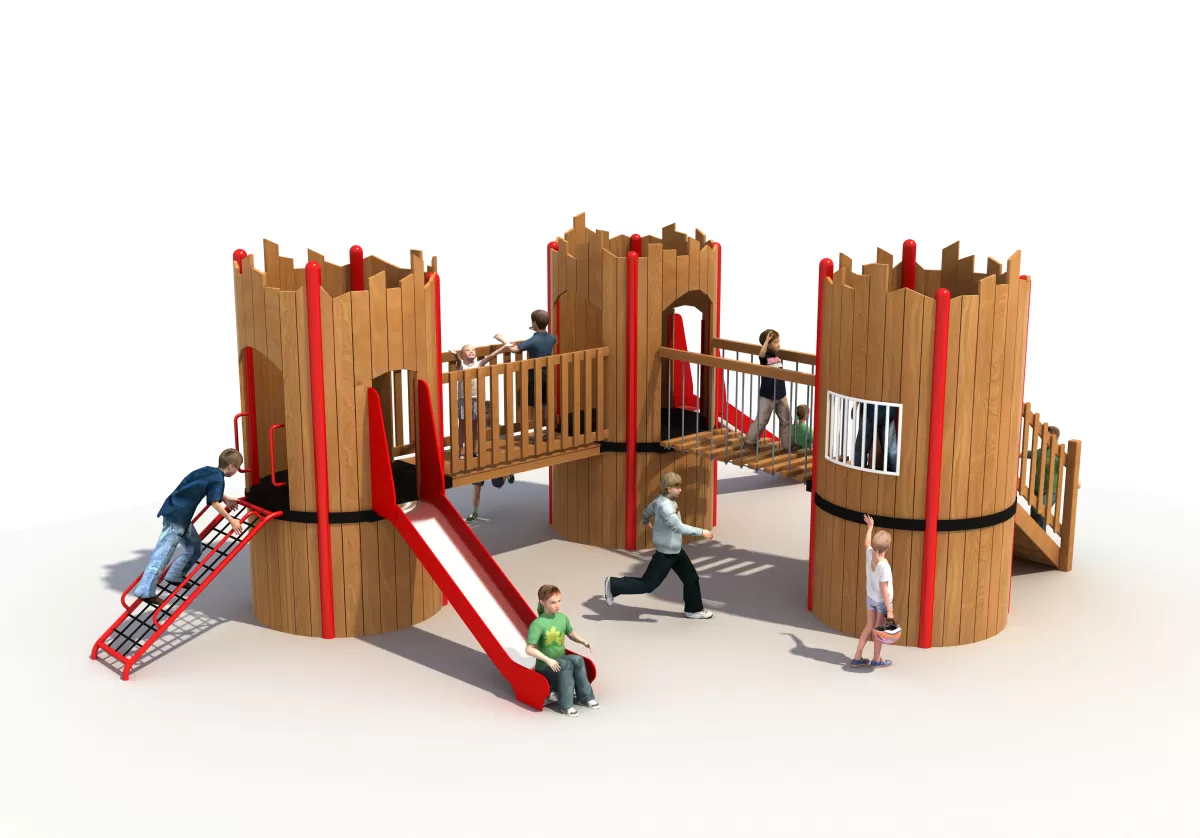
The best specification is the one that fits the design intent, environment, users and maintenance resources of the project.
Wood may refer to naturally durable timber, treated softwood, hardwood, laminated members or wood-plastic composite. These products do not share the same strength, moisture behavior, surface texture or maintenance needs. Ask for the species or product type, grade, treatment method, preservative information, moisture controls, finish and structural dimensions relevant to the design.
Plastic may refer to rotationally molded LLDPE components, HDPE panels, composite boards or smaller engineered parts. Slides and roofs can use a different plastic from flat activity panels. Ask for the material type, grade, UV specification, construction method, thickness or structural design where relevant, color and method of attachment.
Then identify the load-bearing system. In many playgrounds, the main posts, decks and connectors are steel even when the visible design is described as plastic or wood-themed.
| Project factor | Natural or engineered wood components | Molded plastic or plastic panel components |
|---|---|---|
| Visual character | Warm, textured and closely associated with landscape settings | Colorful, smooth and suitable for repeatable themed forms |
| Variation | Natural variation depends on species and finish | More consistent molded shape and color within production tolerances |
| Environmental concerns | Moisture, checking, decay, insects and coating condition | UV exposure, heat, fading, cracking and deformation |
| Inspection focus | Splinters, cracks, rot, loose connections and ground contact | Cracks, sharp damage, worn attachments, heat and color change |
| Design role | Can be structural or decorative depending on specification | Often slides, roofs, panels and enclosures supported by a structural frame |
Wood is frequently selected for parks, resorts and landscape-led projects because its grain and muted palette can sit quietly within planting and natural materials. It can also support a less prescriptive style of play when used for logs, balance elements and climbing forms.
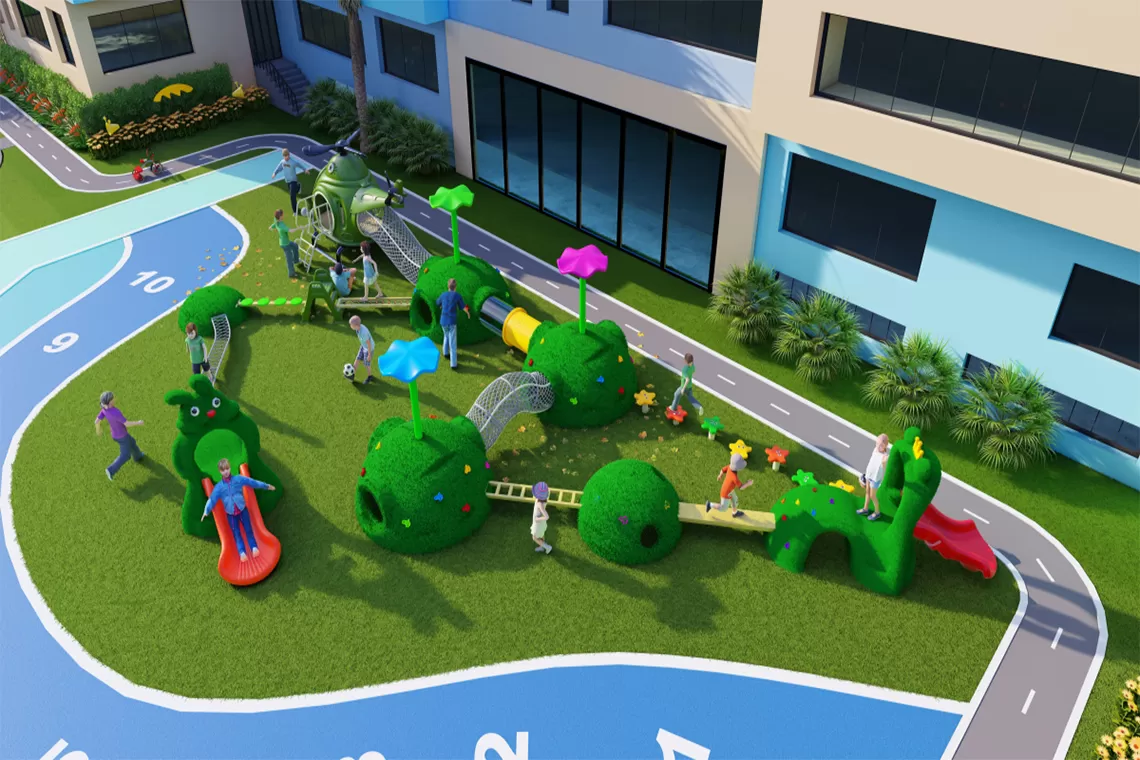
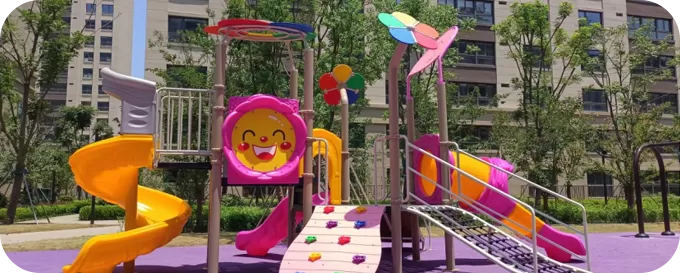
Plastic components allow large curved slides, tunnels, roofs and recognizable decorative shapes. They suit projects that want strong color coding, animal or transport themes, or easy-to-recognize activity zones. Themed appearance does not determine structural quality; the supporting system and connections must be reviewed separately.
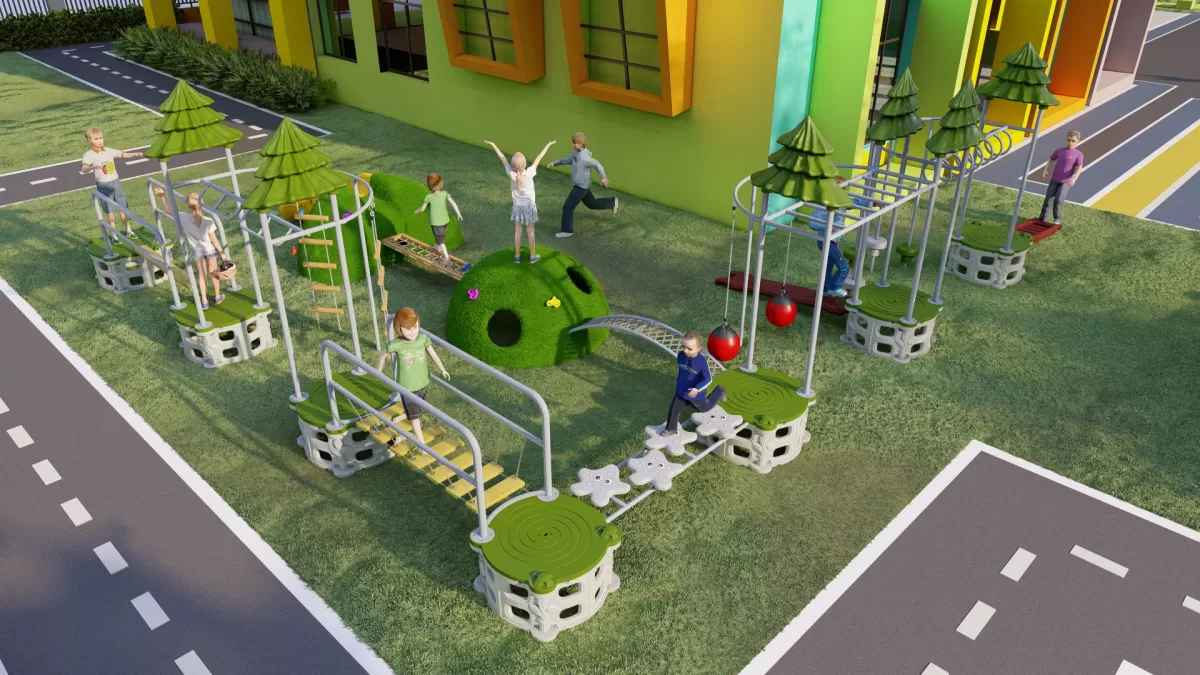
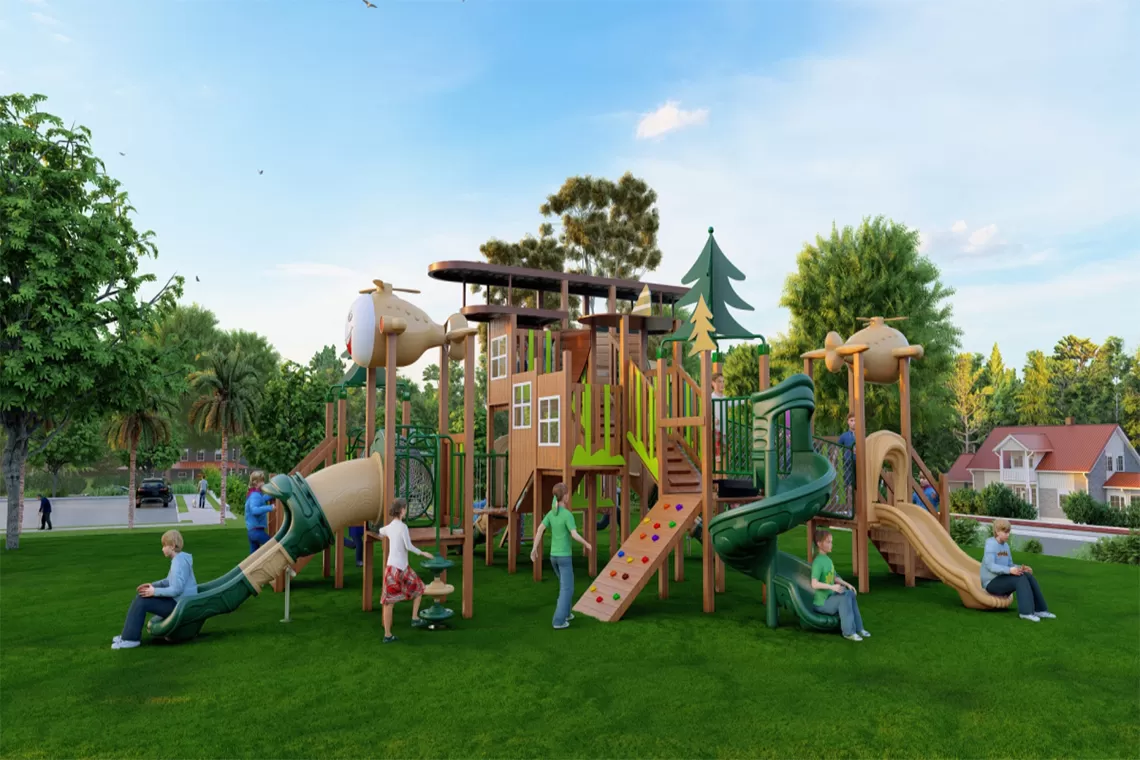
A hybrid approach can combine natural-looking posts or panels with durable molded slides and steel connectors. See examples in natural and wooden playground equipment and compare them with themed playground systems.
Climate should influence the specification and site detail. In wet or humid environments, wood needs suitable species or treatment, controlled ground contact, drainage and inspection for moisture-related damage. In dry climates, checking and surface weathering may become more visible. Coastal exposure can also affect metal connections within a wood structure.
Plastic components exposed to strong sun should be specified for the intended outdoor use and supported to avoid distortion. Dark surfaces can become hot; orientation, shade, local climate and operating procedures should be considered. Cold climates may change impact behavior and make damage more significant. Ask the supplier to identify material limitations instead of accepting “all-weather” as a complete specification.
Site drainage matters for both systems. Standing water, buried connections, poorly detailed foundations and trapped debris can shorten service life regardless of the visible material.
Wood is sometimes described as high maintenance and plastic as maintenance free. Both statements are too broad. Inspection frequency should follow use, environment, manufacturer guidance and applicable local requirements.
Wood checks: splinters, checking, rot, coating wear, loose fasteners, exposed end grain, water traps and movement at connections.
Plastic checks: cracks, sharp damaged edges, fading that may indicate exposure, deformation, loose attachments and worn slide or panel surfaces.
Shared checks: steel corrosion, fasteners, ropes, bearings, foundations, surfacing, cleanliness and changes to the surrounding site.
Keep the approved drawings, material specification and replacement-part references. Repair methods should be compatible with the original component and should not introduce new protrusions, entrapments or structural uncertainty.
Material should support the play brief rather than replace it. Ask whether the configuration provides an appropriate mix of access, climbing, balance, social, sensory, imaginative and sliding activities for the intended users. Review platform levels, transfer points, ground-level play, circulation and supervision.
A wood aesthetic does not automatically create nature play, and a plastic component does not automatically make a playground less valuable. The layout, challenge progression and relationships between activities have a larger effect on how the space works.
Exact wood species, grade, treatment, moisture and finish requirements where applicable.
Plastic type, grade, UV requirements, color and component construction where applicable.
Main structural post, platform, connector and fastener materials.
Surface preparation and coating system for metal parts.
Foundation method, ground-contact details and drainage assumptions.
Component dimensions and configuration drawing revision.
Required model-specific reports or documents for the destination.
Inspection, maintenance, warranty and replacement-part procedure.
The playground materials selection guide can be used to organize these discussions before quotation.
A hybrid system is often the most practical answer. Steel can provide a controlled structural frame; wood or wood-look panels can establish the landscape character; LLDPE can form slides and roofs; ropes can add movement and climbing challenge. The project team should review how the materials meet, drain, expand and receive replacement parts.
Do not compare hybrid systems using only percentages of wood or plastic. Compare the purpose and specification of each component and the evidence supporting it.
There is no universal answer. Service life depends on material grade, structural design, treatment, UV and moisture exposure, installation, use and maintenance.
No. Plastic parts and their supports, fasteners, surfaces and surrounding site still require routine inspection and appropriate maintenance.
No. The description may cover solid timber, laminated wood, engineered boards, composites or a wood-look finish. Request the exact specification.
Yes. Hybrid commercial playgrounds are common. Connections, drainage, structural roles and replacement parts should be coordinated in the approved design.
Compare configuration, dimensions, structural materials, component grades, finishes, reports, packaging, freight term, installation support, maintenance information and warranty scope.
Share the site, climate, users, visual direction and required play functions. ZZRS can discuss a wood, plastic or hybrid configuration and identify the details that must be confirmed in the quotation.
Discuss Your Project