 Buying Guide
Plan restaurant playground equipment around visibility, user age, circulation, surfacing, cleaning, maintenance, budget and the available site.
Read insight


Quick answer: Select outdoor litter bins for playgrounds by expected waste volume, visitor flow, opening and liner design, material, weather exposure, anchoring, service access and cleaning frequency—not by capacity or appearance alone. Place bins where visitors can find them and staff can empty them without entering equipment use zones or blocking accessible routes.
Published by ZZRS Amusement Equipment Co., Ltd. (ZZRS Playground).
This guide is intended for park departments, schools, hotels, residential communities, landscape contractors and playground distributors. It explains how to estimate capacity, compare materials, select openings and liners, plan placement and write a useful product specification. It also addresses a key planning principle: waste management should be designed around how people move through the site, not added after the play equipment and paths have already been fixed.
ZZRS offers commercial outdoor litter bins with options that may include galvanized steel, stainless steel or WPC-style panels, removable liners, different capacities, locking systems and surface-mount arrangements. Final materials, dimensions, capacity and customization should be confirmed in the quotation and approved product information for the selected model.
Outdoor litter bins for playgrounds are commercial waste containers designed for public or shared outdoor environments where weather, repeated use, cleaning and secure servicing must be considered. They differ from light domestic bins because they are expected to remain stable, resist impact and corrosion, contain waste, support routine emptying and fit the visual character of a park or play area.
The outdoor litter bins category can include single-stream general-waste bins, recycling stations, dual-compartment units, decorative or novelty bins and coordinated site-furniture designs. The correct choice depends on the waste generated, collection frequency, staff route, local separation program and risk of misuse.
A playground bin should not be evaluated by appearance alone. Capacity, opening size, liner access, drainage, lock type, anchoring and replacement parts determine whether the product remains practical. A decorative bin that staff cannot empty efficiently will quickly lose its value.
Playground waste planning is the process of predicting what waste will be generated, where visitors will carry it and how staff will remove it. The aim is to reduce litter and servicing effort without introducing obstacles or hygiene problems.
The scale of the wider waste challenge is substantial. The U.S. Environmental Protection Agency reports that 292.4 million tons of municipal solid waste were generated in the United States in 2018, with about 94 million tons recycled and composted. A playground represents only a small part of that total, but public-site design influences whether waste enters the correct stream or becomes litter.
Play areas generate a characteristic mix: snack packaging, drink containers, tissues, small food waste, disposable wipes and occasional bulky items. Sites near cafés, sports fields or event lawns experience different peaks from neighborhood playgrounds. Understanding this pattern is more useful than selecting a bin by a generic “park” label.
Cleanliness also affects perception. Visitors may not inspect the equipment specification, but they notice overflowing waste, odors, insects and stained surfacing. For hotels and residential communities, those conditions can reduce confidence in the overall property. Waste planning is therefore part of both facility management and user experience.
Waste flow is the path waste follows from the moment a visitor finishes using an item until staff remove it from the site. Mapping this flow identifies the locations where bins are most likely to be used and easiest to service.
Walk the site as a visitor. Mark entrances, seating, picnic tables, vending points, water fountains, food outlets, parking routes and exits. Waste is often carried from a purchase point to a consumption point and then toward the next destination. A bin at the final exit may perform better than one placed in the middle of active play.
Then walk the site as a maintenance employee. Identify where a cart or vehicle can stop, which doors or gates must be opened, and whether a full liner must be carried across soft surfacing. A highly visible location may still be poor if servicing disrupts play or requires staff to cross a swing zone.
Record peak times. A school playground may have short, intense use periods. A resort may produce waste throughout the day with a late-afternoon peak. A public park may change dramatically on weekends. Capacity and collection frequency should be based on peak conditions, not an average quiet visit.
Bin capacity is the usable internal volume available before waste blocks the opening, prevents closure or creates overflow. The required capacity depends on waste volume, compaction, collection frequency and the number of bins across the site.
ZZRS lists common capacity options such as 40, 60 and 100 liters for selected models, including possible dual-bin configurations. These are useful reference points, but nominal capacity should be confirmed for the exact product. A 100-liter bin is not automatically better than two 60-liter bins if visitors move through separate areas.
Estimate capacity by observing a comparable site or running a temporary trial. Record the approximate fill level at several times, the number of collections and the type of waste. Light packaging occupies more volume than weight suggests, while food waste can create odor before the bin is full. Recycling streams may fill at different rates.
Provide reserve capacity for peak periods, but do not use size as a substitute for service. Large bins can become heavy, encourage oversized dumping and remain unclean for longer. A practical design balances capacity with liner weight, staff handling and collection frequency.
Waste-stream configuration is the number and type of material categories collected at one point. A single-stream bin prioritizes simplicity, while dual or multi-stream stations support separation when users understand the labels and the collection system keeps materials separate.
Single general-waste bins are appropriate where local recycling is not available, contamination risk is high or the site generates little recyclable material. They require the clearest possible opening and label. Adding a recycling symbol to a bin does not create a recycling program if staff later combine the contents.
Dual bins can separate general waste from bottles and cans or another high-volume stream. They can be efficient near sports and play areas where drink containers are common. The openings should help users identify the intended stream, and the internal liners should remain separate during servicing.
Multi-stream stations are more suitable for high-traffic destinations with established education and collection systems. They require more space, clearer graphics and monitoring. Too many categories can reduce correct sorting, especially among children and international visitors.
Material selection determines how a litter bin responds to rain, ultraviolet exposure, salt, impact, cleaning chemicals and repeated door operation. The visible finish and the hidden structure should both be reviewed.
Powder-coated galvanized steel can provide strength and a wide range of colors. Ask how edges, weld areas and fastener penetrations are protected, because corrosion often begins at damaged or exposed points. The coating system should be suitable for the destination climate and cleaning routine.
Stainless steel can provide corrosion resistance and a clean commercial appearance, but the grade and finish matter. Stainless surfaces can show fingerprints, staining or tea discoloration in some environments and still require cleaning. Confirm whether the whole body or only selected panels are stainless.
WPC or plastic-wood panels can coordinate with benches and natural landscapes while reducing the maintenance associated with painted timber. The supporting frame, fasteners and door hardware remain important. UV exposure and thermal movement should be considered for panel attachment.
Real timber can provide a warm appearance but may require sealing, inspection and replacement. It should not be specified only because the playground has a nature theme. The operator’s ability to maintain the material should guide the choice.
A bin opening is the user interface that influences what enters the container, how easily waste is deposited and whether rain or pests can reach the contents. Opening design should match the intended material and user group.
Large open tops are easy to use but may accept oversized waste and collect rain. Hooded openings provide more weather protection but can be harder to clean. Circular openings can signal bottles and cans, while slots can signal paper, but icons and words should support the shape. Children and visitors who do not share the same language need simple visual guidance.
Opening height and approach space should be considered together. The bin should be reachable from the path without requiring a user to step into landscaping or an equipment use zone. It should not project into the accessible route. Local accessibility requirements may define reach and clear-space conditions.
For food-heavy sites, consider lids or hoods that reduce pest access. The design should still allow quick use; a complicated flap can become dirty or be left open. Test the proposed opening with the actual bags, cups and packages commonly used at the site.
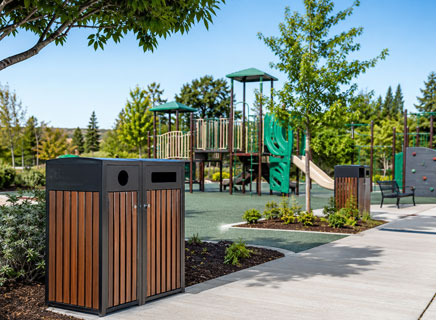
The liner and service door determine how staff remove waste, clean the bin and return it to operation. These features can have a greater effect on lifecycle cost than the exterior design.
A removable metal or durable plastic liner helps contain leaks and protects the outer body. It should fit without excessive clearance that allows bags to fall between the liner and shell. Handles or lifting points should support safe removal. Confirm the liner’s actual volume and replacement availability.
Side-opening doors can reduce vertical lifting and are useful for larger capacities. Top-opening service may simplify the body but can require staff to lift a full liner higher. The preferred method depends on the bin height, collection bag, staff equipment and site route. Ask operators to review a sample or detailed drawing before standardizing a large order.
Locks deter tampering and unauthorized dumping, but keys must be managed. A proprietary key can create problems if replacements are difficult to obtain. Hinges, latches and door alignment should tolerate repeated use. Water should not collect inside the base or around the liner.
Placement is the positioning of bins where visitors are likely to dispose of waste and staff can service them without obstructing play, circulation or supervision. The best location is usually near a transition point rather than in the center of activity.
Good locations include entrances and exits, seating clusters, picnic areas, food and drink points, parking transitions and the route back to buildings. Place bins close enough to be convenient but not directly beside a bench where odor or insects affect users. At large sites, distribute bins so that visitors encounter one before leaving each activity zone.
Keep bins outside equipment use zones and clear of slide exits, swing paths, running routes and fall-attenuating surfaces unless the approved layout specifically accommodates them. The CPSC handbook commonly recommends six-foot use zones around many stationary components and larger or differently shaped zones for moving equipment. A bin is a rigid obstacle and should not be introduced into these areas.
Do not block sightlines. A tall or decorative bin near a preschool area can hide a child from a seated adult. Avoid locations that encourage children to climb on the bin to reach another object. Coordinate placement with lighting, irrigation and snow-removal routes where relevant.
Service separation is the planning of cleaning and waste collection so staff can work without moving carts, bags or vehicles through active play. It protects operations and reduces interruptions.
Create a collection route along hard paths. If a bin is located inside a large play area, provide a route that does not cross loose-fill surfacing or narrow gates. Staff should be able to open the service door fully without standing in a cycle path or blocking an accessible route.
Schedule collection before opening, during low-use periods or after closing. Emergency overflow collection may still be required during events. Staff should know how to isolate the immediate area if broken glass, sharp waste or a spill is found.
Storage and wash-down should be planned. A bin that is cleaned beside the playground may discharge dirty water into surfacing or planting. Identify where liners and bodies can be washed, dried and inspected. Use cleaning products compatible with the finish.
A comparison table helps buyers match bin design to the site rather than defaulting to the lowest price or largest capacity.
| Bin Type | Best Use | Strength | Limitation | Key Specification |
|---|---|---|---|---|
| 40–60 L single bin | Small playground, entrance or low-volume zone | Easy to place and service | May require frequent collection | Opening, liner weight, mounting and weather protection |
| 100 L single bin | High-traffic general waste | Longer interval before full | Heavy liner and risk of oversized dumping | Side service, bag support, lock and staff handling |
| Dual-compartment station | General waste plus bottles/cans | Supports basic separation | Contamination if labeling is unclear | Separate liners, distinct openings and collection process |
| Decorative or novelty bin | Children’s zones and themed parks | High visibility and engagement | Can be harder to clean or replace | Original design, rounded details, service access and durability |
| WPC-panel bin | Landscaped parks and coordinated furniture schemes | Natural appearance with commercial frame | Panel attachment and UV performance require review | Frame material, panel grade, fasteners and replacement panels |
| Stainless-steel bin | Hotels, urban sites and premium facilities | Clean appearance and corrosion resistance | Shows marks and still requires maintenance | Stainless grade, finish, full/partial construction and cleaning method |
Site-furniture coordination is the selection of bins, benches, signage and other amenities as a coherent family of products. It can improve visual order and simplify procurement.
Matching frame colors, panel materials and proportions can make the playground landscape look intentional. ZZRS also offers recycled plastic park benches and related site products that can be reviewed alongside bins. The objective is not perfect visual uniformity; it is compatible materials, maintenance and replacement planning.
Do not place a bin directly against every bench. Separate enough to reduce odor and insects while keeping the bin visible. Where food is consumed, a nearby bin is useful. In quiet observation areas, a greater separation may improve comfort.
Standardizing locks, liners, fasteners and panel types across a property can reduce spare-parts complexity. Ask the supplier whether several styles can share internal components. This is especially useful for hotel groups, residential developers and municipalities managing multiple sites.
Graphics and color are communication tools that help users recognize the bin and select the correct waste stream. They should remain clear after exposure to sun, cleaning and minor damage.
Use short labels supported by simple icons. Where visitors speak multiple languages, icons can carry the primary meaning. Avoid decorative graphics that make the opening hard to identify. A recycling station should use a consistent color and label system across the property.
Custom branding can include a property logo, park identity or laser-cut pattern, but it should not weaken the body or create sharp edges. Applied decals should be specified for outdoor use and positioned where cleaning does not quickly damage them. Confirm who supplies artwork and who approves it.
Novelty bins can be effective in children’s environments because they attract attention. Their forms should remain stable, serviceable and easy to clean. Avoid designs that invite climbing, trap fingers or obstruct the opening. Original designs also reduce intellectual-property risk.
A maintenance schedule defines what staff check, how often they check it and what action follows a defect. It should reflect site use and climate rather than using one fixed interval for every location.
Daily or opening checks may include overflow, sharp objects, vandalism, pest activity, spills, door closure and stability. High-traffic or food-service locations may need several checks per day. Collection should occur before waste blocks the opening or creates odor.
Weekly checks can include cleaning the body, inspecting locks and hinges, checking mounting bolts and examining liners for leaks or deformation. Monthly or seasonal checks may review coating damage, corrosion, panel movement, drainage and label condition. Coastal and winter sites may require more frequent corrosion or base inspections.
Record defects and repairs. A simple asset number on each bin allows staff to report the correct location and model. Keep replacement keys, liners, hinges and labels available. If a bin becomes unstable or develops a sharp edge, remove it from service until repaired.
A procurement specification turns operational needs into measurable product requirements. It reduces the chance that bidders quote products that look similar but perform differently.
State the intended location, traffic level and waste stream.
Specify nominal capacity and whether it is single or dual compartment.
Identify body, frame, panel, liner and fastener materials.
Describe finish, color and environmental exposure.
Define opening type, weather protection and labeling.
State door orientation, liner removal method and lock requirements.
Define mounting method and who supplies anchors.
Request dimensions, weight and clear service space.
Request cleaning instructions, warranty and spare-parts availability.
Require drawings or photos that show the exact offered model.
For a complete play zone, coordinate bins with freestanding playground equipment, benches, paths and surface boundaries on the same layout. This prevents rigid site furniture from being added inside equipment clearances after installation.
ZZRS supports distributors and project buyers with litter-bin selection, material and capacity options, color or label customization, packing and coordination with playground and site-furniture orders. Selected product information lists galvanized steel, 304 stainless steel or WPC-panel options, removable galvanized liners, 40-, 60- and 100-liter capacities, keyed locks and surface-mount or portable arrangements. The exact configuration depends on the approved model.
A useful inquiry should identify the site type, quantity, destination, desired capacity, waste streams, preferred material, color, mounting, branding and collection method. For large projects, provide a site plan so quantities and locations can be reviewed rather than estimated only from total area.
Before ordering, approve the product drawing or detailed specification, confirm liner access and lock orientation, and request a sample when staff handling is a critical concern. Packaging should protect finished surfaces and keep keys and small hardware clearly labeled.
The number depends on visitor flow, entrances, seating, food use, site size and collection frequency. Map waste flow and place bins at high-probability disposal points. A distributed network of smaller bins may perform better than one large central bin.
Common commercial options include approximately 40, 60 and 100 liters, but the best capacity depends on peak waste volume and staff handling. Observe a comparable site or run a trial before standardizing a large order.
Surface mounting can improve stability and reduce unauthorized movement. Portable bases may suit temporary or flexible sites. The mounting method should match the pavement, cleaning plan, wind exposure and local requirements.
No. Stainless steel can be appropriate for corrosion resistance and appearance, but grade, finish, cleaning and cost matter. Powder-coated galvanized steel and WPC-panel systems may be better for other projects. Compare the complete construction and climate.
Do not place bins inside equipment use zones, slide exits, swing paths, primary running routes or accessible-route clear width. Avoid locations that block supervision, create odors beside seating or require staff to cross active play while servicing.
Yes, many commercial models can accept color, decals, cut patterns or labels. Confirm artwork, outdoor durability, cleaning compatibility and whether customization changes lead time or replacement availability.
Outdoor litter bins work best when capacity, location, service access and material are planned together. The goal is not to place the largest possible container beside the playground. It is to create a waste system that visitors understand and staff can maintain without obstructing play.
ZZRS can review bin options as part of a playground or site-furniture package. Buyers should provide the site type, expected traffic, waste streams, collection routine and destination climate so the offered product can be evaluated through measurable specifications and lifecycle operation. For a broader public-space plan, also compare types of park exercise equipment and their functions before locating fitness stations beside children’s play routes.
Practical guidance from playground planning, manufacturing, delivery and completed project experience.
Buying Guide
 Buying Guide
 Buying Guide