 Buying Guide
Compare 10 Canadian playground equipment manufacturers and suppliers by manufacturing evidence, product focus, regional support, CSA documentation and project fit.
Read insight


Quick answer: A water playground should be planned as one coordinated system: users and supervision, play equipment, water depth and circulation, drainage, surface conditions, utilities, foundations, access, operations and maintenance must be reviewed together. Buyers should not select equipment first and solve the pool, water system or installation interfaces later.
Published by ZZRS Amusement Equipment Co., Ltd. (ZZRS Playground).
| Planning area | Questions to resolve | Required project input |
|---|---|---|
| Users and operations | Who will use the area, how will it be supervised and what is the expected operating pattern? | Age groups, capacity assumptions, staffing and operating season |
| Site and water system | What pool or splash-pad arrangement, drainage, treatment and utilities are planned? | Survey, levels, water-system concept and local engineering requirements |
| Equipment mix | Which slides, spray features, platforms and ground-level activities suit each zone? | Layout, activity brief, theme and budget priorities |
| Materials | How will water chemistry, sunlight, humidity and maintenance affect the specification? | Climate, treatment regime and cleaning plan |
| Installation interfaces | Who coordinates foundations, embedded items, pipework, electrical work, surfacing and equipment assembly? | Responsibility matrix and approved drawings |
| Handover | What records, instructions, spare parts and inspection steps are required? | Document register and maintenance responsibility |
Start by deciding whether the project is a shallow pool with play structures, a zero-depth splash area, a mixed aquatic zone or an addition to an existing facility. Record the target users, approximate capacity, opening season, supervision plan, operating hours and maintenance resources. These decisions influence the activity mix, circulation and technical coordination.
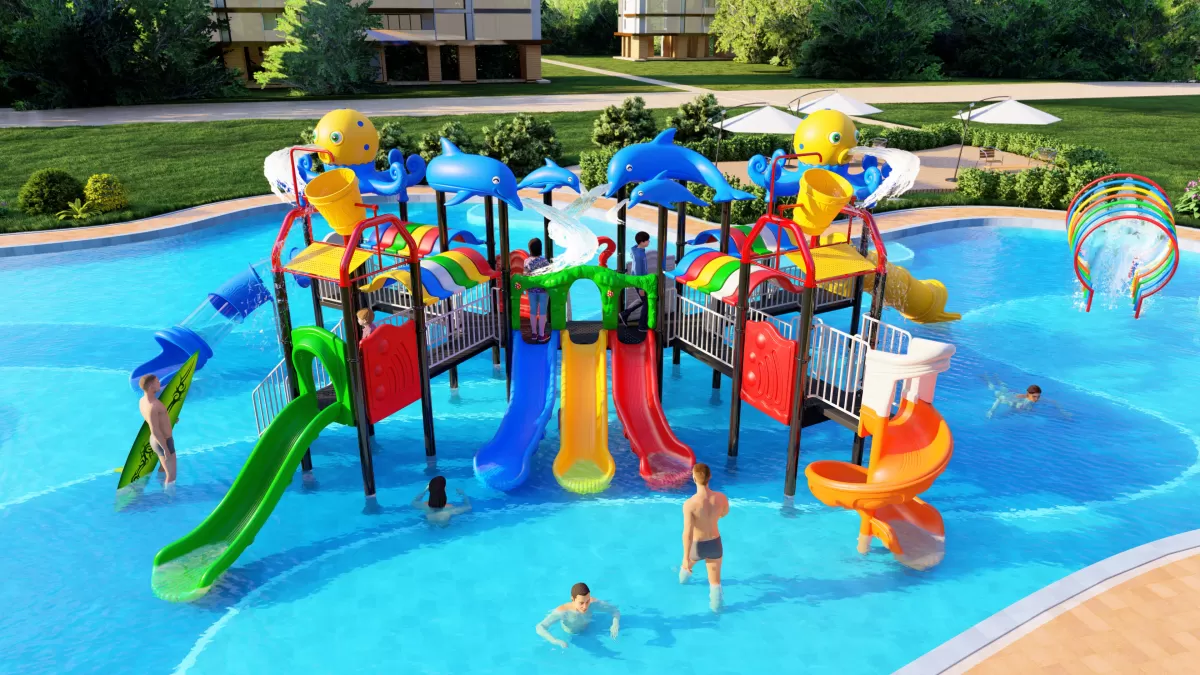
Use the commercial water playground equipment range to identify possible activity types, but do not treat a catalogue rendering as a completed site design. The final arrangement must relate to the confirmed site, water system and destination requirements.
Provide a current survey or site drawing with dimensions, units, levels, access routes and known utilities. Mark existing pools, plant rooms, buildings, walls, trees and drainage points. The project team should confirm where water collects, how the area will drain and how users and maintenance staff enter the site.
Water treatment, hydraulic calculations, electrical design, drainage and local approvals require appropriately qualified local professionals. The equipment supplier can coordinate equipment interfaces and information within its agreed scope, but should not be assumed to replace the project’s local engineering and approval responsibilities.
Separate gentler ground-level sprays and low-complexity activities from faster slides, elevated structures or areas intended for more confident users. Review entrances, exits, waiting locations, caregiver positions, visibility and circulation between zones. A balanced layout provides choice without forcing small children through faster movement paths.
Ground-level splash zone: sprays, arches and interactive features with clear circulation.
Early-user zone: lower access, simple routes and visible exits.
Composite play zone: platforms, slides and multiple activity choices coordinated as one structure.
Transition and rest areas: routes, waiting points, shade and caregiver observation positions.
Ask for a project-specific schedule covering structural members, coatings, plastics, fasteners, platforms, slide components and decorative parts. Share the intended water-treatment regime, climate, sunlight, humidity and cleaning approach so the supplier can explain the proposed materials and maintenance limitations.
The water playground materials guide explains how chemical exposure, ultraviolet light, drainage and maintenance should be considered. Avoid universal lifespan claims; performance depends on the actual specification, exposure, installation and ongoing care.
The approved drawing set should show equipment positions, orientation, access, supporting points and interfaces that affect foundations, embedded items, pipework, drainage, electrical work or surfacing. Record drawing revisions and require the equipment list, component references and installation information to match the approved layout.
Create a responsibility matrix before work begins. Assign the parties responsible for civil works, water treatment, plumbing, electrical systems, foundations, embedded items, equipment assembly, commissioning, surfacing, final checks and authority approvals. The commercial playground installation guide provides a useful framework for foundations, site access, anchoring and handover.
A useful quotation should identify the equipment and optional items, material and finish assumptions, drawing scope, production and approval points, packing basis, shipment assumptions, installation information and exclusions. Compare suppliers against the same brief and record every unresolved assumption.
Use the quotation information checklist before requesting prices. Before installation, verify the required drawings, component lists, packing information and handover records with the manufacturer document checklist.
Confirm how the area will open, close and be supervised.
Define routine cleaning, water-system checks and equipment inspections.
Provide safe maintenance access and a process for isolating unavailable features.
Identify consumables, wear items and project-specific spare parts.
Keep approved drawings, product information and maintenance records together.
Agree on final inspection and handover responsibilities.
Theme and colour can help a water playground fit a resort, park, school or community setting, but visual choices should follow the confirmed activity and technical scope. Identify which decorative elements are standard, which are customized and which changes affect drawings, materials, production time or document coverage. Record the approved colour and artwork references so they remain controlled through production.
Also review the spaces around the equipment: caregiver observation, shade, seating, storage, changing areas, first-aid access, equipment isolation and routes for cleaning or repair. These items may be supplied by different parties, but they affect whether the water-play zone can be supervised and maintained as intended. Where accessibility requirements apply, the local designer and authority should confirm routes, transfer conditions and other project-specific requirements.
Confirmed site drawing, levels, access and utilities
Defined users, capacity assumptions and supervision plan
Approved equipment zoning and activity mix
Water-system, drainage and local engineering responsibilities assigned
Project-specific materials and finishes reviewed
Foundation, pipework, electrical and equipment interfaces coordinated
Quotation inclusions, exclusions and document scope recorded
Installation, commissioning, inspection and maintenance responsibilities assigned
ZZRS Playground can support water-play projects with equipment selection, layout coordination, project-specific drawings, manufacturing coordination, packing information and installation documents within the confirmed scope. Send the site plan and water-play brief to begin a project-specific review.
Buyer questions
Concise answers to the project questions buyers should resolve before approval.
Provide the site plan, users, capacity, water source and treatment concept, drainage, climate, operating season, access, utilities, budget, schedule and the responsibilities of the water-system and local engineering teams.
The contract should assign qualified local water-system, civil, electrical and project professionals. The equipment supplier can provide product-specific interface information within the agreed scope but does not automatically design or approve the entire water system.
Confirm the metal, coating, plastic, fastener, seal and finish specifications together with sunlight, temperature, water chemistry, cleaning procedures and locations where water may collect. Review the exact configuration rather than relying on a general material name.
Retain the approved drawings, equipment and water-system interfaces, commissioning and inspection records, cleaning and water-treatment procedures, wear-item references, maintenance intervals, warranty conditions and responsibility contacts.
Practical guidance from playground planning, manufacturing, delivery and completed project experience.
Buying Guide
 Buying Guide
 Factory & Production