
Last reviewed: August 2026
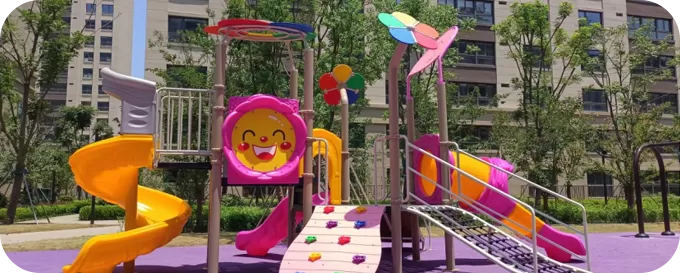
A custom-themed hotel playground should translate the property’s brand story into a clear play journey—not simply add decorative panels to standard equipment. Start with the hotel’s guests, architecture, landscape and site operations, then define the story, visual language, activities, visibility, materials, budget and approval process before production.
This guide focuses on theme development, brand fit and the design brief. For site, climate, pool-area and operational planning, read outdoor playground equipment for resorts. For lifecycle and guest-flow analysis, use the broader hotel playground planning guide.
A useful theme starts with the property’s identity. The story might relate to local nature, maritime history, wildlife, exploration, architecture or an existing family program. Write the concept in one or two sentences before selecting colors or decorative forms.
The story should be understandable to guests without creating a structure that is difficult to supervise, manufacture, ship, install or maintain.
Clarify who will use the play area, how they arrive and how long they are likely to stay. A resort may want a destination feature, while a city hotel may need a compact family amenity that supports shorter use.
Map the experience from first view to entry, active play, quieter activities, caregiver seating and exit. The theme can help guests understand this sequence through forms, color and recognizable landmarks.
| Design element | Questions for the brief |
|---|---|
| Color palette | Which brand colors are essential, and which can be adjusted for outdoor use? |
| Forms and silhouettes | Which shapes should be recognizable from guest paths or arrival areas? |
| Panels and graphics | What information, characters or motifs are appropriate and maintainable? |
| Rooflines and towers | How do they support the story without blocking visibility? |
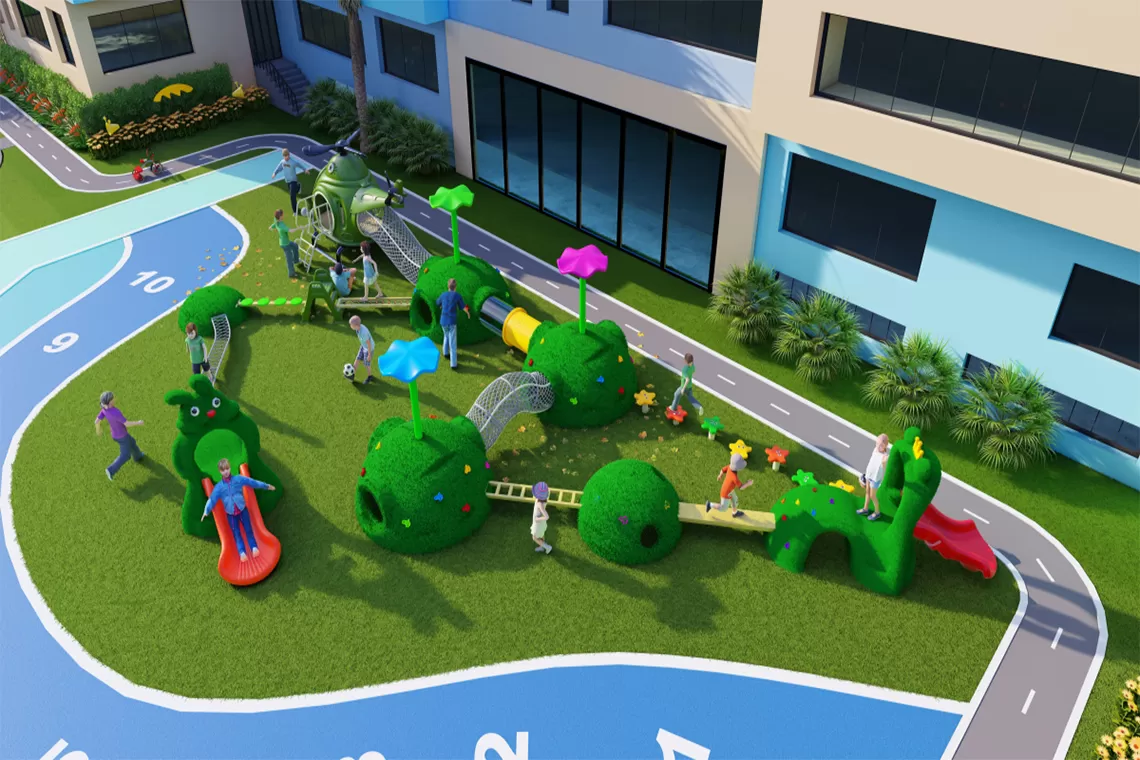
| Landscape connection | How will planting, surfacing, shade and seating reinforce the concept? |
| Night appearance | Does the property need lighting coordination or an after-hours visual feature? |
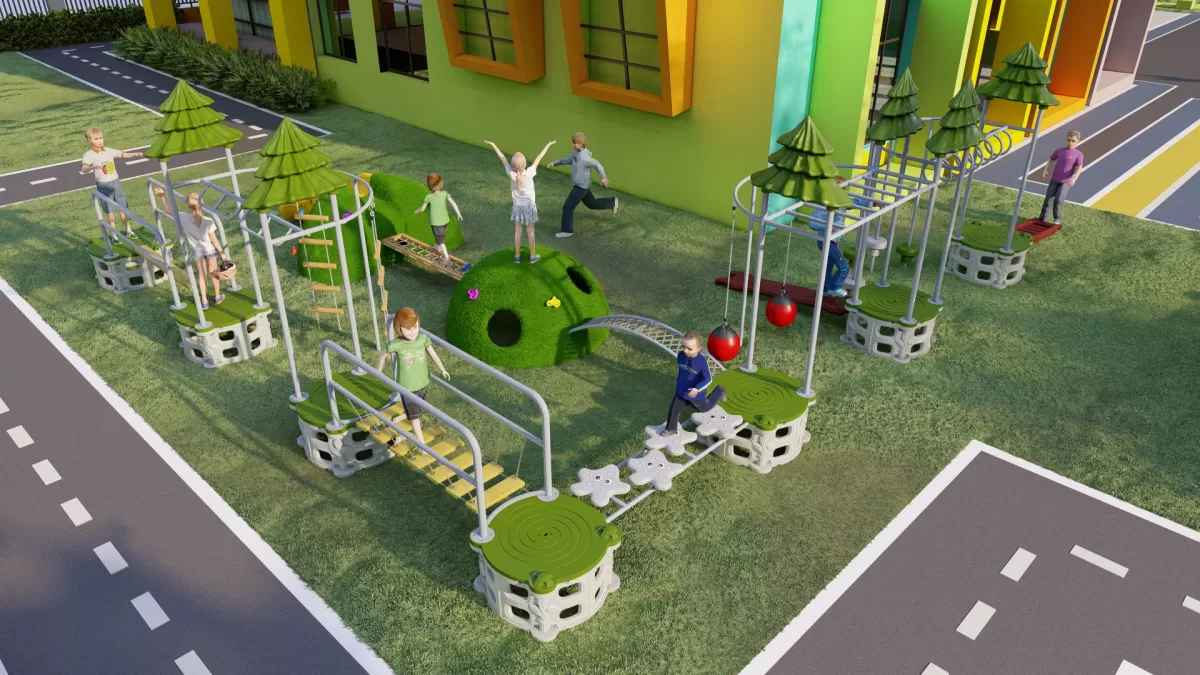
Theme should organize activities. A ship theme can use routes, decks, climbing and lookout points; a forest theme can use balance, nets, tactile panels and layered movement; an exploration theme can use progression and discovery.
Do not let decoration replace play value. The activity plan should still define climbing, sliding, balance, crawling, sensory, social and imaginative opportunities for the intended age groups.
Large decorative elements can create blind spots. Review the design from normal caregiver seating, staff routes and entrances. Openings, panels and roofs should be considered together with circulation and supervision.
Where the playground connects to a kids’ club, pool, restaurant or garden, identify who supervises each boundary and how children enter and leave the area.
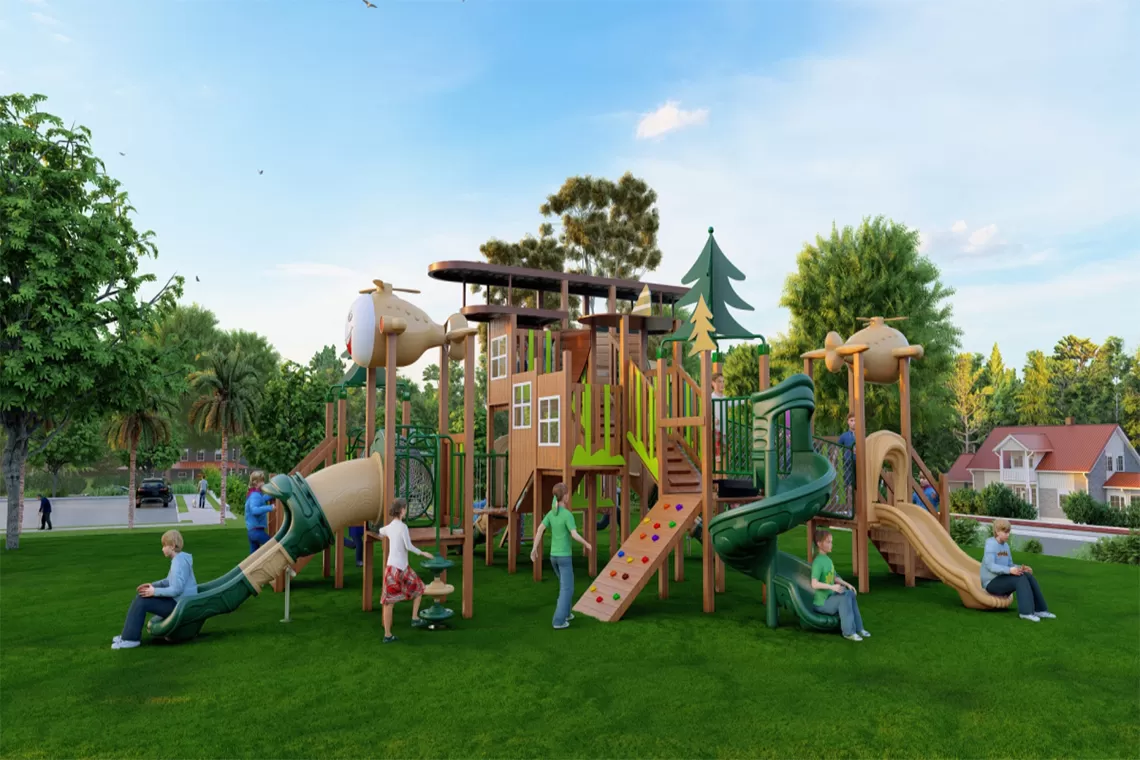
A render can include forms that are expensive, fragile or difficult to replace. During design review, ask how each custom element will be fabricated, finished, connected, packed and identified.
Prefer modular decorative components where practical. Record color references, panel files, materials and attachment details so that future replacement does not require recreating the entire design.
The visual concept must work with the climate. Strong UV, high humidity, salt air, heavy rain or seasonal temperature changes can affect colors, coatings, fasteners, plastics and cleaning.
Request a project-specific material schedule. Avoid selecting finishes only from a rendering. The final design should state materials, surface treatment and maintenance considerations for the approved components.
Custom theming can affect design time, molds or formed elements, decorative panels, structural shapes, color quantities, packing volume and installation. Separate essential brand features from optional visual enhancements.
| Priority level | Typical use |
|---|---|
| Essential | Signature silhouette, core palette, main story element and required guest recognition |
| Supporting | Secondary panels, repeated motifs, themed activity details and coordinated surfacing |
| Optional | Additional decorative features that can be removed if budget or shipping volume changes |
Approve the site and guest brief.
Approve the story statement and visual references.
Approve the activity plan and age zones.
Review the concept layout and major silhouettes.
Review the 3D rendering, colors and landscape relationship.
Confirm safety zones, materials and technical constraints.
Approve production drawings and final quotation scope.
Record later changes in writing before manufacture.
See the custom playground equipment design process for the full path from site plan to production.
Custom decorative components may require special protection, labeling and assembly sequencing. Confirm how unusual shapes, panels, hardware and finishes will be packed. The installation team should be able to connect package labels to drawings and component lists.
Review packing and shipping from China and the commercial installation guide before finalizing the delivery plan.
ZZRS Amusement Equipment Co., Ltd., also known as ZZRS Playground, can review a hotel or resort site brief, develop a custom layout and 3D rendering, adjust theme and color direction, confirm the selected material and configuration scope, coordinate production, complete trial assembly when required, prepare classified packing and provide installation drawings and online technical communication.
The final design, documents and support depend on the approved project and quotation. Buyers can browse themed playground equipment or send ZZRS a hotel theme brief.
Hotel or resort type and brand position
Site plan, photos, access and surrounding amenities
Guest age groups, capacity and expected dwell time
Story statement, colors, architecture and visual references
Required activities and accessibility objectives
Climate, coastal exposure, shade and drainage
Budget priorities, schedule, delivery and installation plan
Brand-asset ownership and approval contacts
The story, forms, colors, activities and landscape relationship are developed around the property rather than only changing standard colors or adding a logo.
Often yes, but the final palette should be reviewed against available materials, outdoor exposure, visibility, maintenance and production constraints.
It can. Cost may change with design time, custom forms, panels, color quantities, packing volume and installation complexity. Prioritize essential and optional theme elements.
Timing depends on the site information, project complexity, revision rounds and approval speed. Confirm the design and production schedule in the quotation.
Yes. A modular structure can use coordinated panels, roofs, colors and selected forms to create a recognizable theme while supporting future maintenance.
Keep approved drawings, color references, panel files, component labels and supplier contacts. Confirm replacement-part procedures before ordering.
It should fit the property’s brand and landscape, but it can have its own child-friendly expression. The brief should define what must match and what can vary.
ZZRS can prepare a layout and 3D proposal after reviewing the site, users, theme, activities, budget and project requirements.