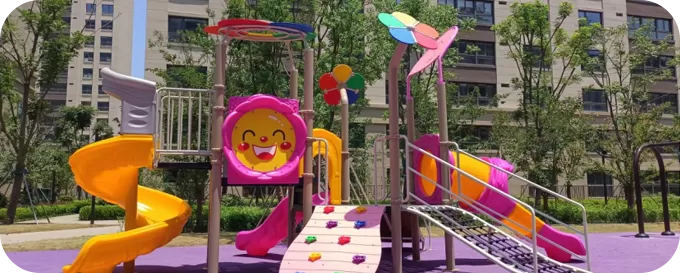

Custom playground equipment is not simply about changing colors or adding a few slides to an existing model. For schools, parks, resorts, farms, communities, kindergartens, tourist attractions, and commercial play projects, a custom playground should match the real site, target age group, project theme, safety requirements, budget, and installation conditions.
A clear design process helps buyers understand what information is needed, how the playground concept is developed, how drawings and materials are confirmed, and how the project moves from design to production and delivery.
ZZRS Playground, also known as ZZRS Amusement Equipment Co., Ltd., is a professional playground equipment manufacturer in Wenzhou, China. With 26 years of industry experience and a 20,000 square meter production factory, we provide custom outdoor playground equipment, themed playground equipment, stainless steel slides, indoor soft play structures, and commercial playground solutions for global projects.
This guide explains how a custom playground equipment project usually moves from site plan to final production.
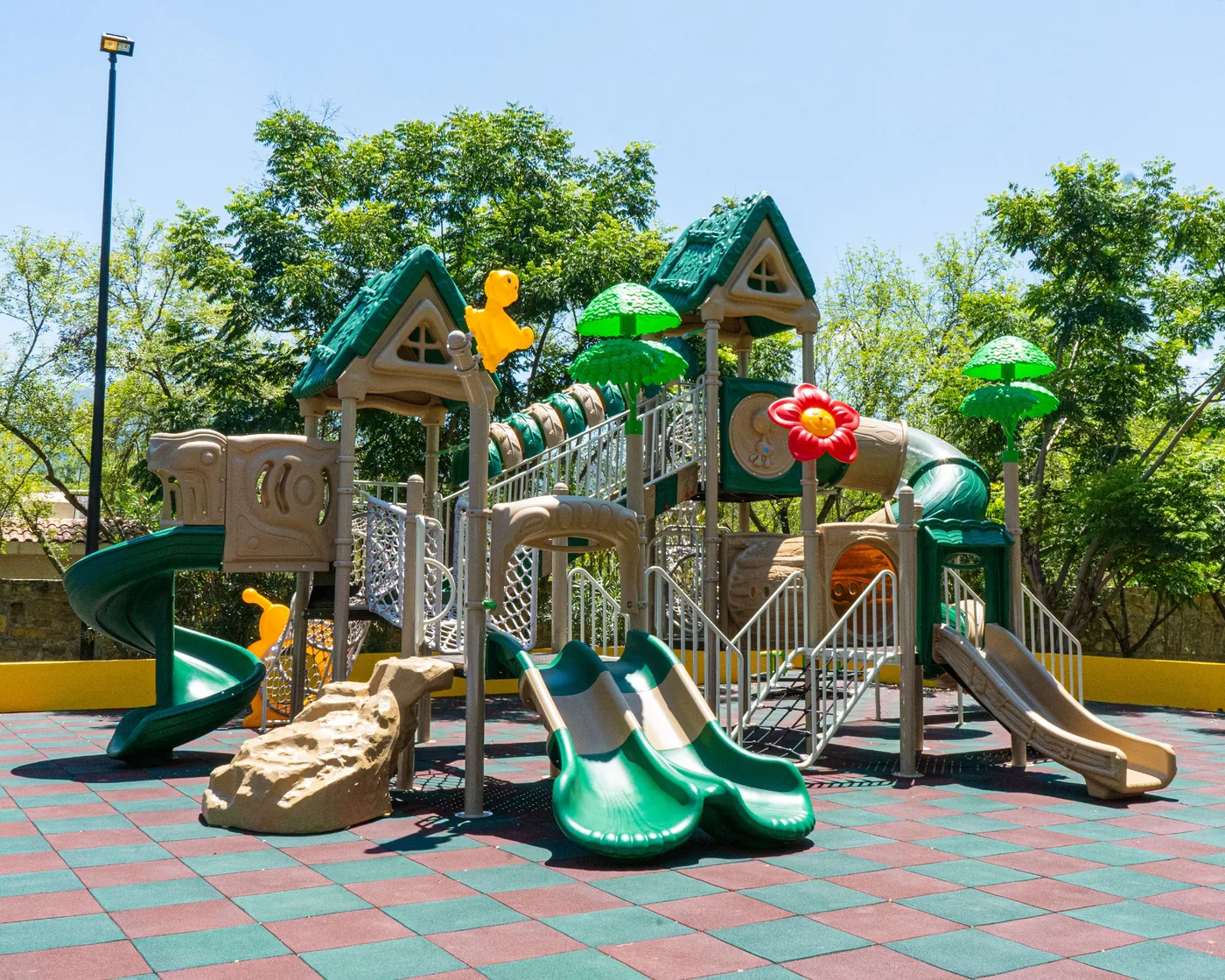 Custom playground equipment starts with site planning, design concept, and project requirements.
Many buyers start a playground project with a product photo or a general idea, such as “I want a forest-themed playground,” “I need a slide for a kindergarten,” or “I want a play area for a resort.” These ideas are useful, but they are not enough to start production directly.
A custom playground needs a clear design process because every project has different conditions. The same playground structure may need to be adjusted for a different site size, age group, local climate, safety surfacing, installation method, or project budget.
Without a clear process, common problems may happen:
The equipment may not fit the actual site.
The play functions may not match the target age group.
The safety zones may be too small.
The design may look good but be difficult to produce.
The packing volume and shipping cost may be unclear.
The installation team may not understand the structure.
The final result may be different from the buyer’s expectations.
A professional playground design process helps reduce these risks. It allows the buyer and manufacturer to confirm key details step by step before production starts.
For custom commercial playground equipment, the goal is not only to create an attractive design. The final product should also be practical to manufacture, ship, install, use, and maintain.
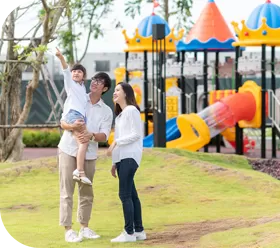
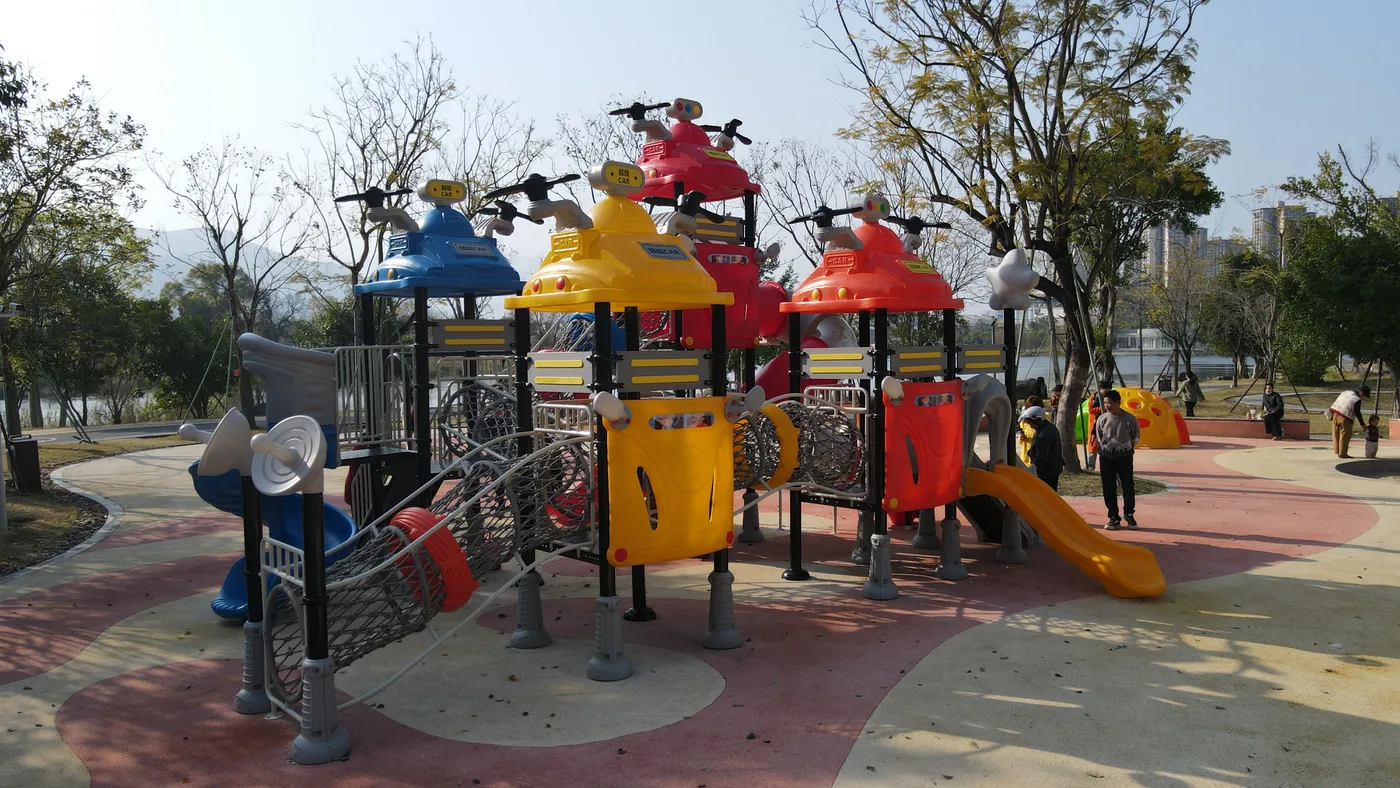 Site size, layout, and photos help the manufacturer create a more suitable playground design.
The first step in custom playground design is to confirm the site size and project type. The site is the foundation of the whole design. Without accurate site information, it is difficult to recommend the right playground layout.
Buyers should prepare the following information if possible:
Site length and width
Site shape
Photos or videos of the location
CAD drawing or layout plan if available
Entrance and exit position
Nearby buildings, trees, walls, roads, or water areas
Ground condition
Drainage condition
Height limit if any
Safety surfacing plan if already confirmed
The project type is also important. A kindergarten playground, public park playground, resort playground, farm park playground, shopping mall play area, and community playground all have different design priorities.
For example, a kindergarten project usually needs lower platforms, softer colors, simple climbing, and age-appropriate play functions. A resort or tourist attraction may need a stronger theme, larger visual impact, and more photo-friendly design. A public park may need durable structures and a layout suitable for high-frequency public use.
Common custom playground project types include:
Kindergarten playground
School playground
Public park playground
Community playground
Resort playground
Hotel playground
Farm park playground
Tourist attraction playground
Shopping mall playground
Indoor soft play project
Outdoor commercial playground
Themed destination playground
When the manufacturer understands the site size and project type, the design team can recommend a more suitable playground direction. Buyers can also review the playground site planning stage before moving into detailed design.
The second step is to confirm the target age group and play functions. Children of different ages have different movement abilities, risk awareness, and play preferences.
For children aged 2 to 6, the playground should focus on lower platforms, gentle slides, crawl tunnels, interactive panels, pretend play elements, and simple climbing routes. The purpose is to help young children explore safely while developing balance, coordination, and social interaction.
For children aged 5 to 12, the playground can include more challenging functions, such as climbing nets, rope bridges, tube slides, spiral slides, balance beams, larger platforms, and adventure-style play routes.
For mixed-age projects, it is often better to create different zones instead of using one structure for all children. A toddler zone, main play structure, climbing zone, swing area, and open activity area can work together to create a more complete playground experience.
Common play functions include:
Slides
Climbing nets
Rope bridges
Crawl tunnels
Balance beams
Interactive panels
Observation platforms
Swings
Spring riders
Stainless steel slides
Tube slides
Spiral slides
Tree house structures
Themed roofs
Open activity space
Play functions also affect the final cost, layout, production complexity, packing volume, and installation method. That is why it is important to confirm them early.
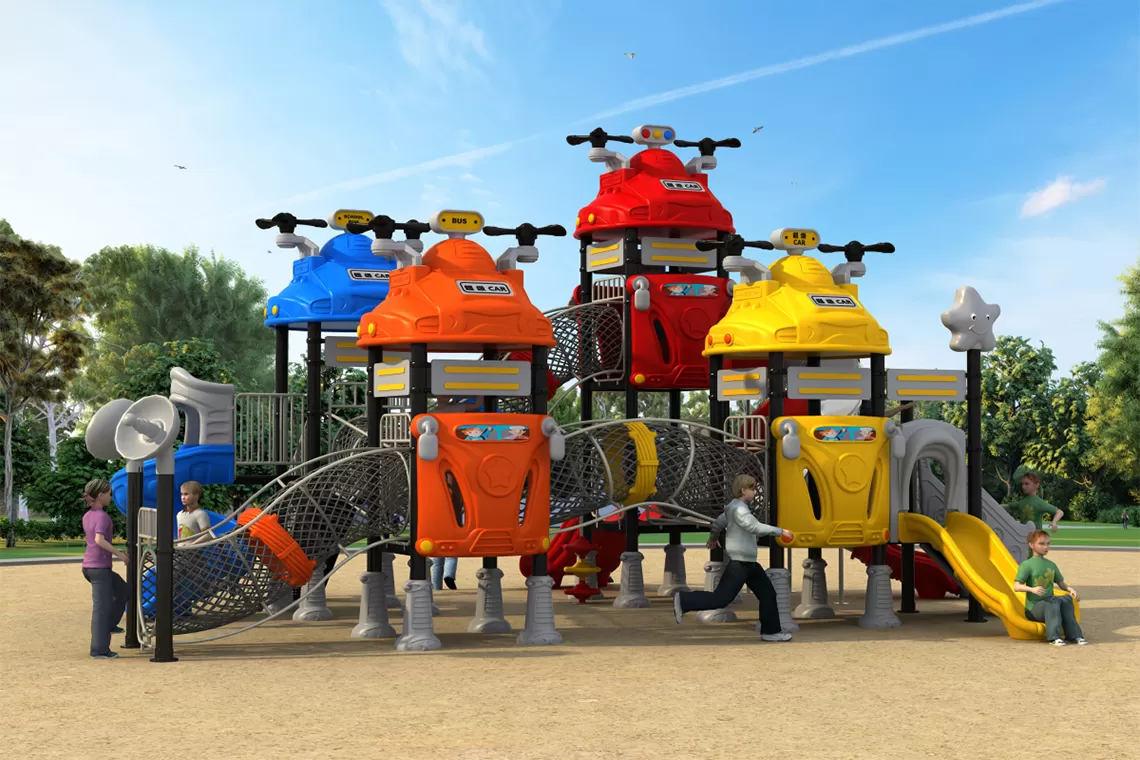
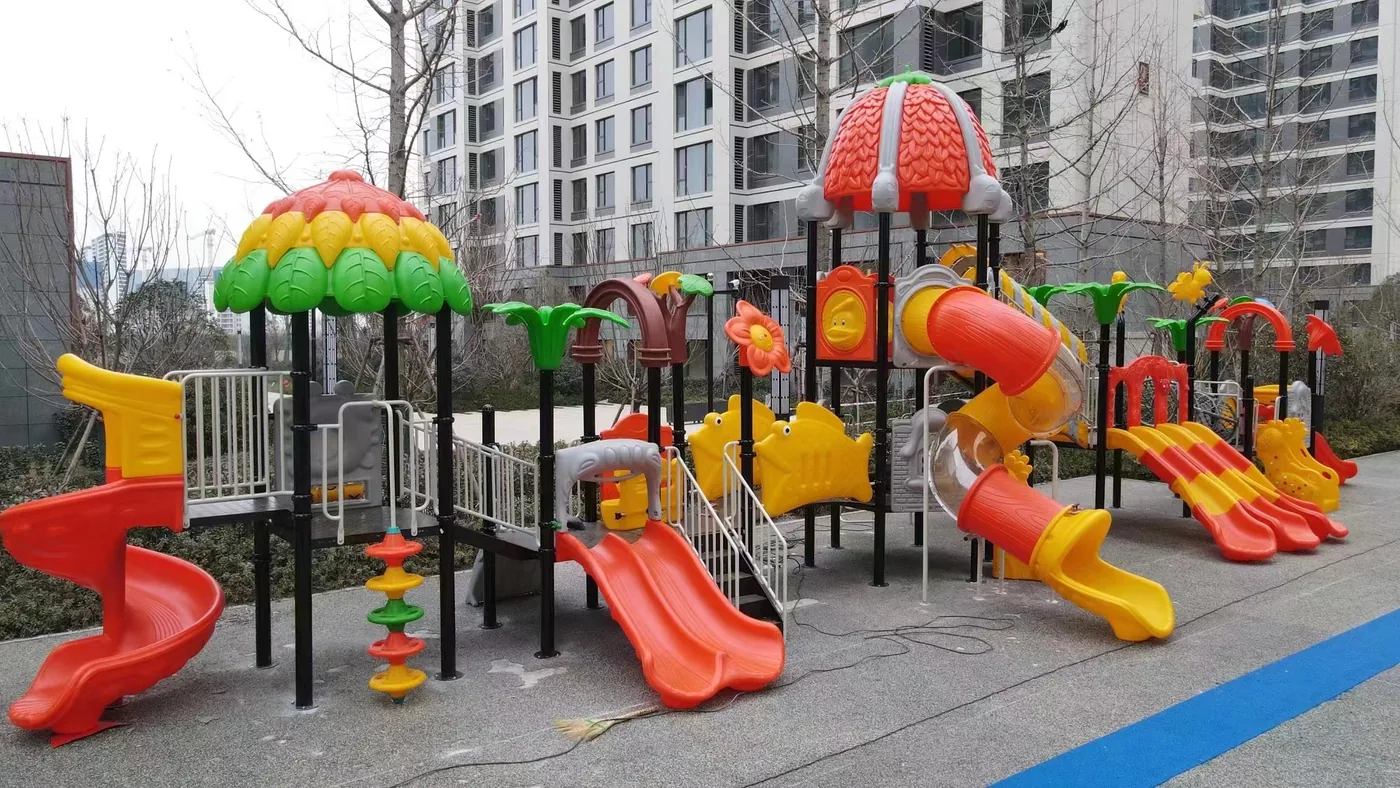 Theme, color, and visual style should match the project environment and target users.
Theme and visual style are especially important for custom playground equipment. A playground is not only a place for children to play. For many parks, resorts, farms, kindergartens, and tourist attractions, it is also part of the landscape and visitor experience.
Common playground theme directions include:
Forest theme
Ocean theme
Dinosaur theme
Castle theme
Farm theme
Animal theme
Tree house theme
Space theme
Nature theme
Waterfront theme
Modern style
Minimal style
For example, a forest-themed playground may use tree house forms, wood-like textures, animal characters, climbing nets, and earth-tone colors. An ocean-themed playground may use blue and white colors, wave shapes, marine animals, and open movement routes. A farm park playground may use animal IP, barn elements, fruit shapes, and natural colors.
Color selection should also match the site environment. For kindergartens, bright and soft colors may be more suitable. For resorts and parks, natural colors may blend better with the landscape. For commercial play areas, stronger visual elements may help attract families.
The theme should not only look attractive. It should also support play value. Slides, climbing, crawling, balancing, and role-play functions should be integrated into the theme naturally.
At this stage, buyers can provide reference images, brand colors, landscape photos, or project concept ideas. The manufacturer can then create a design direction that fits the real site and production feasibility.
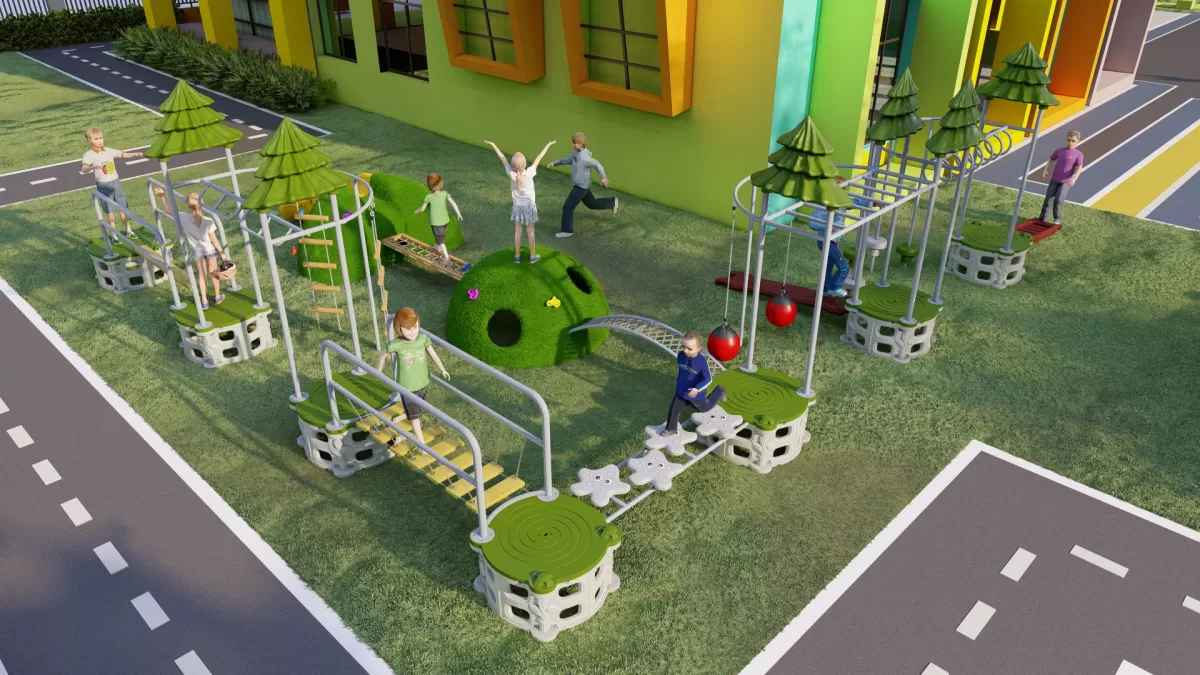
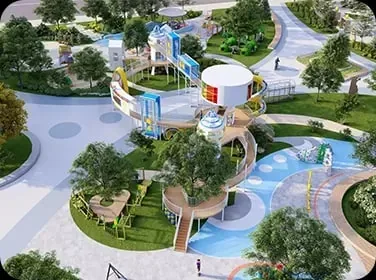 3D renderings help buyers understand the playground layout, functions, and visual direction before production.
After confirming the site, age group, play functions, and theme direction, the design team can create a 3D rendering and layout proposal.
A 3D rendering helps buyers understand the overall appearance of the playground before production. It shows the structure, colors, theme elements, slides, platforms, climbing areas, and surrounding space more clearly than a simple product list.
A layout proposal can also help confirm:
Equipment position
Site usage
Entrance and exit direction
Safety zones
Slide exit direction
Activity zones
Walking routes
Relationship with surrounding landscape
Approximate installation area
For custom outdoor playground equipment, this step is very important. It allows buyers to review the design and request adjustments before production starts.
Common adjustments at this stage include:
Changing colors
Adjusting slide direction
Reducing or adding play functions
Modifying platform height
Adjusting the overall size
Changing theme decorations
Separating age zones
Improving traffic flow
Matching the design with landscape style
The goal is to make the design more practical for the site, age group, budget, and installation conditions. For more detailed design considerations, buyers can review ZZRS Playground's custom playground equipment planning support.
After the design direction is confirmed, the next step is to review materials, safety details, and budget.
Material selection affects durability, appearance, maintenance, and cost. For commercial outdoor playground equipment, common materials include galvanized steel pipes, powder-coated metal parts, HDPE panels, LLDPE plastic slides, stainless steel slides, ropes, nets, anti-slip platforms, and stainless steel fasteners.
Different environments may require different material choices. For seaside or humid areas, corrosion resistance should be considered carefully. For high-traffic public spaces, the structure needs to be strong enough for repeated use. For resorts or theme parks, the finish and colors should match the landscape and brand style.
Safety details should also be reviewed before production. For international projects, standards such as EN1176 and ASTM are often used as important references for playground safety planning. Buyers should confirm whether the project has specific local requirements.
Key details to check include:
Platform height
Fall height
Guardrail design
Slide exit area
Safety zones
Climbing difficulty
Openings and gaps
Ground surfacing
Anti-slip surfaces
Fasteners and connection parts
Age-appropriate design
Budget should be discussed together with design and material selection. If the project budget is limited, the manufacturer may recommend a modular structure or reduce decorative elements while keeping core play functions. If the project is a destination playground, the design may include more themed details, larger slides, and stronger visual elements.
A clear budget discussion helps avoid unnecessary design changes later. Buyers can also review the materials stage when comparing durability, finish, and cost.
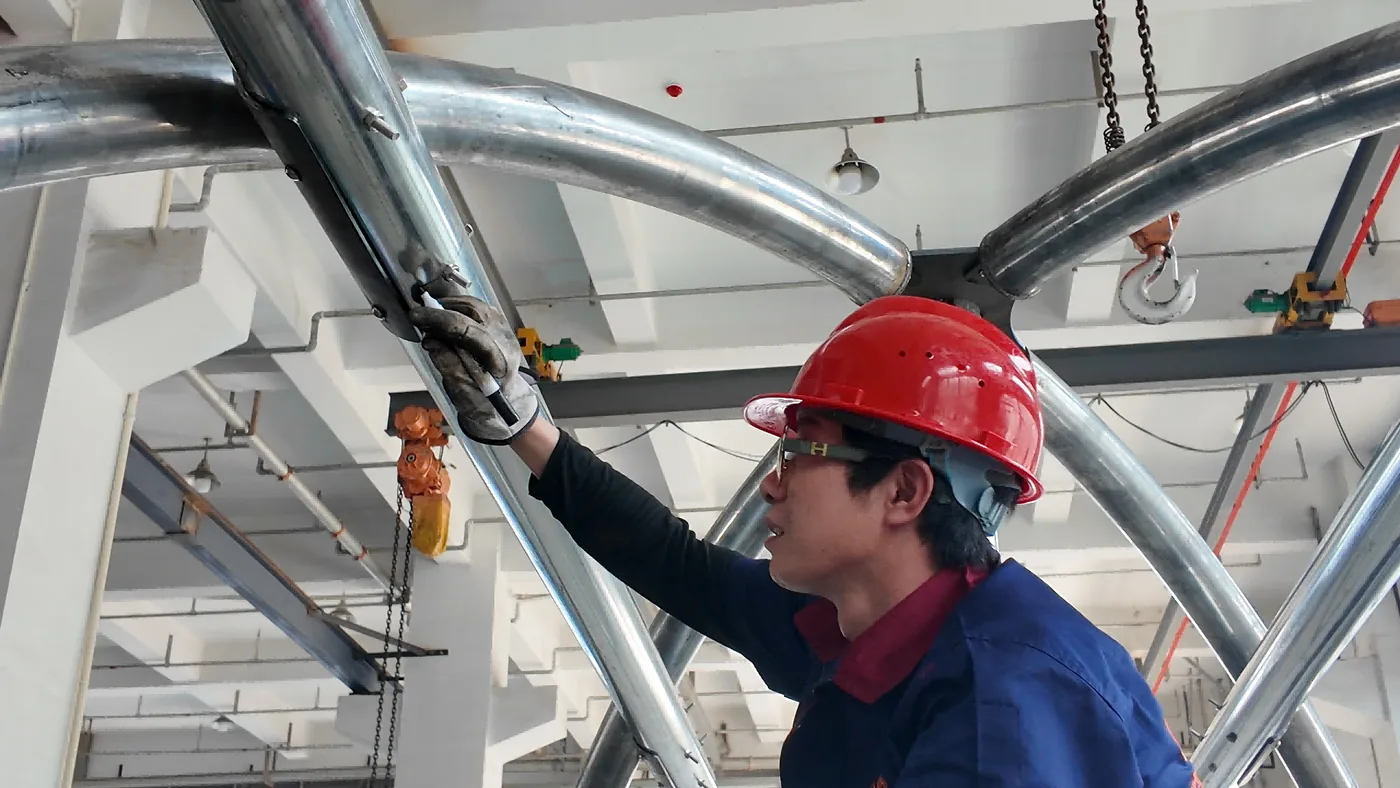 Factory trial assembly helps check structure, dimensions, accessories, and installation details before shipment.
Once the design, materials, and quotation are confirmed, the project can move into production.
For custom playground equipment, production usually includes metal structure processing, plastic component production, panel cutting, welding, surface treatment, painting or powder coating, hardware preparation, rope or net assembly, and themed decoration production.
During production, the factory should check key details such as dimensions, structure matching, surface finish, accessories, and packing requirements.
For some custom playground projects, factory trial assembly may be arranged before shipment. Trial assembly does not always mean the whole playground is fully installed exactly like the final site. In many cases, it means checking the main structure, key components, connection points, special parts, and installation logic before packing.
Factory trial assembly can help check:
Whether the main structure matches the drawing
Whether platforms, posts, slides, and panels fit correctly
Whether custom parts can be installed properly
Whether the slide direction is correct
Whether the themed decorations match the design
Whether hardware and accessories are complete
Whether the installation sequence is reasonable
This step is especially useful for non-standard playground projects, large structures, themed playgrounds, and overseas projects that require clearer installation support.
ZZRS Playground supports factory inspection and trial assembly when needed, helping clients reduce possible installation problems after delivery.
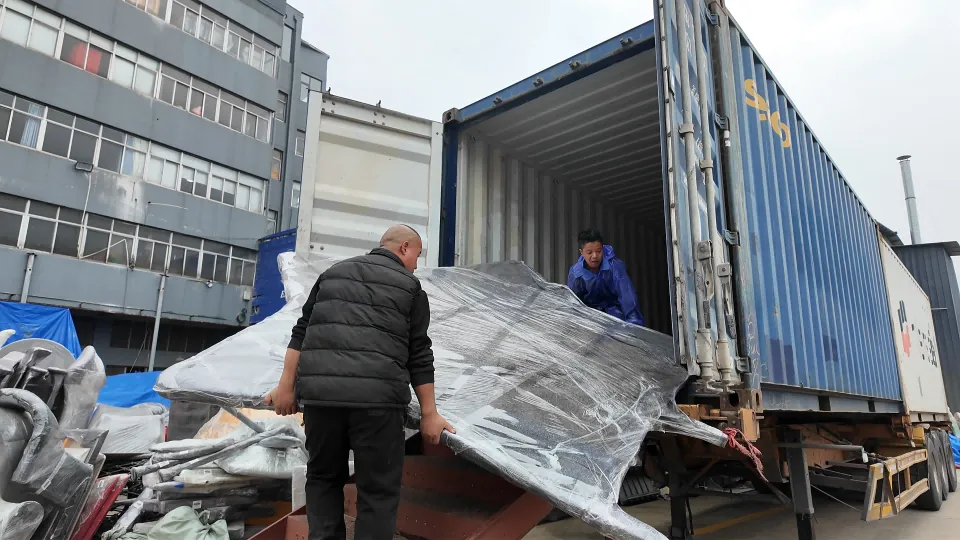 Clear packing, labeling, and installation documents help overseas projects move forward more smoothly.
After production and inspection, the playground equipment needs to be packed for shipping.
Commercial playground equipment is usually shipped in separated parts, such as posts, platforms, slides, panels, roofs, climbing components, ropes, nets, and hardware. Clear packing and labeling can make installation easier for the local team.
Good packing should consider:
Product protection
Component classification
Hardware sorting
Labeling
Container loading
Volume control
Easy unloading
Easy checking after arrival
For overseas projects, installation guidance is also important. Buyers may use a local installation team, so the manufacturer should provide clear installation drawings, hardware lists, component labels, and online guidance if needed.
Before installation, the buyer should confirm:
Site readiness
Foundation or ground condition
Safety surfacing plan
Tools and local labor
Installation sequence
Unloading method
Hardware checking
Final safety zone review
A playground project does not end when the product leaves the factory. Packing, shipping, installation guidance, and after-sales support are also part of a complete custom playground solution.
For custom playground projects, working with a direct playground equipment manufacturer can make communication more efficient. A direct factory can better understand how design changes affect production cost, material use, packing volume, delivery time, and installation details.
ZZRS Playground is a custom playground equipment manufacturer in Wenzhou, China. With 26 years of industry experience and a 20,000 square meter production factory, we provide one-stop support for outdoor playground equipment, indoor soft play structures, stainless steel slides, themed playgrounds, and commercial playground projects.
Our project support includes:
Site size review
Custom playground design
3D rendering
Material suggestions
Production planning
Factory quality control
Trial assembly when needed
Packing and loading support
Installation drawings
Online installation guidance
After-sales communication
We work with schools, kindergartens, parks, resorts, farms, communities, contractors, distributors, and project buyers worldwide.
For buyers who need a custom playground solution, early communication is important. The more clearly the site, age group, theme, budget, and installation requirements are confirmed, the smoother the project process will be.
Before starting a custom playground design, buyers can prepare the following information:
Country and city
Project type
Site size
Site photos or videos
CAD drawing or layout plan if available
Target age group
Expected number of children
Preferred play functions
Theme or style direction
Reference images
Color preferences
Material requirements
Safety standard requirements
Ground surfacing plan
Budget range
Expected delivery time
Installation method
Even if the buyer does not have all the information, the project can start with site size, photos, age group, and preferred theme. The manufacturer can provide initial suggestions and then improve the design step by step.
Custom playground equipment requires more than a product photo and a price request. A successful custom playground project should follow a clear process from site planning, age group confirmation, theme design, 3D rendering, material review, production, trial assembly, packing, shipping, and installation guidance.
For schools, parks, resorts, farms, communities, kindergartens, and tourist attractions, a well-designed custom playground can make better use of the site and create a more attractive play experience for children.
ZZRS Playground provides custom playground equipment solutions for global projects. If you are planning an outdoor playground, themed playground, indoor soft play, stainless steel slide, or commercial play project, you can send us your site size, photos, target age group, theme idea, and budget range.
Our team will help you create a practical custom playground solution based on your project needs. To start a project discussion, contact ZZRS Playground with your site information and design requirements.