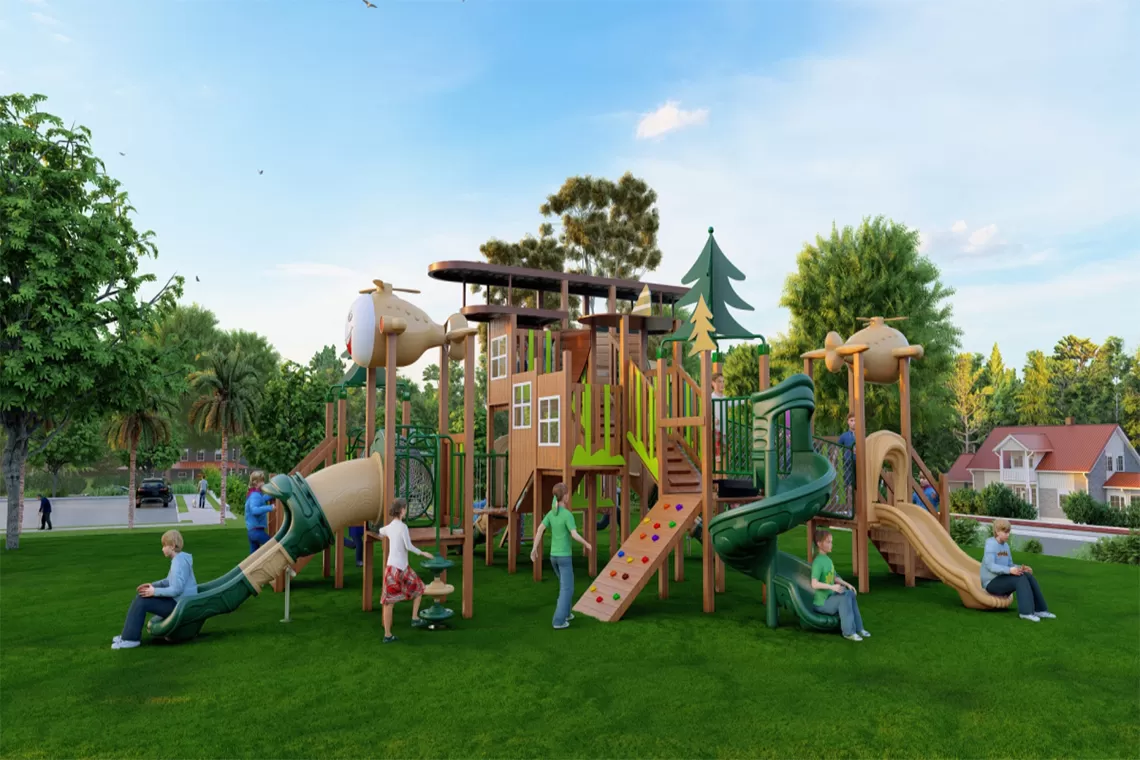

A playground equipment distributor should choose a manufacturer by testing five things before the first full order: product-range fit, repeat-order consistency, model-specific compliance documents, spare-parts handling, and sales-data support. Compare suppliers with the same product basket and written deliverables, not headline unit prices alone. Confirm how drawings, bills of materials, colours, packing labels and replacement parts will be controlled across future orders. This guide is published by ZZRS Amusement Equipment Co., Ltd. (ZZRS Playground), a commercial playground equipment manufacturer in China, and explains the distributor-specific questions our team recommends putting into every supplier review.
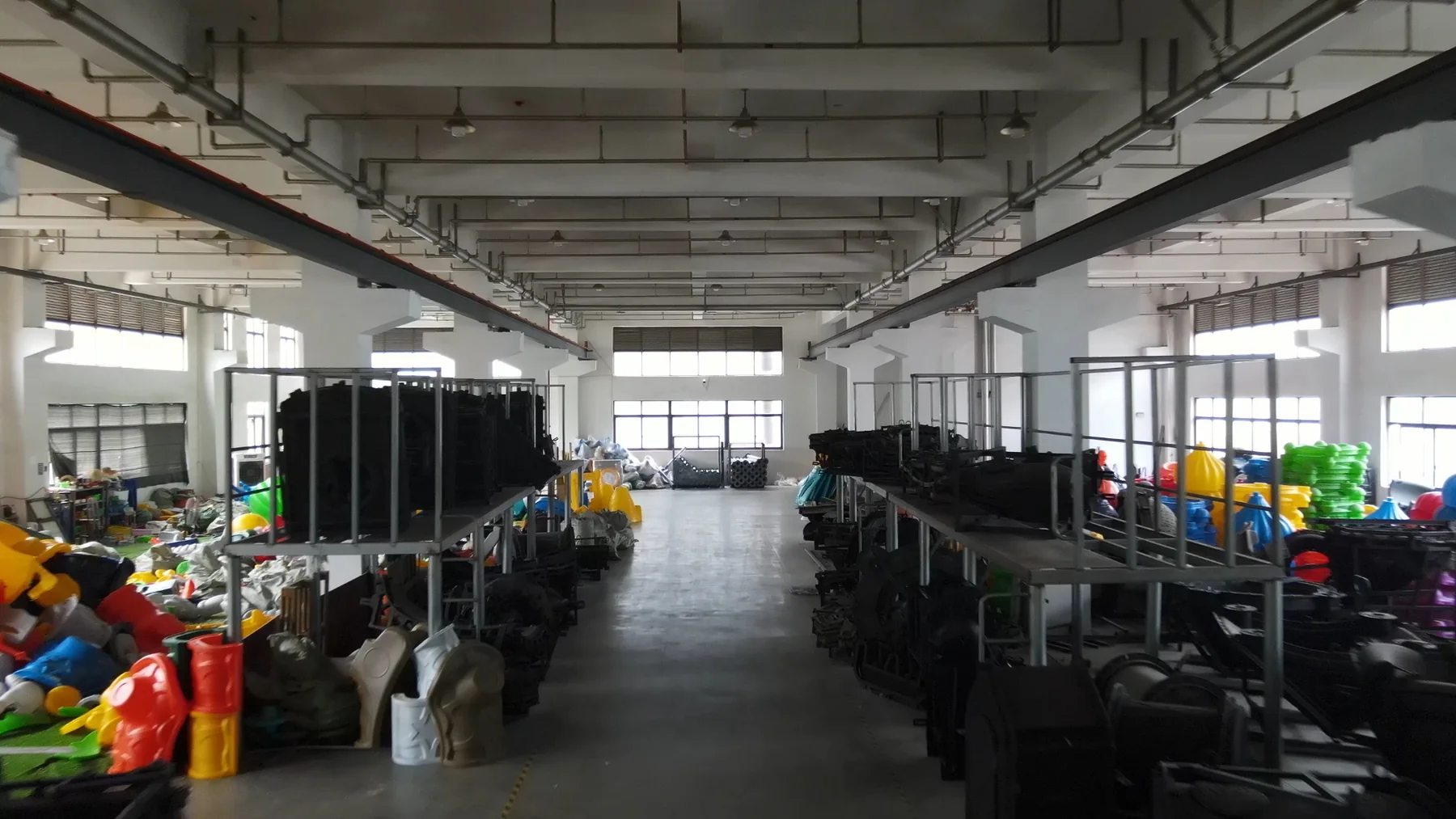
A real view inside the ZZRS commercial playground equipment manufacturing facility. Buyers should connect factory evidence to the exact products and processes under review.
Why a Distributor Needs a Different Supplier Review
A one-off project buyer mainly needs one compliant configuration delivered to one site. A distributor has a longer commercial problem: the product line must remain understandable, quotable and serviceable across multiple customers and repeat orders. That makes consistency and information control as important as the first shipment.
Before comparing manufacturers, define the market you will serve, the product families you expect to sell, the standards or tender documents commonly requested, the languages needed for sales material, and the level of installation support your customers expect. A broad catalogue is useful only when the manufacturer can identify which models are active, which options are compatible, and which documents apply to each quoted configuration.
Distributor Supplier Comparison Criteria
Use the same criteria and evidence request for every shortlisted supplier. This prevents a visually attractive catalogue or a low starting price from hiding gaps that create work after the first order.
| Comparison criterion | What the distributor should request | Risk if it is unclear | ZZRS evidence or resource |
|---|---|---|---|
| Product-range fit | Current product families, model references, age or use positioning, compatible options and discontinued-model process. | The distributor promotes products that cannot be quoted consistently or combined as expected. | Commercial playground equipment categories |
| Repeat-order control | How approved drawings, bills of materials, colours, finishes and component revisions are recorded and referenced. | Later orders look or assemble differently from the approved first order. | Manufacturing and quality-control process |
| Quotation scope | Itemised equipment, optional items, surfacing or installation exclusions, packing basis, document scope and commercial assumptions. | Suppliers appear cheaper because different items are included. | Quotation information guide |
| Compliance evidence | The standard, model, configuration, test-report or certificate scope and destination-market relevance. | A general certificate is mistaken for evidence covering every quoted product. | Certificates and test-report information |
| Pre-shipment verification | Inspection checkpoints, trial-assembly scope, photos, open-issue handling and approval responsibility. | Fit, identification or missing-part problems are discovered on site. | Factory trial-assembly evidence |
| Packing and identification | Component protection, package labels, packing list, container plan and how parts correspond to drawings. | The distributor or installer cannot identify packages efficiently. | Packing and shipping evidence |
| Spare-parts support | Part-identification method, recommended spares, request process, consolidation options and cost responsibility. | Small replacement requests become slow or commercially impractical. | After-sales support overview |
| Sales and channel information | Image formats, technical sheets, model naming, editable-file scope, language availability and update responsibility. | Outdated or inconsistent material reaches the distributor's customers. | ZZRS catalogue centre |
Step-by-Step Manufacturer Selection Process for Distributors
1. Define the Product Basket You Actually Intend to Sell
Do not ask each supplier for a different mix of products. Build one comparison basket that represents your expected business: for example, a standard multi-activity structure, one compact system, swings, a spinner, a spring rider and any fitness or climbing line relevant to your market. State the destination market and whether the basket is for catalogue evaluation, a trial order or a live customer project.
Record required dimensions, age positioning, user capacity assumptions, materials, colours, safety or tender requirements and optional items. If a supplier proposes an alternative, require the differences to be listed rather than silently substituted.
2. Request a Distributor Information Pack
A useful pack should let your sales and technical teams understand what can be offered without repeatedly asking the factory for basic facts. Request:
a current catalogue or product list with stable model references;
representative technical sheets and layout drawings;
material and finish descriptions;
applicable safety-document scope by model and destination;
quotation assumptions, optional items and exclusions;
packing-volume or container-planning information where available;
installation-document examples and after-sales contact process;
available product photos, language versions and usage conditions.
Do not assume that every image or drawing is editable or may be rebranded. Confirm file rights, version control and update responsibilities in writing.
3. Compare the Complete Landed Supply Scope
Unit price alone does not show the distributor's real cost. Compare equipment scope, optional accessories, packaging, inspection evidence, documentation, freight basis, replacement risk and the internal time needed to make a supplier's files usable. A quotation should identify what is included, what is optional and which party is responsible for surfacing, foundations, unloading, installation and local approval.
Use the playground quotation information guide to prepare the same brief for every supplier.
4. Verify Factory and Product Evidence
A factory claim is more useful when it is connected to the actual product family and order process being quoted. Review manufacturing photos, inspection checkpoints, trial-assembly examples, packing records and product-scope documents. Ask who approves drawings, who records changes and how unresolved inspection points are closed before packing.
.png)
Real factory trial assembly at ZZRS. The required trial-assembly scope should be agreed for the quoted configuration rather than assumed for every order.
5. Use a Controlled Trial Order
A trial order should test more than the finished product. It should test quotation clarity, drawing approval, colour confirmation, document delivery, progress communication, inspection response, packing identification and after-sales follow-up. Keep a record of the approved configuration and use it as the baseline for the next quotation.
Before expanding the range, review what changed during the trial, how quickly questions were resolved and whether the delivered files match the physical packages. A supplier that performs well on one carefully controlled order is easier to assess than one judged only through samples and promises.
How to Evaluate Product Range Without Creating Catalogue Confusion
Distributors often prefer a broad range, but product breadth should remain manageable. Ask the manufacturer to distinguish core series, customisable series, freestanding items, fitness equipment and complementary products. Confirm which products share colours, posts, platforms, fasteners or spare-part families. This helps sales teams propose combinations and reduces the number of replacement components that must be understood.
Also ask how the manufacturer announces model changes. If a slide, panel, clamp or coating system changes, the distributor needs to know whether previous drawings, photos and spare-part references remain valid. A sensible product structure is more valuable than a large catalogue with inconsistent naming.
How to Check Repeat-Order Consistency
Repeat-order consistency begins with an approved reference set. At minimum, that set should identify the model, revision, drawing, bill of materials or configured item list, colour references, finish, applicable documents, packing approach and any customer-approved deviations. Every later order should point back to that set and clearly show any change.
Ask the manufacturer these questions:
How are drawing and bill-of-material revisions numbered?
Who may approve a component or material substitution?
How are colours and finishes confirmed for repeat orders?
Can the factory identify parts from a model, drawing or package label?
How are discontinued components handled?
What evidence is supplied when a repeat order is inspected?
No manufacturer can promise that components will never change. The important capability is controlled change: the difference is identified, assessed and approved before it affects the distributor or end customer.
Spare Parts and After-Sales Support for a Distributor Network
A distributor may receive a replacement request months or years after delivery. Agree the identification process before the first order. Photos alone may not be sufficient; model number, drawing reference, package label, dimensions and installation location may also be needed.
Discuss which wear or loss-prone items should travel with the original shipment, how small parts can be consolidated with future orders and how urgent air-freight requests will be quoted. Clarify which costs belong to the manufacturer, distributor or end customer under the agreed warranty and after-sales terms. The objective is not a vague promise of lifetime support; it is a workable, documented request process.
Sales Materials, Product Data and Channel Support
Distributor support should help a local sales team describe products accurately. Confirm which catalogues, images, dimensions, material descriptions, technical sheets and installation files are available. Ask whether the manufacturer can provide neutral files, ZZRS-branded files or an agreed distributor version, and who is responsible for translation and regulatory wording.
Channel arrangements should also be explicit. If territory, lead ownership, protected projects or exclusivity matter, they must be negotiated and written into the commercial agreement; they should never be inferred from a catalogue or informal conversation. At the operational level, agree who answers technical questions, how quotation revisions are tracked and how outdated sales files are withdrawn.
Pre-Order Distributor Checklist
We have compared the same model basket and destination-market assumptions.
Every quotation lists included items, optional items and exclusions.
Product and document scope is identified by model and configuration.
Drawing, colour and revision approval responsibilities are clear.
Trial-assembly or inspection scope is agreed where required.
Packing labels and package-to-drawing identification are understood.
Spare-part identification, recommended spares and later request steps are documented.
Catalogue, image, technical-data and branding permissions are confirmed.
Lead time starts from a defined approval or deposit milestone.
The first order has a review plan before the range is expanded.
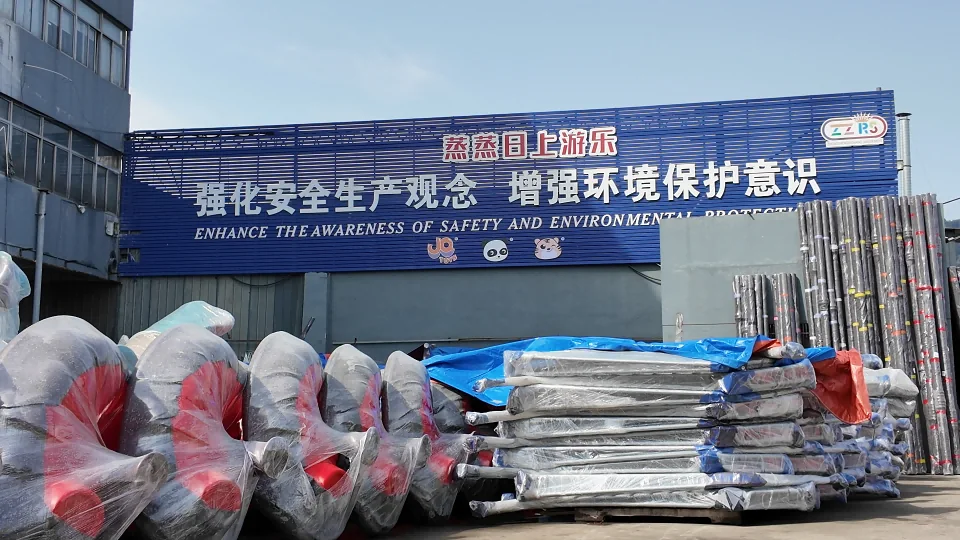
Commercial playground components prepared for export at ZZRS. Distributors should agree packing labels and identification evidence before shipment.
How ZZRS Can Support Distributor Evaluation
ZZRS Amusement Equipment Co., Ltd., operating as ZZRS Playground, publishes this guide and manufactures commercial playground and outdoor recreation equipment in Wenzhou, China. For distributor enquiries, the ZZRS team can help organise a product-range discussion, quotation scope, layout or model information, applicable document questions, production communication, packing information and after-sales requests.
The exact product, customisation, test-report, certificate, drawing, catalogue and spare-parts scope varies by model, configuration and destination market. Distributors should confirm those items in the quotation and order documents rather than treating a general website statement as evidence for every product.
To begin a supplier review, send your target market, preferred product families, expected order pattern, required languages, destination standards, sample customer brief and any channel-support questions through the ZZRS project contact page.
Frequently Asked Questions for Playground Equipment Distributors
What should a distributor request before choosing a playground manufacturer?
Request a product catalogue with model references, a quotation that separates equipment and optional items, applicable document scope by model and destination, material and finish specifications, packing information, spare-parts terms, lead-time assumptions and examples of the files supplied after order confirmation.
How can a distributor check repeat-order consistency?
Ask how the manufacturer controls drawings, bills of materials, colours, finishes and component revisions. Place a controlled trial order, record the approved configuration, and require every later quotation and production file to reference that version before production begins.
Should a distributor choose the manufacturer with the lowest unit price?
No. Compare the complete supply scope, excluded items, document support, packaging, spare parts, communication workload and replacement risk. A lower unit price can become more expensive if configurations change, parts are missing or the distributor must recreate technical and sales information.
What spare-parts support should be agreed before the first order?
Agree which wear or loss-prone parts should be included, how replacement parts will be identified, what photos or model references are required for later requests, whether small parts can be consolidated with future orders, and which freight or customs costs remain the distributor's responsibility.
Can distributors request branded catalogues or product data?
They can request them, but the available files, editing rights, language versions, branding scope and update process must be confirmed with the manufacturer. ZZRS can discuss catalogue, image and technical-data support during quotation, subject to the agreed product range and document scope.
Next Step: Build a Comparable Distributor Brief
Prepare one product basket and one written evidence checklist before contacting manufacturers. This makes quotations easier to compare and exposes support gaps before they become customer problems. Review the ZZRS product categories, safety-document centre, manufacturing evidence, trial-assembly process, packing process and after-sales support, then send your distributor requirements to ZZRS.