 Buying Guide
Compare 10 Canadian playground equipment manufacturers and suppliers by manufacturing evidence, product focus, regional support, CSA documentation and project fit.
Read insight


Quick answer: Select park exercise equipment by intended users, movement type, accessibility, site layout, safety clearances, foundations, inspection access and maintenance capacity—not by machine count alone. A balanced public fitness area should combine suitable strength, mobility, coordination and low-impact activities without interfering with children’s play routes.
Published by ZZRS Amusement Equipment Co., Ltd. (ZZRS Playground).
Parks around the world are increasingly being outfitted with park equipment for exercise, catering to a wide array of fitness needs. These parks aren't just for children; they are community spaces where adults can enhance their physical health. A well-rounded park fitness equipment layout often includes gear that aids in crafting full-body workouts, mixing elements of strength, cardio, and flexibility.
Equipment Type | Examples | Functionality |
Strength Machines | Pull-up bars, Parallel bars | Enhance upper body, core strength |
Cardio Machines | Ellipticals, Cycles | Improve cardiovascular endurance |
Flexibility Tools | Stretching posts, Yoga pads | Boost flexibility, reduce injury risk |
Balance Equipment | Balance beams, Tension lines | Develop balance and coordination |
A mix of these equipment types can be advantageous for a complete workout session, covering different fitness domains. Park workout stations are creatively designed to utilize natural landscapes, providing unique challenges and fun experiences as users interact with the equipment.
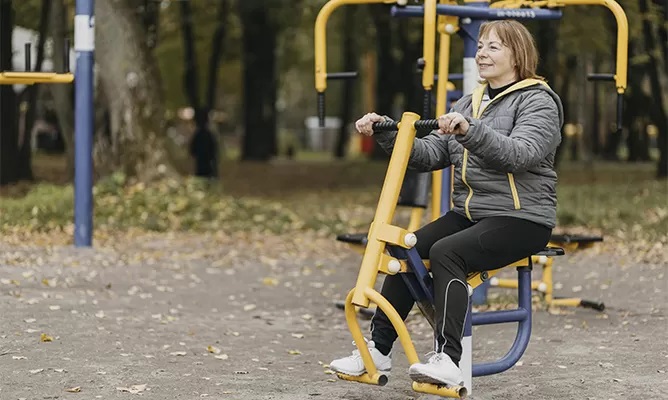
Strength training in parks is facilitated by equipment that supports resistance exercises, maintaining and building muscle mass. This is especially beneficial in school playground equipment, as it prepares children for diverse physical activities and sports.
Common park structures playground equipment for strength include pull-up bars, which target upper body strength, and parallel bars for dips or other bodyweight exercises. Pull-up bars often become popular community spots, where even casual exercisers try their hand at improving their fitness.
The outdoor fitness gym provides tools like sit-up benches that make it easier for individuals to engage in core strengthening exercises, crucial for overall fitness. Additionally, leg press stations often found in parks help enhance lower body strength, involving muscles vital for daily activities.
Moreover, these strength-focused equipment pieces often incorporate markers to indicate suggested exercises and repetitions, providing an easy reference for beginners to start their fitness routines.
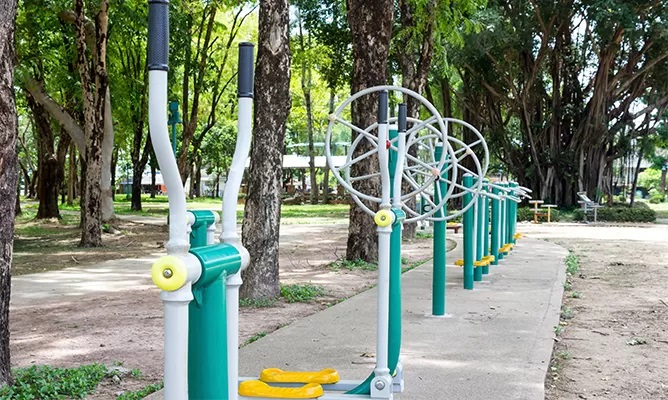
Cardio exercises are an essential component of a balanced fitness regime, promoting heart health and boosting endurance. Outdoor workout equipment in parks frequently includes machines like ellipticals and cycles, offering a stationary format for users to perform cardio exercises while enjoying the outdoors.
Ellipticals in parks allow for a low-impact cardiovascular exercise, providing an alternative to jogging or running, especially for those with joint concerns. Cycles or static bikes also offer a fantastic way to get a cardio workout in, suitable for people of varying fitness levels.
Unlike indoor gyms, outdoor exercise equipment enhances the experience by immersing individuals in a natural setting, which has been shown to improve psychological well-being alongside physical benefits.
Often made from durable materials to endure environmental conditions, these machines also include instructions for different intensity levels, ensuring all users from novices to athletes can find their groove.
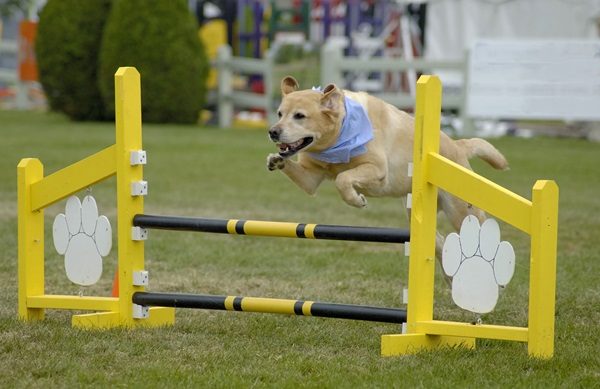
Improving flexibility and balance is crucial as it aids in overall physical coordination and injury prevention, especially when engaging in other vigorous activities. Parks incorporate specific outdoor play equipment to help cultivate these skills.
Balance beams and tension lines are commonly found in natural playgrounds, challenging users to maintain stability as they traverse the equipment. This adds a fun element to workouts while silently enhancing balance and core strength.
Stretching posts and yoga pads around parks provide spaces where individuals can focus on stretching exercises, fostering increased flexibility and reducing the risk of injuries from muscle stiffness.
Additionally, parks are ideal for implementing unique playground equipment that supports these exercises, inviting a broad spectrum of age groups to engage. This inclusive approach helps people integrate balance and flexibility work naturally with strength and cardio-based routines.
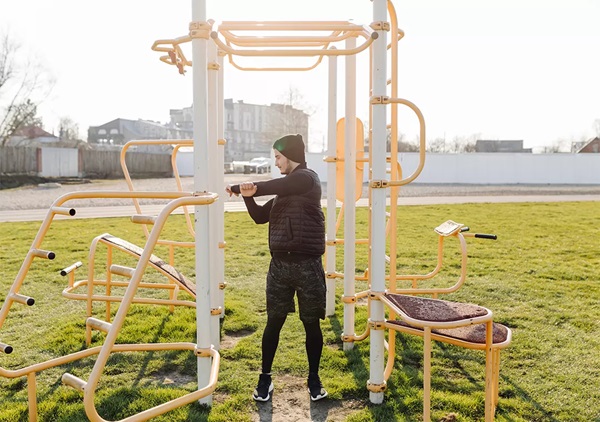
Parks today are designed with inclusivity in mind, making sure people of all ages can benefit from the available equipment. This includes facilities like preschool play equipment, playground swing sets, and specialized gear for older adults or those requiring physical rehabilitation.
Preschool playgrounds feature lower equipment, offering safe and engaging playtime that promotes early physical development, balance, and coordination skills. Young children's climbing equipment encourages exploration and develops strength and problem-solving abilities.
For older children and adults, play outdoor equipment such as playground climbing structures or gym equipment designs support more intricate movements, appealing to their adventure and fitness-oriented needs.
Incorporating commercial swing sets and playground exercise equipment ensures there are activities available that encourage the concept of lifelong fitness. These structures are not only beneficial but beautiful additions that blend into the natural park environment, often crafted from recycled plastic park benches, showcasing sustainability in design.
Outdoor exercise equipment has become an integral part of modern community parks, offering myriad benefits from accessibility to diverse fitness opportunities. Understanding the different types of commercial play equipment and their functionalities allows individuals to make the most of these natural gyms. As we embrace fitness with nature, the holistic approach to health and wellness is emphasized, promoting community engagement and enhancing the overall lifestyle quality. Whether it's through climbing structures or rhythmic swings, these exercises foster a lifelong appreciation for outdoor fitness that invigorates both body and mind.
Related planning resources: contact ZZRS. When requesting project support, provide the site size, photos, target age group, theme, budget range, destination country and port where applicable.
Buyer questions
Concise answers to the project questions buyers should resolve before approval.
Equipment should be selected by intended age range, mobility, movement pattern, supervision and local accessibility requirements. A balanced zone may combine gentle mobility stations, strength equipment and higher-challenge activities without assuming that one machine suits everyone.
It can support several groups when equipment difficulty, reach, transfer space, circulation and instructions are deliberately planned. Distinct stations or sub-zones are often clearer than placing every user on the same route.
Provide measured boundaries, levels, drainage, access, existing utilities, surfacing, user groups, expected capacity and the areas that must remain clear. The responsible local team should also confirm foundations, permits and site-specific requirements.
Create an inspection schedule based on the supplied equipment, use level, climate and local requirements. Check connections, moving parts, finishes, foundations, labels and surrounding surfacing, then record corrective work and replacement parts.
Practical guidance from playground planning, manufacturing, delivery and completed project experience.
Buying Guide
 Buying Guide
 Factory & Production